


Genetic polymorphisms of human flavin-containing monooxygenase 3: implications for drug metabolism and clinical perspectives
- PMID: 17559352
- PMCID: PMC2213907
- DOI: 10.2217/14622416.8.6.635
Genetic polymorphisms of human flavin-containing monooxygenase 3: implications for drug metabolism and clinical perspectives
Abstract
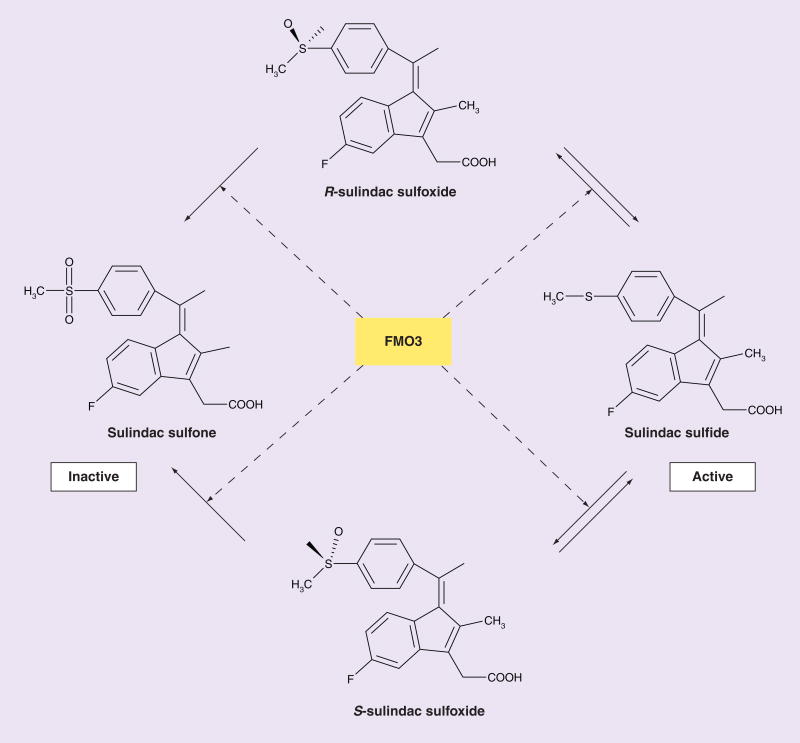
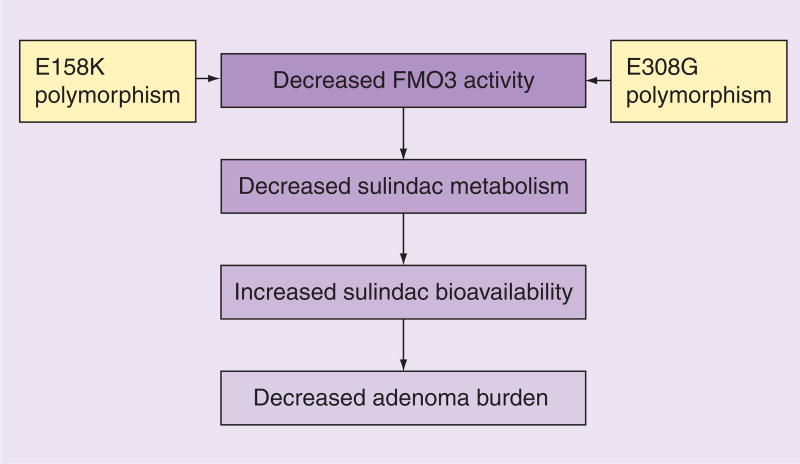
Flavin-containing monooxygenase 3 (FMO3) is a hepatic microsomal enzyme that oxidizes a host of drugs, xenobiotics and other chemicals. Numerous variants in the gene encoding FMO3 have been identified, some of which result in altered enzymatic activity and, consequently, altered substrate metabolism. Studies also implicate individual and ethnic differences in the frequency of FMO3 polymorphisms. In addition, new variants continue to be identified with potentially important clinical implications. For example, the role of FMO3 variants in the pathophysiology of gastrointestinal diseases is an evolving area of research. Two commonly occurring polymorphisms of FMO3, E158K and E308G, have been associated with a reduction in polyp burden in patients with familial adenomatous polyposis who were treated with sulindac sulfide, an FMO3 substrate. These findings suggest a potential role for prospective genotyping of common FMO3 polymorphisms in the treatment of disease states that involve the use of drugs metabolized by FMO3. This review summarizes the current state of research on the genetic polymorphisms of FMO3, with a focus on their clinical implications in gastrointestinal diseases.
Figures
References
Bibliography
-
- Cashman JR, Zhang J. Human flavin-containing monooxygenases. Annu Rev Pharmacol Toxicol. 2006;46:65–100. - PubMed
-
•• This review article summarizes recent information on the pharmacological and toxicological significance of human flavin-containing monooxygeanses (FMOs).
-
- Chen GP, Ziegler DM. Liver microsome and flavin-containing monooxygenase catalyzed oxidation of organic selenium compounds. Arch Biochem Biophys. 1994;312:566–572. - PubMed
-
- McCombie RR, Dolphin CT, Povey S, Phillips IR, Shephard EA. Localization of human flavin-containing monooxygenase genes FMO2 and FMO5 to chromosome 1q. Genomics. 1996;34:426–429. - PubMed
Websites
-
- National Center for Biotechnology Information. www.ncbi.nlm.nih.gov.
-
- The Human Gene Mutation Database at the Institute of Medical Genetics in Cardiff. www.hgmd.cf.ac.uk/ac/index.php.
-
- Allelic Variant Database, University College Lodon, UK. http://human-fmo3.biochem.ucl.ac.uk/Human_FMO3/
-
- UniProt Knowledgebase. http://ca.expasy.org/sprot/
Publication types
MeSH terms
Substances
Grants and funding
LinkOut - more resources
Full Text Sources
Other Literature Sources
