


Individual differences in amphetamine self-administration: the role of the central nucleus of the amygdala
- PMID: 17568395
- PMCID: PMC2742632
- DOI: 10.1038/sj.npp.1301478
Individual differences in amphetamine self-administration: the role of the central nucleus of the amygdala
Abstract
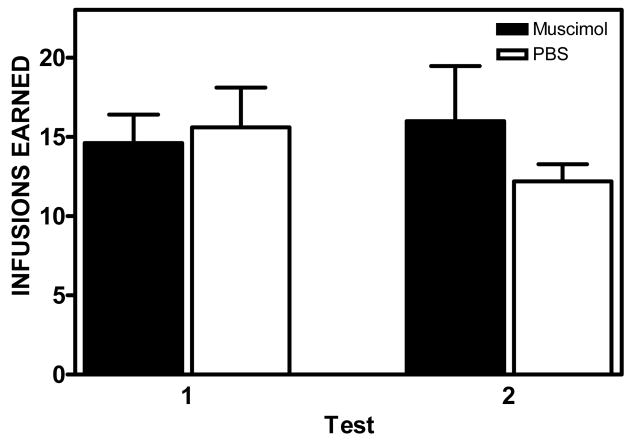
Rats categorized as high responder (HR), based on their activity in an inescapable novel environment, self-administer more amphetamine than low responder (LR) rats. The current study examined if the central nucleus of the amygdala (ACe) contributes to the elevated response for amphetamine in HR rats. Male Sprague-Dawley rats were classified as HR and LR rats based on their activity in inescapable novelty and novelty place preference, and then were trained to self-administer amphetamine (0.1 mg/kg/infusion). Once stable responding was achieved, rats received microinfusions of the GABA(A) agonist muscimol (0.5 microg/0.5 microl) or phosphate-buffered saline into the ACe immediately before self-administration of amphetamine (0.1, 0.03, 0.01, or 0.001 mg/kg/infusion) or saline. An additional group of rats was trained to lever press for sucrose rather than amphetamine. Based on the inescapable novelty test, HR rats self-administered more amphetamine than LR rats at the 0.03 and 0.01 mg/kg/infusion unit doses; there were no significant individual differences in amphetamine self-administration based on the novelty place preference test. Inactivation of the ACe with muscimol decreased self-administration at the 0.03 and 0.01 mg/kg/infusion unit doses in HR rats, but had no effect on LR rats. ACe inactivation had no reliable effect on inactive lever responding and appeared to be region specific based on anatomical controls. In addition, while inactivation of the ACe decreased responding for sucrose, inactivation did not differentially affect HR and LR rats. These results suggest that the ACe contributes to the elevated rate of amphetamine self-administration in HR rats.
Conflict of interest statement
Disclosure/Conflict of Interest
The authors declare that this work was funded by NIH grants DA05312 and DA16013. We declare that, except for income received from our primary employers, no financial support or compensation has been received from any individual or corporate entity over the past three years for research or professional service and there are no personal financial holdings that could be perceived as constituting a potential conflict of interest.
Figures



References
-
- Alheid GF, Heimer L. New prespectives in basal forebrain organization of special relevance for neuropsychiatric disorders: The striatopallidal, amygdaloid, and corticopetal components of the substantia innominata. Neuroscience. 1988;27:1–39. - PubMed
-
- Alleweireldt AT, Hobbs RJ, Taylor AR, Neisewander JL. Effects of SCH-23390 infused into the amygdala or adjacent cortex and basal ganglia on cocaine seeking and self-administration in rats. Neuropsychopharmacology. 2006;31:363–374. - PubMed
-
- Asan E. Interrelationships between tyrosine hydroxylase-immunoreactive dopaminergic afferents and somatostatinergic neurons in the rat central amygdaloid nucleus. Histochem Cell Biol. 1997;107:65–79. - PubMed
-
- Bardo MT, Donohew RL, Harrington NG. Psychobiology of novelty seeking and drug seeking behavior. Behavioural Brain Research. 1996;77:23–43. - PubMed
-
- Beaulieu S, DiPaolo T, Barden N. Control of ACTH secretion by the central nucleus of the amygdala: Implication of the serotonergic system and its relevance to the glucocorticoid delayed feedback mechanism. Neuroendocrinology. 1986;44:247–254. - PubMed
Publication types
MeSH terms
Substances
Grants and funding
LinkOut - more resources
Full Text Sources
Miscellaneous
