


Role of the anion nitrite in ischemia-reperfusion cytoprotection and therapeutics
- PMID: 17568573
- PMCID: PMC2002522
- DOI: 10.1016/j.cardiores.2007.05.001
Role of the anion nitrite in ischemia-reperfusion cytoprotection and therapeutics
Abstract
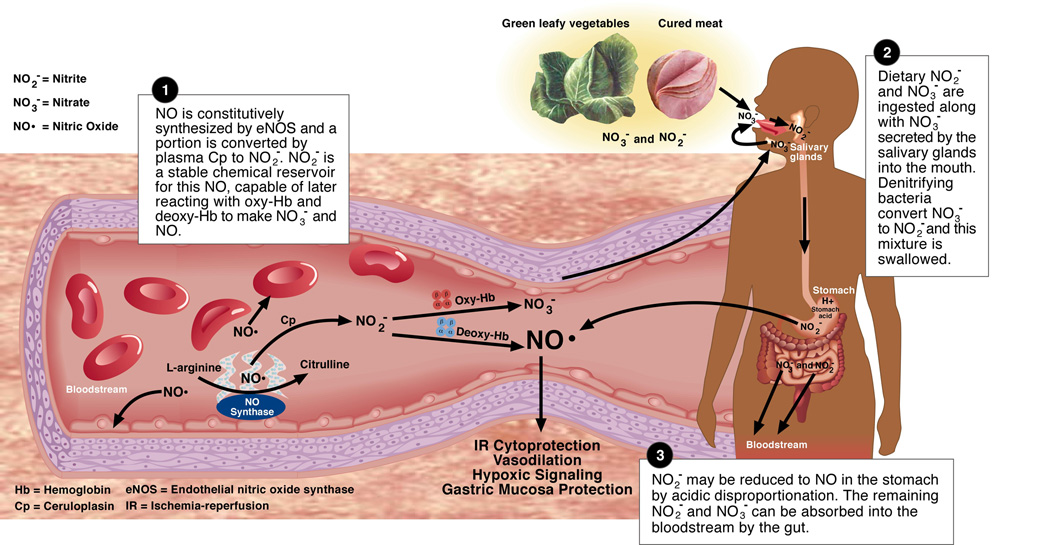
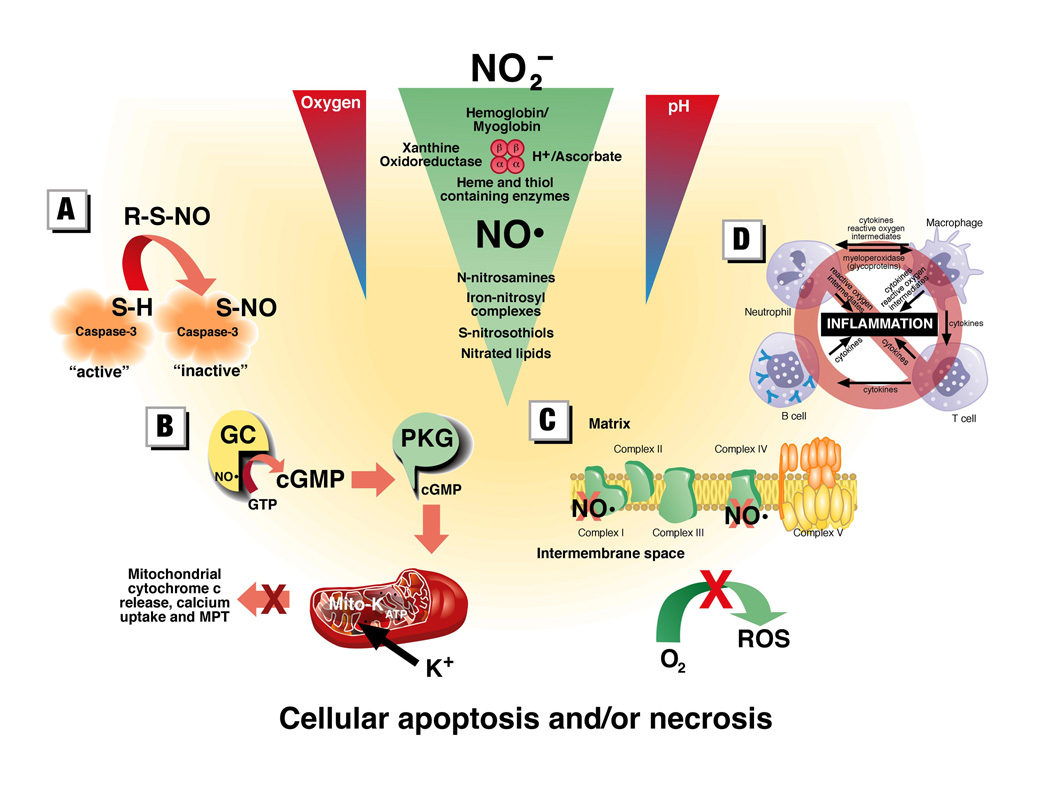
The anion nitrite (NO(2)(-)) constitutes a biochemical reservoir for nitric oxide (NO). Nitrite reduction to NO may be catalyzed by hemoglobin, myoglobin or other metal-containing enzymes and occurs at increasing rates under conditions of physiologic hypoxia or ischemia. A number of laboratories have now demonstrated in animal models the ability of nitrite to provide potent cytoprotection following focal ischemia-reperfusion (IR) injury of the heart, liver, brain, and kidney. While the mechanism of nitrite-mediated cytoprotection remains to be fully characterized, the release of nitrite-derived NO following IR appears to be central to this mechanism. The evidence of nitrite-mediated cytoprotection against IR injury in multiple animal models opens the door to potential therapeutic opportunities in human disease. Here we review the mechanisms for nitrite formation in blood and tissue, its metabolic equilibrium with NO, nitrate, and NO-modified proteins, the evidence supporting nitrite-mediated cytoprotection, and the potential mechanisms driving cytoprotection, and we explore the opportunities for the therapeutic application of nitrite for human disease.
Figures
References
-
- Gladwin MT, Crawford JH, Patel RP. The biochemistry of nitric oxide, nitrite, and hemoglobin: role in blood flow regulation. Free Radic Biol Med. 2004;36:707–717. - PubMed
-
- Gladwin MT, Schechter AN, Kim-Shapiro DB, Patel RP, Hogg N, Shiva S, et al. The emerging biology of the nitrite anion. Nat Chem Biol. 2005;1:308–314. - PubMed
-
- Huang KT, Keszler A, Patel N, Patel RP, Gladwin MT, Kim-Shapiro DB, et al. The reaction between nitrite and deoxyhemoglobin. Reassessment of reaction kinetics and stoichiometry. J Biol Chem. 2005;280:31126–31131. - PubMed
-
- Herold S, Rehmann FJ. Kinetics of the reactions of nitrogen monoxide and nitrite with ferryl hemoglobin. Free Radic Biol Med. 2003;34:531–545. - PubMed
Publication types
MeSH terms
Substances
Grants and funding
LinkOut - more resources
Full Text Sources
Other Literature Sources
