


Neonatal maternal separation and enhancement of the hypoxic ventilatory response in rat: the role of GABAergic modulation within the paraventricular nucleus of the hypothalamus
- PMID: 17569732
- PMCID: PMC2277229
- DOI: 10.1113/jphysiol.2007.135160
Neonatal maternal separation and enhancement of the hypoxic ventilatory response in rat: the role of GABAergic modulation within the paraventricular nucleus of the hypothalamus
Abstract
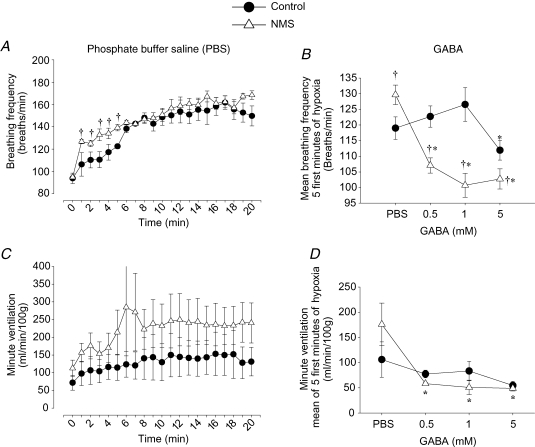
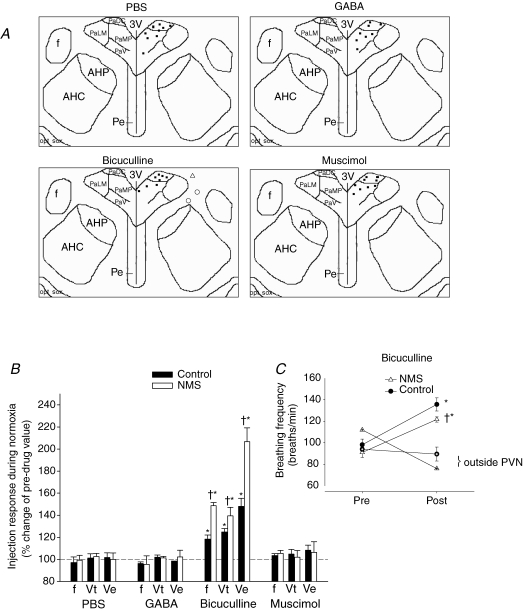
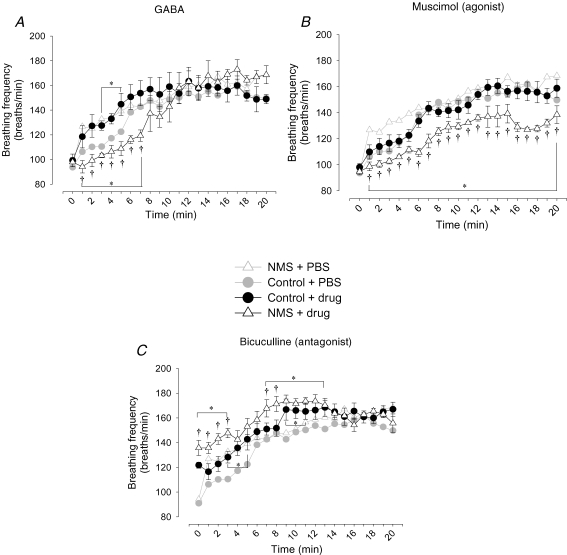
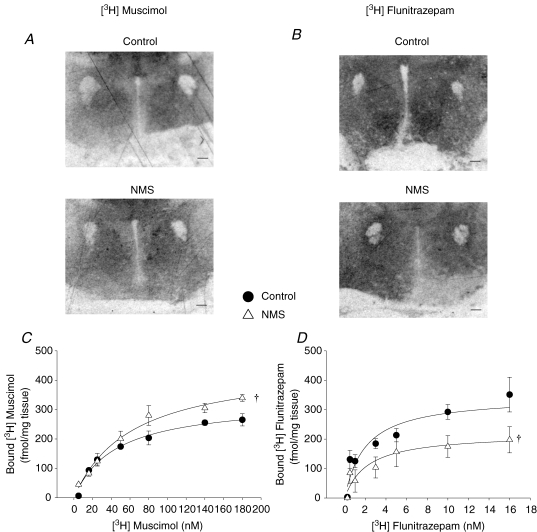
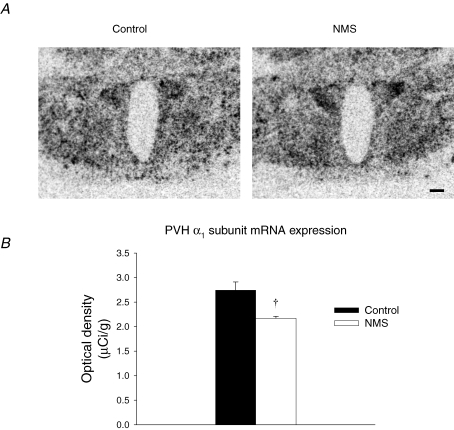
Neonatal maternal separation (NMS) affects respiratory control development as adult male (but not female) rats previously subjected to NMS show a hypoxic ventilatory response 25% greater than controls. The paraventricular nucleus of the hypothalamus (PVN) is an important modulator of respiratory activity. In the present study, we hypothesized that in awake rats, altered GABAergic inhibition within the PVN contributes to the enhancement of hypoxic ventilatory response observed in rats previously subjected to NMS. During normoxia, the increase in minute ventilation following microinjection of bicuculline (1 mm) within the PVN is greater in NMS versus control rats. These data show that regulation of ventilatory activity related to tonic inhibition of the PVN is more important in NMS than control rats. Microinjection of GABA or muscimol (1 mM) attenuated the ventilatory response to hypoxia (12% O2) in NMS rats only. The higher efficiency of microinjections in NMS rats is supported by results from GABAA receptor autoradiography which revealed a 22% increase in GABAA receptor binding sites within the PVN of NMS rats versus controls. Despite this increase, however, NMS rats still show a larger hypoxic ventilatory response than controls, suggesting that within the PVN the larger number of GABAA receptors either compensate for (1) a deficient GABAergic modulation, (2) an increase in the efficacy of excitatory inputs converging onto this structure, or (3) both. Together, these results show that the life-long consequences of NMS are far reaching as they can compromise the development of vital homeostatic function in a way that may predispose to respiratory disorders.
Figures
References
-
- Anisman H, Zaharia MD, Meaney MJ, Merali Z. Do early-life events permanently alter behavioral and hormonal responses to stressors? Int J Dev Neurosci. 1998;16:149–164. - PubMed
-
- Ben-Ari Y, Khazipov R, Leinekugel X, Caillard O, Gaiarsa JL. GABAA, NMDA and AMPA receptors: a developmentally regulated ‘menage a trois’. Trends Neurosci. 1997;20:523–529. - PubMed
-
- Berquin P, Bodineau L, Gros F, Larnicol N. Brainstem and hypothalamic areas involved in respiratory chemoreflexes: a Fos study in adult rats. Brain Res. 2000;857:30–40. - PubMed
-
- Caldji C, Francis D, Sharma S, Plotsky PM, Meaney MJ. The effects of early rearing environment on the development of GABAA and central benzodiazepine receptor levels and novelty-induced fearfulness in the rat. Neuropsychopharmacology. 2000;22:219. - PubMed
Publication types
MeSH terms
Substances
LinkOut - more resources
Full Text Sources
