Apodemus agrarius as a new definitive host for Neodiplostomum seoulense
- PMID: 17570982
- PMCID: PMC2526299
- DOI: 10.3347/kjp.2007.45.2.157
Apodemus agrarius as a new definitive host for Neodiplostomum seoulense
Abstract
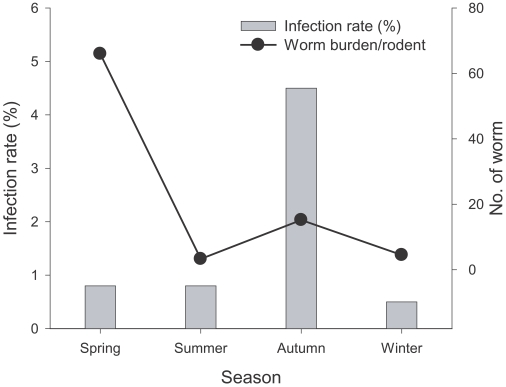
A total of 1,496 rodents and insectivores were live-trapped at Yeoncheon-gun (n = 351), Paju-shi (804), and Pocheon-gun (343), Gyeonggi-do (Province), and examined for intestinal helminths, including Neodiplostomum seoulense, seasonally from December 2004 to September 2005. Six species of rodents, including Apodemus agrarius (1,366), Mus musculus (32), Micronytus fortis (28), Eothenomys regulus (9), Micronys minutus (6), and Cricetulus triton (3), and 1 species of insectivores Crocidura lasiura (54) were collected. A total of 321 adult N. seoulense were collected from 19 (1.4%) A. agrarius. The worm burden ranged from 1 to 101 per A. agrarius (mean; 16.9). No N. seoulense was observed in other rodent or insectivore species examined. The infection rate during autumn (4.5%) was higher than those during spring (0.8%), summer (0.8%), and winter (0.5%). The average number of N. seoulense in infected A. agrarius was the highest in spring (66.0 specimens), followed by autumn (15.2), winter (4.5), and summer (3.3). This study first confirms that A. agrarius is a natural definitive host for N. seoulense, and demonstrates that the infection rates and intensities vary seasonally and geographically.
Figures

References
-
- Chai JY, Lee SH. Food-borne intestinal trematode infections in the Republic of Korea. Parasitol Int. 2002;51:129–154. - PubMed
-
- Chai JY, Shin EH, Han ET, Guk SM, Choi MH, Lee SH. Genetic difference in susceptibility and fatality of three strains of mice experimentally infected with Neodiplostomum seoulense. J Parasitol. 2000;86:1140–1144. - PubMed
-
- Hong ST. Studies on intestinal trematodes in Korea. VII. Growth, development and recovery of Fibricola seoulensis from experimentally infected rats and mice. Korean J Parasitol. 1982;20:112–121. - PubMed
-
- Hong ST, Chai JY, Lee SH. Ten human cases of Fibricola seoulensis infection and mixed one with Stellantchasmus and Metagonimus. Korean J Parasitol. 1986;24:95–97. - PubMed
MeSH terms
LinkOut - more resources
Full Text Sources