


Near infrared dyes as lifetime solvatochromic probes for micropolarity measurements of biological systems
- PMID: 17573433
- PMCID: PMC1989699
- DOI: 10.1529/biophysj.107.111609
Near infrared dyes as lifetime solvatochromic probes for micropolarity measurements of biological systems
Abstract
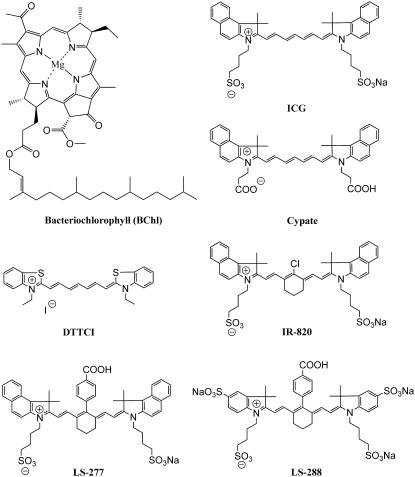
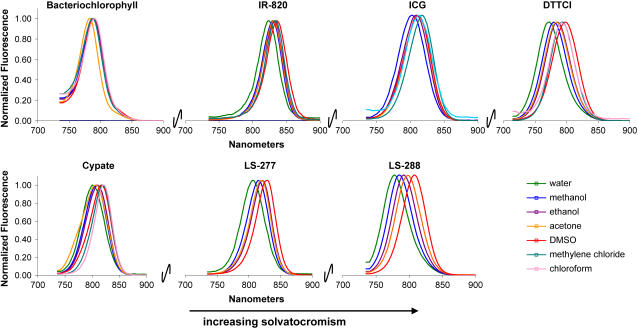
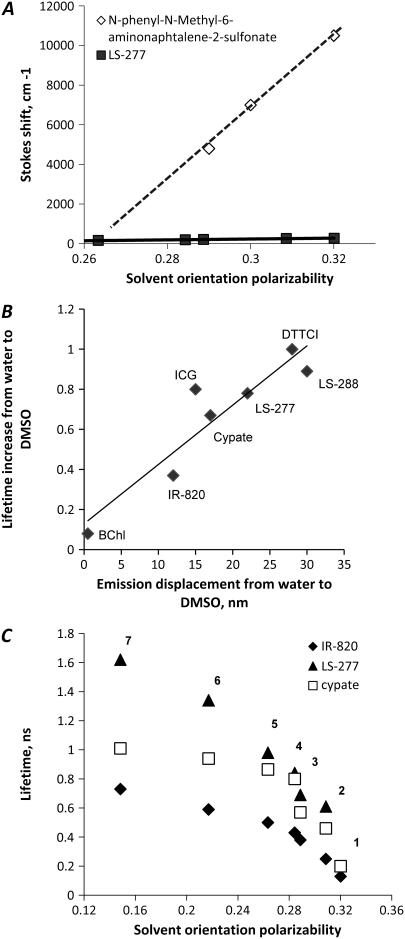
The polarity of biological mediums controls a host of physiological processes such as digestion, signaling, transportation, metabolism, and excretion. With the recent widespread use of near-infrared (NIR) fluorescent dyes for biological imaging of cells and living organisms, reporting medium polarity with these dyes would provide invaluable functional information in addition to conventional optical imaging parameters. Here, we report a new approach to determine polarities of macro- and microsystems for in vitro and potential in vivo applications using NIR polymethine molecular probes. Unlike the poor solvatochromic response of NIR dyes in solvents with diverse polarity, their fluorescence lifetimes are highly sensitive, increasing by a factor of up to 8 on moving from polar to nonpolar mediums. We also established a correlation between fluorescence lifetime and solvent orientation polarizability and developed a lifetime polarity index for determining the polarity of complex systems, including micelles and albumin binding sites. Because of the importance of medium polarity in molecular, cellular, and biochemical processes and the significance of reduced autofluorescence and deep tissue penetration of light in the NIR region, the findings reported herein represent an important advance toward using NIR molecular probes to measure the polarity of complex biological systems in vitro and in vivo.
Figures
References
-
- Whitsett, J. A., and T. E. Weaver. 2002. Hydrophobic surfactant proteins in lung function and disease. N. Engl. J. Med. 347:2141–2148. - PubMed
-
- Orti, E., P. M. Viruela, R. Viruela, F. Effenberger, V. Hernandez, and J. T. Lopez Navarrete. 2005. Raman and theoretical study of the solvent effects on the sizable intramolecular charge transfer in the push-pull 5-(dimethylamino)-5′-nitro-2,2′-bithiophene. J. Phys. Chem. A. 109:8724–8731. - PubMed
Publication types
MeSH terms
Substances
Grants and funding
LinkOut - more resources
Full Text Sources
Other Literature Sources
Miscellaneous
