


IL-4-STAT6 signal transduction-dependent induction of the clinical phase of Sjögren's syndrome-like disease of the nonobese diabetic mouse
- PMID: 17579059
- PMCID: PMC2856075
- DOI: 10.4049/jimmunol.179.1.382
IL-4-STAT6 signal transduction-dependent induction of the clinical phase of Sjögren's syndrome-like disease of the nonobese diabetic mouse
Abstract
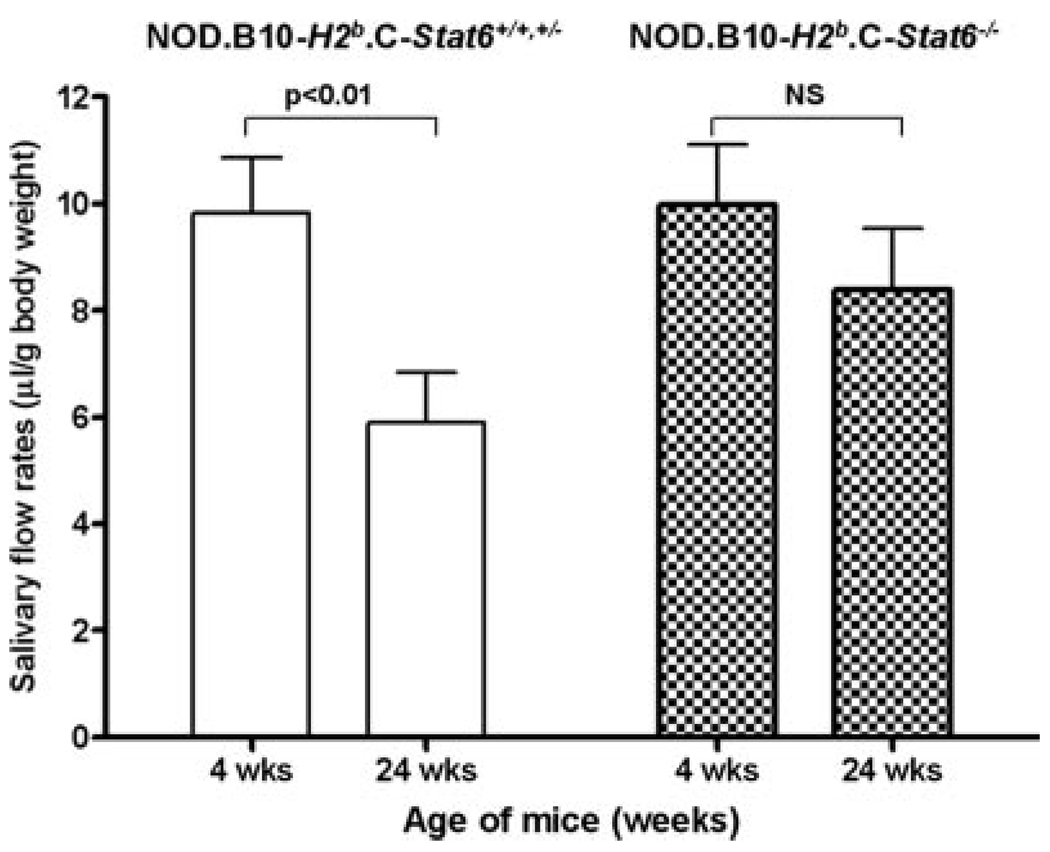
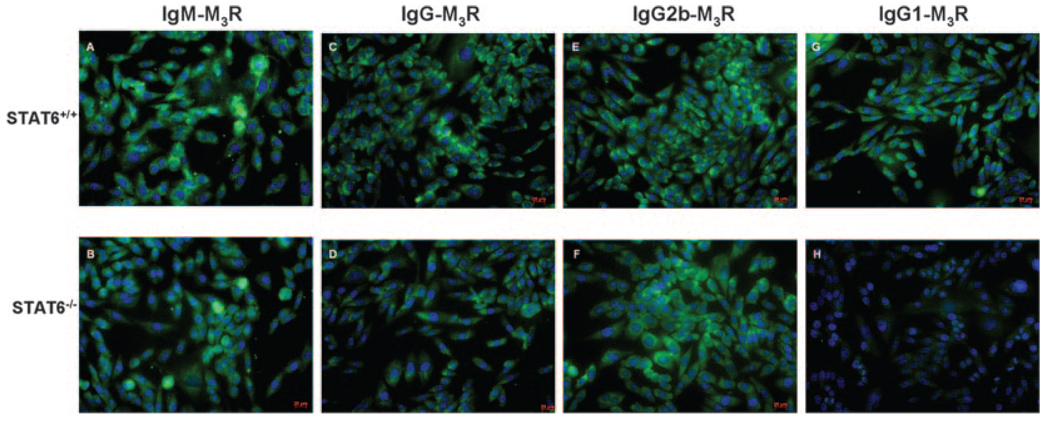
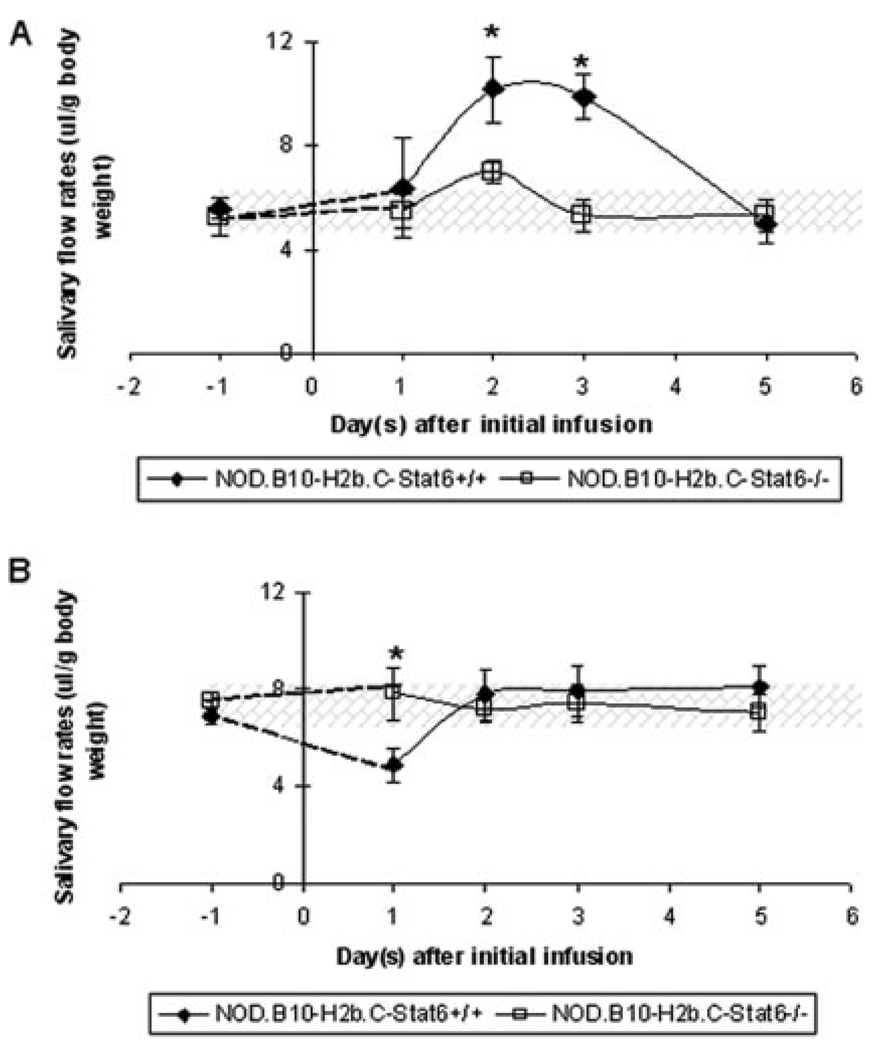
NOD.B10-H2(b) and NOD/LtJ mice manifest, respectively, many features of primary and secondary Sjögren's syndrome (SjS), an autoimmune disease affecting primarily the salivary and lacrimal glands leading to xerostomia (dry mouth) and xerophthalmia (dry eyes). B lymphocytes play a central role in the onset of SjS with clinical manifestations dependent on the appearance of autoantibodies reactive to multiple components of acinar cells. Previous studies with NOD.IL4(-/-) and NOD.B10-H2(b).IL4(-/-) mice suggest that the Th2 cytokine, IL-4, plays a vital role in the development and onset of SjS-like disease in the NOD mouse model. To investigate the molecular mechanisms by which IL-4 controls SjS development, a Stat6 gene knockout mouse, NOD.B10-H2(b).C-Stat6(-/-), was constructed and its disease profile was defined and compared with that of NOD.B10-H2(b).C-Stat6(+/+) mice. As the NOD.B10-H2(b).C-Stat6(-/-) mice aged from 4 to 24 wk, they exhibited leukocyte infiltration of the exocrine glands, produced anti-nuclear autoantibodies, and showed loss and gain of saliva-associated proteolytic enzymes, similar to NOD.B10-H2(b).C-Stat6(+/+) mice. In contrast, NOD.B10-H2(b).C-Stat6(-/-) mice failed to develop glandular dysfunction, maintaining normal saliva flow rates. NOD.B10-H2(b).C-Stat6(-/-) mice were found to lack IgG1 isotype-specific anti-muscarinic acetylcholine type-3 receptor autoantibodies. Furthermore, the IgG fractions from NOD.B10-H2(b).C-Stat6(-/-) sera were unable to induce glandular dysfunction when injected into naive recipient C57BL/6 mice. NOD.B10-H2(b).C-Stat6(-/-) mice, like NOD.B10-H2(b).IL4(-/-) mice, are unable to synthesize IgG1 Abs, an observation that correlates with an inability to develop end-stage clinical SjS-like disease. These data imply a requirement for the IL-4/STAT6-pathway for onset of the clinical phase of SjS-like disease in the NOD mouse model.
Conflict of interest statement
The authors have no financial conflict of interest.
Figures
References
-
- Fox RI, Kang HI. Pathogenesis of Sjögren’s syndrome. Rheum. Dis. Clin. North Am. 1992;18:517–538. - PubMed
-
- Fox RI, Michelson P. Approaches to the treatment of Sjögren’s syndrome. J. Rheumatol. 2000;61 Suppl:15–21. - PubMed
-
- Jonsson R, Haga HJ, Gordon TP. Current concepts on diagnosis, autoantibodies and therapy in Sjögren’s syndrome. Scand. J. Rheumatol. 2000;29:341–348. - PubMed
-
- Vitali C, Bombardieri S, Jonsson R, Moutsopoulos HM, Alexander EL, Carsons SE, Daniels TE, Fox PC, Fox RI, Kassan SS, et al. Classification criteria for Sjögren’s syndrome: a revised version of the European criteria proposed by the American-European Consensus Group. Ann. Rheum. Dis. 2002;61:554–558. - PMC - PubMed
-
- Robinson CP, Brayer J, Yamachika S, Esch TR, Peck AB, Stewart CA, Peen E, Jonsson R, Humphreys-Beher MG. Transfer of human serum IgG to non-obese diabetic Igµ null mice reveals a role for autoantibodies in the loss of secretory function of exocrine tissues in Sjögren’s syndrome. Proc. Natl. Acad. Sci. USA. 1998;95:7538–7543. - PMC - PubMed
Publication types
MeSH terms
Substances
Grants and funding
LinkOut - more resources
Full Text Sources
Medical
Molecular Biology Databases
Research Materials
Miscellaneous
