. 2007 Jul;5(7):e174.
doi: 10.1371/journal.pbio.0050174. Epub 2007 Jun 19.

Epigenetic natural variation in Arabidopsis thaliana

Affiliations

Epigenetic natural variation in Arabidopsis thaliana

Matthew W Vaughn et al. PLoS Biol. 2007 Jul.

Abstract

Cytosine methylation of repetitive sequences is widespread in plant genomes, occurring in both symmetric (CpG and CpNpG) as well as asymmetric sequence contexts. We used the methylation-dependent restriction enzyme McrBC to profile methylated DNA using tiling microarrays of Arabidopsis Chromosome 4 in two distinct ecotypes, Columbia and Landsberg erecta. We also used comparative genome hybridization to profile copy number polymorphisms. Repeated sequences and transposable elements (TEs), especially long terminal repeat retrotransposons, are densely methylated, but one third of genes also have low but detectable methylation in their transcribed regions. While TEs are almost always methylated, genic methylation is highly polymorphic, with half of all methylated genes being methylated in only one of the two ecotypes. A survey of loci in 96 Arabidopsis accessions revealed a similar degree of methylation polymorphism. Within-gene methylation is heritable, but is lost at a high frequency in segregating F(2) families. Promoter methylation is rare, and gene expression is not generally affected by differences in DNA methylation. Small interfering RNA are preferentially associated with methylated TEs, but not with methylated genes, indicating that most genic methylation is not guided by small interfering RNA. This may account for the instability of gene methylation, if occasional failure of maintenance methylation cannot be restored by other means.


Conflict of interest statement

Competing interests. RAM and WRM are founders of, and have interests in, Orion Genomics, a company that has licensed the methylation profiling technology described in this paper (United States 7,186,512).

Figures

Figure 1
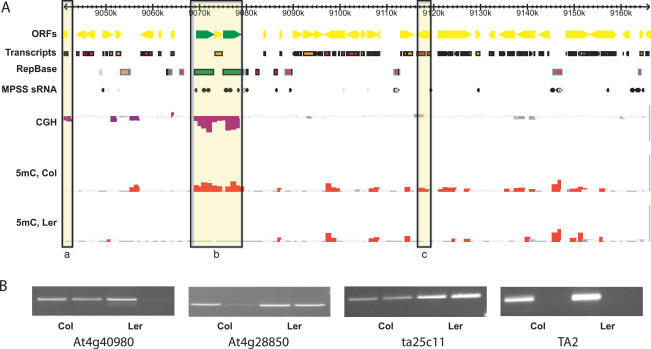
Figure 1. Methylation Profiles for Col and Ler Arabidopsis Ecotypes
(A) Microarray data from Chromosome 4 are displayed for a 125-kb region 9 Mb from the nuclear organizing region (Figure S1). Open reading frames from genes (yellow) and retrotransposons (green) are indicated, along with repeats predicted by RepBase and TandemRepeatFinder. Small RNA matches from massively parallel signature-sequencing (MPSS) data are indicated. Tiles that represent significant CNPs are highlighted in purple (CGH), while tiles that detect significant DNA methylation are highlighted in red for the two ecotypes (5 mC, Col and Ler). Examples of a gene CNP (a), a TE CNP (b), and a methylation polymorphism (c) are boxed. (B) Significant methylation was detected by microarray analysis for two representative genes in Ler (At4g40980) and Col (At4g28850), respectively. This methylation was verified by digestion of genomic DNA by McrBC, followed by PCR amplification using primers specific for each gene (lower panels). Failure to amplify a product after digestion by McrBC indicates that the gene is methylated. Control primers from an unmethylated tile (ta25c11) and a methylated transposon (TA2) indicate complete digestion and amplification in each case.
Figure 2
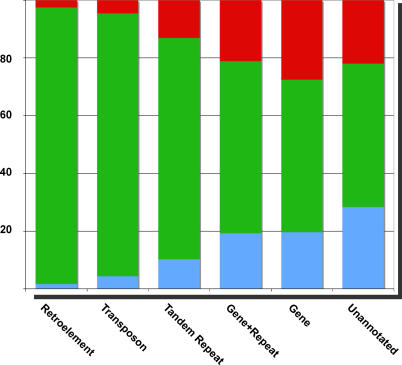
Figure 2. Variation in Methylation of Genes and Transposons
Methylation status of tiles detecting significant methylation but not overlapping CNPs (Table 1) was compared between ecotypes. Among these were tiles annotated as retrotransposons (1,551), transposons (623), tandem repeats (107), genes with repeats (904), genes (2,174), and unannotated (304). Methylation in Col (red), both ecotypes (green), and Ler (blue) is represented in the proportional bar graphs for each class of tile. A total of 45% of genic and unannotated tiles that detected significant methylation did so in only one of the two ecotypes, while 94% of TE tiles detected significant methylation in both (Table 2).
Figure 3
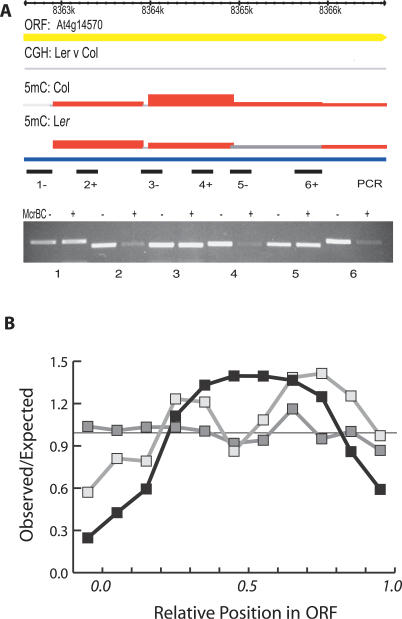
Figure 3. Methylation is Localized within Genes
(A) Intermediate levels of methylation were detected by microarray analysis in Col and Ler for one representative gene (genome browser tracks are annotated as in Figure 1). Primer pairs 1–6 are indicated below each tile of the array. Amplification of McrBC digested Col DNA (+) and undigested Col DNA (−) was performed as in Figure 1. Failure to amplify digested DNA indicated that methylation was localized to regions 2, 4, and 6, rather than spanning the entire gene. (B) The number of genic tiles detecting significant methylation was calculated at 10% intervals relative to the length of each gene and compared with the number expected if methylation was randomly distributed (black line). Only genes larger than 2 kb (three tiles or more per gene) were considered. Methylated tiles differing between ecotypes were also plotted in a similar way (light gray line). Genic methylation is largely concentrated in the middle of genes. For comparison, methylation distribution as a function of position was also calculated for TE-derived open reading frames (dark grey line) and is uniformly distributed.
Figure 4
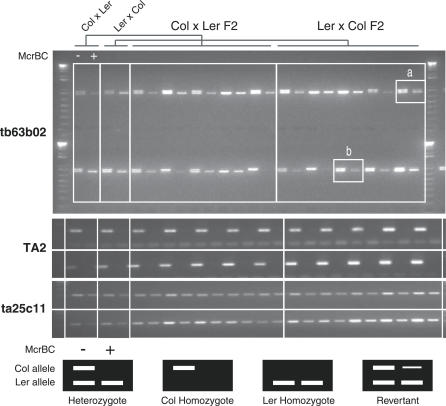
Figure 4. Heritability of Polymorphic Gene Methylation
The gene At4g28850 is methylated in Col but not Ler. Genomic DNA was prepared from F 1 and F 2 siblings derived from reciprocal crosses between Col and Ler and subjected to McrBC digestion and PCR amplification of this locus as in Figure 1. The amplification product (tb63b02) has a small deletion in Ler, enabling the parental alleles to be distinguished. DNA samples were digested (+) or mock-digested (−) with McrBC. Control primers were used to amplify a methylated retrotransposon (TA2) in each sample, as well as an unmethylated control tile (ta25c11). Samples of two F 1 and ten F 2 plants are shown for each cross (out of a total of eight and 40, respectively) (Table S3). In almost all cases, the Col allele is digested by McrBC, and the Ler allele is never digested. Two exceptions are indicated (a and b) in which the Col allele has lost all or most of its associated methylation.
Figure 5
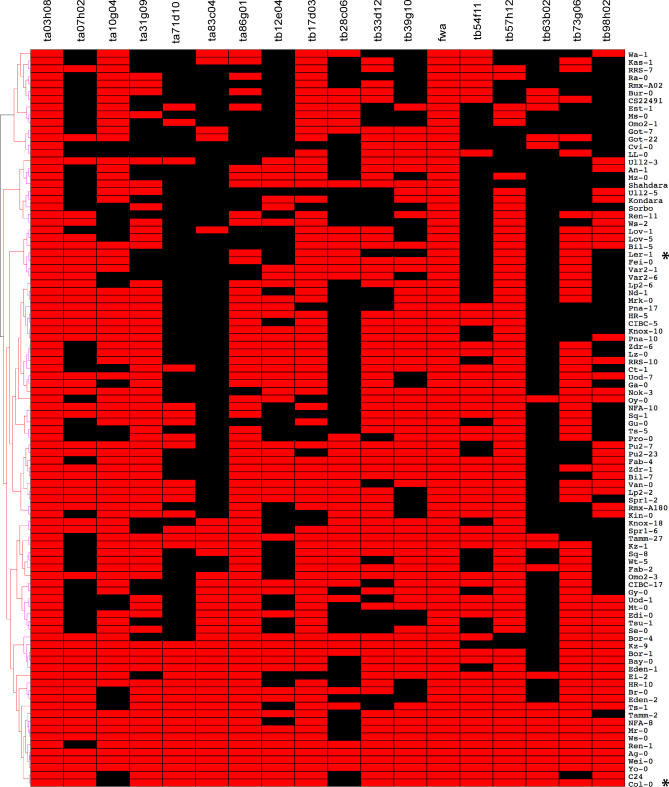
Figure 5. Genic Methylation among 96 Arabidopsis Accessions
Methylation polymorphism was surveyed at 18 genomic loci in 96 natural variation accessions of Arabidopsis [43], including the flowering time control locus fwa. Equal amounts of undigested (McrBC−) and digested genomic DNA (McrBC+) from each accession were amplified using PCR with primers specific for each locus. Methylation was scored as binary traits, represented in the graphical matrix by red (methylated) or black (unmethylated). Col-0 and Ler-1 are highlighted with an asterisk, and loci are arranged left to right in correspondence with their physical order on Chromosome 4. Per-accession methylation profiles were clustered using unweighted pair group method with arithmetic mean, and a support tree was generated using 10,000 bootstrapped replicates. The resulting tree bears no resemblance to a recent kinship-based phylogeny [42], and no major branches of the tree have significant support (unpublished data).

References

    1. Bender J. DNA methylation and epigenetics. Annu Rev Plant Biol. 2004;55:41–68. - PubMed
    1. Chan SW, Henderson IR, Jacobsen SE. Gardening the genome: DNA methylation in Arabidopsis thaliana . Nat Rev Genet. 2005;6:351–360. - PubMed
    1. Klose RJ, Bird AP. Genomic DNA methylation: The mark and its mediators. Trends Biochem Sci. 2006;31:89–97. - PubMed
    1. Terranova R, Agherbi H, Boned A, Meresse S, Djabali M. Histone and DNA methylation defects at Hox genes in mice expressing a SET domain-truncated form of Mll. Proc Natl Acad Sci U S A. 2006;103:6629–6634. - PMC - PubMed
    1. Weber M, Davies JJ, Wittig D, Oakeley EJ, Haase M, et al. Chromosome-wide and promoter-specific analyses identify sites of differential DNA methylation in normal and transformed human cells. Nat Genet. 2005;37:853–862. - PubMed

Publication types