


Genetic analysis of multifocal superficial urothelial cancers by array-based comparative genomic hybridisation
- PMID: 17579624
- PMCID: PMC2360305
- DOI: 10.1038/sj.bjc.6603850
Genetic analysis of multifocal superficial urothelial cancers by array-based comparative genomic hybridisation
Abstract
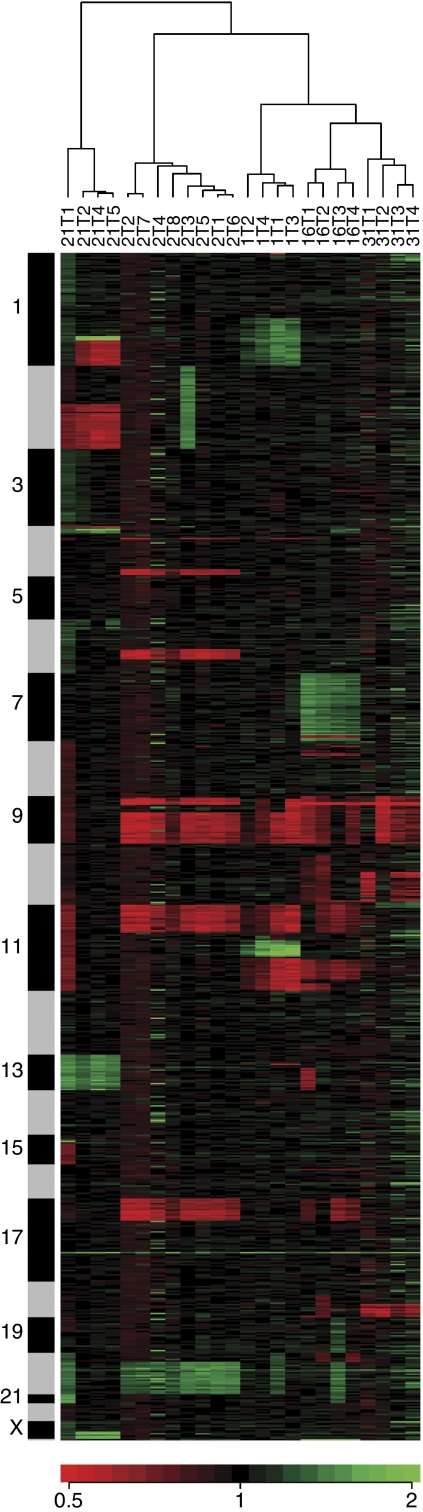
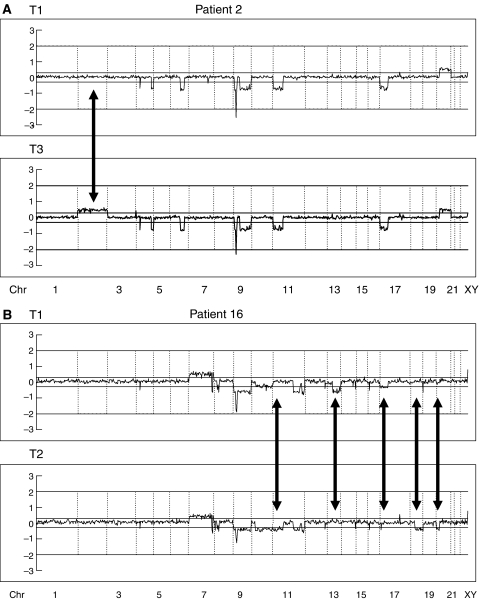
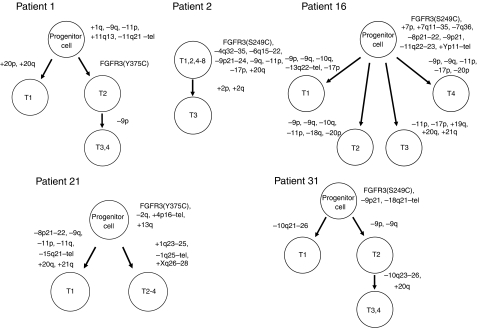
The purpose of this study was to investigate the accumulation of genetic alterations during metachronous and/or synchronous development of multifocal low-grade superficial urothelial tumours in the same patient, by using array-based comparative genomic hybridisation (array-CGH) and FGFR mutation analysis. We analysed 24 tumours (pTa-1 G1-2) from five patients. We had previously identified a clonal relationship among the tumours of each patient by microsatellite analysis. This time, unsupervised hierarchical cluster analysis revealed that the tumours from each patient were clustered together independently of the tumours from the other patients. All of the tumours from a single patient showed a set of 2-7 identical regional or whole-arm chromosomal changes. In addition, several individual alterations were also found. Cladistic diagrams revealed that the accumulation of genetic alterations could not be explained by a linear model, and the existence of a hypothetical precursor cell was assumed in four patients. In some cases, FGFR mutation seemed to occur later during multifocal tumour development. Taken together, these findings suggest that low-grade superficial urothelial tumours accumulate minor genetic alterations during multifocal development, although these tumours are genetically stable.
Figures
References
-
- Almadori G, Bussu F, Cadoni G, Galli J, Rigante M, Artuso A, Maurizi M (2004) Multistep laryngeal carcinogenesis helps our understanding of the field cancerisation phenomenon: a review. Eur J Cancer 40: 2383–2388 - PubMed
-
- Billerey C, Chopin D, Aubriot-Lorton MH, Ricol D, Gil Diez de Medina S, Van Rhijn B, Bralet MP, Lefrere-Belda MA, Lahaye JB, Abbou CC, Bonaventure J, Zafrani ES, van der Kwast T, Thiery JP, Radvanyi F (2001) Frequent FGFR3 mutations in papillary non-invasive bladder (pTa) tumors. Am J Pathol 158: 1955–1959 - PMC - PubMed
-
- Blaveri E, Brewer JL, Roydasgupta R, Fridlyand J, DeVries S, Koppie T, Pejavar S, Mehta K, Carroll P, Simko JP, Waldman FM (2005) Bladder cancer stage and outcome by array-based comparative genomic hybridization. Clin Cancer Res 11: 7012–7022 - PubMed
-
- Dalbagni G, Ren ZP, Herr H, Cordon-Cardo C, Reuter V (2001) Genetic alterations in tp53 in recurrent urothelial cancer: a longitudinal study. Clin Cancer Res 7: 2797–2801 - PubMed
-
- Habuchi T (2005) Origin of multifocal carcinomas of the bladder and upper urinary tract: molecular analysis and clinical implications. Int J Urol 12: 709–716 - PubMed
MeSH terms
Substances
LinkOut - more resources
Full Text Sources
Other Literature Sources
