


Structure and evolution of a proviral locus of Glyptapanteles indiensis bracovirus
- PMID: 17594494
- PMCID: PMC1919376
- DOI: 10.1186/1471-2180-7-61
Structure and evolution of a proviral locus of Glyptapanteles indiensis bracovirus
Abstract
Background: Bracoviruses (BVs), a group of double-stranded DNA viruses with segmented genomes, are mutualistic endosymbionts of parasitoid wasps. Virus particles are replication deficient and are produced only by female wasps from proviral sequences integrated into the wasp genome. Virus particles are injected along with eggs into caterpillar hosts, where viral gene expression facilitates parasitoid survival and therefore perpetuation of proviral DNA. Here we describe a 223 kbp region of Glyptapanteles indiensis genomic DNA which contains a part of the G. indiensis bracovirus (GiBV) proviral genome.
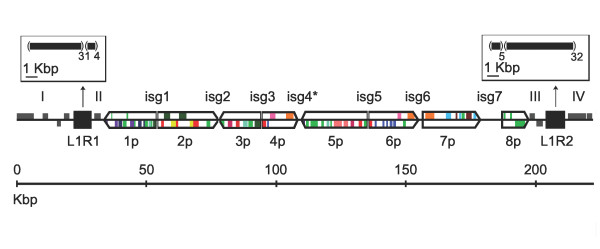
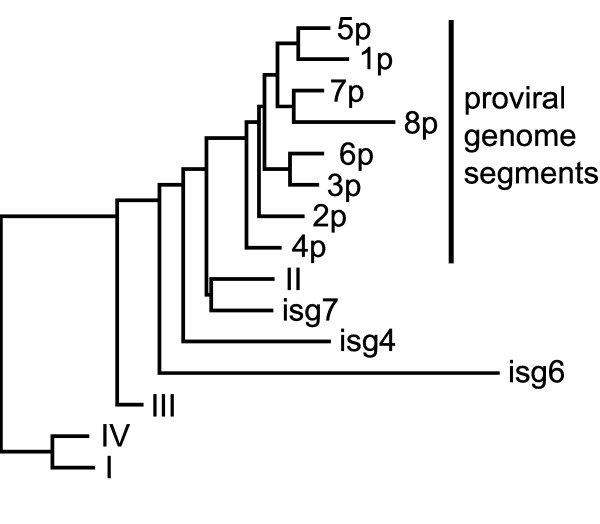
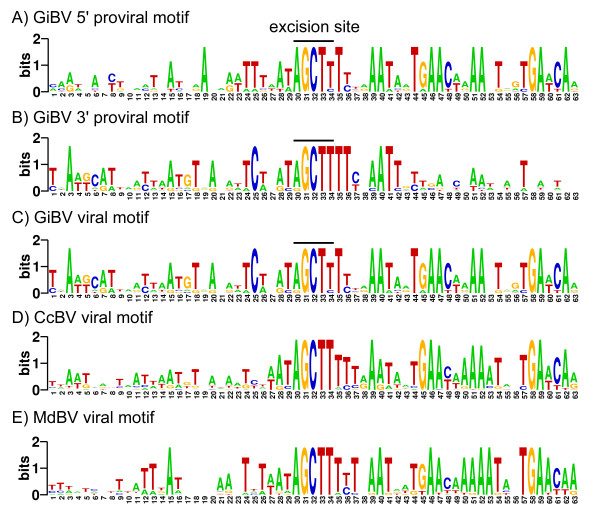
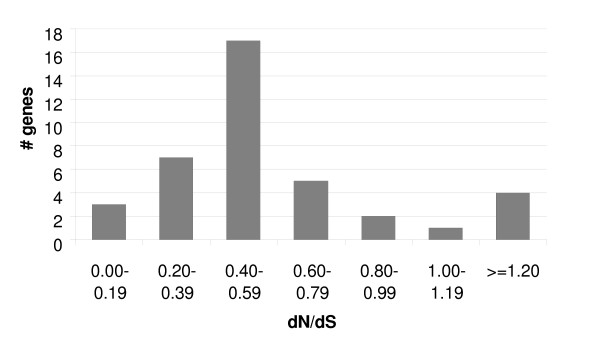
Results: Eighteen of ~24 GiBV viral segment sequences are encoded by 7 non-overlapping sets of BAC clones, revealing that some proviral segment sequences are separated by long stretches of intervening DNA. Two overlapping BACs, which contain a locus of 8 tandemly arrayed proviral segments flanked on either side by ~35 kbp of non-packaged DNA, were sequenced and annotated. Structural and compositional analyses of this cluster revealed it exhibits a G+C and nucleotide composition distinct from the flanking DNA. By analyzing sequence polymorphisms in the 8 GiBV viral segment sequences, we found evidence for widespread selection acting on both protein-coding and non-coding DNA. Comparative analysis of viral and proviral segment sequences revealed a sequence motif involved in the excision of proviral genome segments which is highly conserved in two other bracoviruses.
Conclusion: Contrary to current concepts of bracovirus proviral genome organization our results demonstrate that some but not all GiBV proviral segment sequences exist in a tandem array. Unexpectedly, non-coding DNA in the 8 proviral genome segments which typically occupies ~70% of BV viral genomes is under selection pressure suggesting it serves some function(s). We hypothesize that selection acting on GiBV proviral sequences maintains the genetic island-like nature of the cluster of proviral genome segments described herein. In contrast to large differences in the predicted gene composition of BV genomes, sequences that appear to mediate processes of viral segment formation, such as proviral segment excision and circularization, appear to be highly conserved, supporting the hypothesis of a single origin for BVs.
Figures
References
-
- Wu M, Sun LV, Vamathevan J, Riegler M, Deboy R, Brownlie JC, McGraw EA, Martin W, Esser C, Ahmadinejad N, Wiegand C, Madupu R, Beanan MJ, Brinkac LM, Daugherty SC, Durkin AS, Kolonay JF, Nelson WC, Mohamoud Y, Lee P, Berry K, Young MB, Utterback T, Weidman J, Nierman WC, Paulsen IT, Nelson KE, Tettelin H, O'Neill SL, Eisen JA. Phylogenomics of the reproductive parasite Wolbachia pipientis wMel: a streamlined genome overrun by mobile genetic elements. PLoS Biol. 2004;2:E69. doi: 10.1371/journal.pbio.0020069. - DOI - PMC - PubMed
Publication types
MeSH terms
Substances
Associated data
- Actions
- Actions
- Actions
- Actions
- Actions
- Actions
- Actions
- Actions
LinkOut - more resources
Full Text Sources
