


Retinol binding protein 4 expression in humans: relationship to insulin resistance, inflammation, and response to pioglitazone
- PMID: 17595259
- PMCID: PMC2893415
- DOI: 10.1210/jc.2006-0816
Retinol binding protein 4 expression in humans: relationship to insulin resistance, inflammation, and response to pioglitazone
Abstract
Context: Retinol binding protein 4 (RBP4) was recently found to be expressed and secreted by adipose tissue, and was strongly associated with insulin resistance.
Objective: The aim was to determine the relationship between RBP4 and obesity, insulin resistance, and other markers of insulin resistance in humans.
Design and patients: RBP4 mRNA levels in adipose tissue and muscle of nondiabetic human subjects with either normal or impaired glucose tolerance (IGT) were studied, along with plasma RBP4. RBP4 gene expression was also measured in adipose tissue fractions, and from visceral and sc adipose tissue (SAT) from surgical patients.
Setting: The study was conducted at University Hospital and General Clinical Research Center.
Intervention: Insulin sensitivity (S(I)) was measured, and fat and muscle biopsies were performed. In IGT subjects, these procedures were performed before and after treatment with metformin or pioglitazone.
Main outcome measures: The relationship between RBP4 expression and obesity, S(I), adipose tissue inflammation, and intramyocellular lipid level, and response to insulin sensitizers was measured.
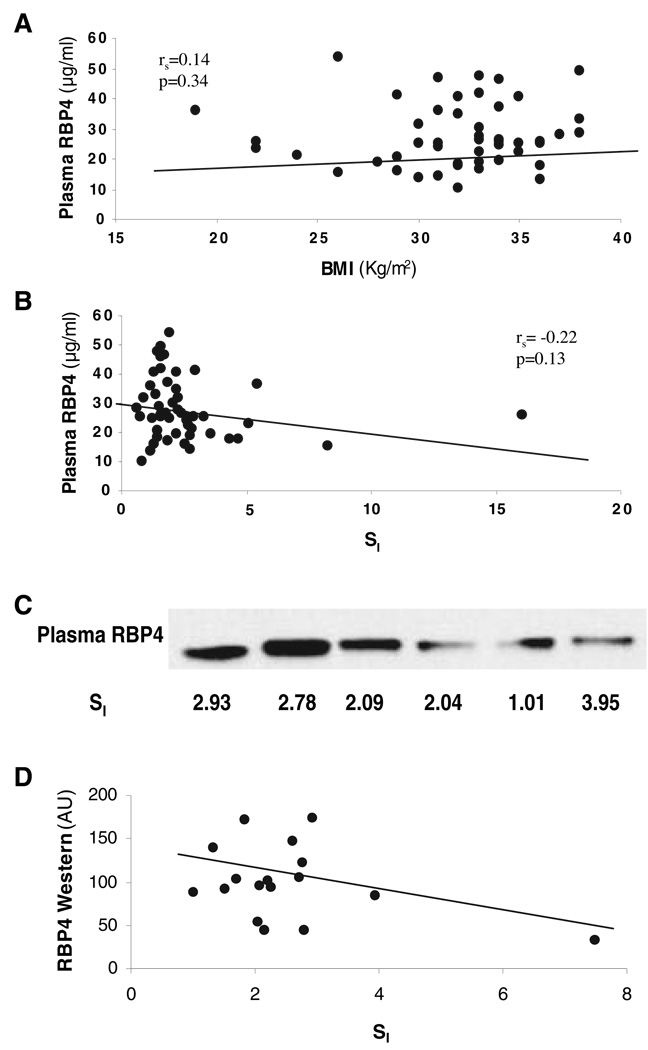
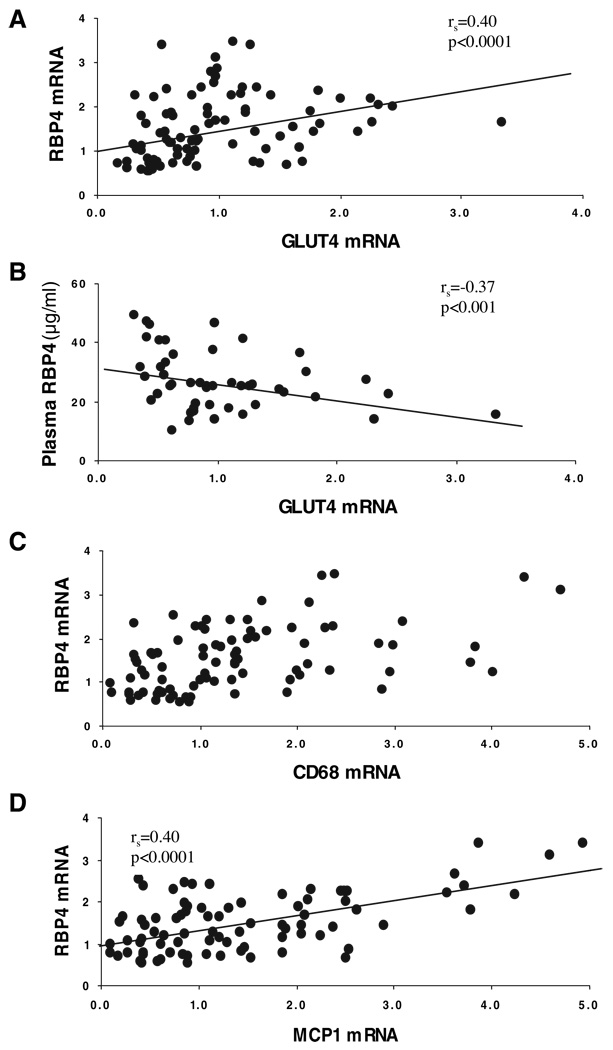
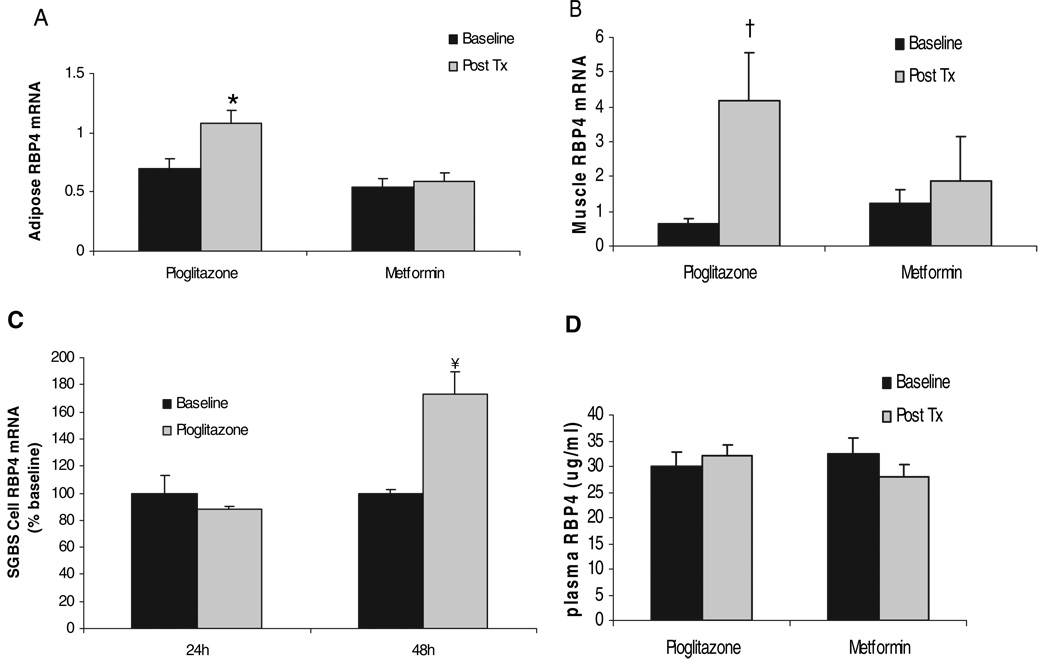
Results: RBP4 was expressed predominantly from the adipocyte fraction of SAT. Although SAT RBP4 expression and the plasma RBP4 level demonstrated no significant relationship with body mass index or S(I), there was a strong positive correlation between RBP4 mRNA and adipose inflammation (monocyte chemoattractant protein-1 and CD68), and glucose transporter 4 mRNA. Treatment of IGT subjects with pioglitazone resulted in an increase in S(I) and an increase in RBP4 gene expression in both adipose tissue and muscle, but not in plasma RBP4 level, and the in vitro treatment of cultured adipocytes with pioglitazone yielded a similar increase in RBP4 mRNA.
Conclusions: RBP4 gene expression in humans is associated with inflammatory markers, but not with insulin resistance. The increase in RBP4 mRNA after pioglitazone treatment is unusual, suggesting a complex regulation of this novel adipokine.
Figures
Comment in
-
Editorial: Retinol binding protein 4 and pathogenesis of diabetes.J Clin Endocrinol Metab. 2007 Jul;92(7):2430-2. doi: 10.1210/jc.2007-1054. J Clin Endocrinol Metab. 2007. PMID: 17616636 No abstract available.
References
-
- Flegal KM, Carroll MD, Ogden CL, Johnson CL. Prevalence and trends in obesity among US adults, 1999–2000. JAMA. 2002;288:1723–1727. - PubMed
-
- Mokdad A, Serdula MK, Dietz WH, Bowman B, Marks J, Koplan J. The spread of the obesity epidemic in the United States, 1991–1998. JAMA. 1999;282:1519–1522. - PubMed
-
- Carr DB, Utzschneider KM, Hull RL, Kodama K, Retzlaff BM, Brunzell JD, Shofer JB, Fish BE, Knopp RH, Kahn SE. Intra-abdominal fat is a major determinant of the National Cholesterol Education Program Adult Treatment Panel III criteria for the metabolic syndrome. Diabetes. 2004;53:2087–2094. - PubMed
-
- Karelis AD, St. Pierre DH, Conus F, Rabasa-Lhoret R, Poehlman ET, Poehlman ET. Metabolic and body composition factors in subgroups of obesity: what do we know? J Clin Endocrinol Metab. 2004;89:2569–2575. - PubMed
-
- Eckel RH, Grundy SM, Zimmet PZ. The metabolic syndrome. Lancet. 2005;365:1415–1428. - PubMed
Publication types
MeSH terms
Substances
Grants and funding
- R01 DK039176/DK/NIDDK NIH HHS/United States
- R37 DK039176/DK/NIDDK NIH HHS/United States
- R01 DK071346/DK/NIDDK NIH HHS/United States
- DK 71346/DK/NIDDK NIH HHS/United States
- R01 DK052398/DK/NIDDK NIH HHS/United States
- DK 71277/DK/NIDDK NIH HHS/United States
- R01 DK071277/DK/NIDDK NIH HHS/United States
- UL1 TR001998/TR/NCATS NIH HHS/United States
- M01 RR014288/RR/NCRR NIH HHS/United States
- M01RR14288/RR/NCRR NIH HHS/United States
- R01 HD034522/HD/NICHD NIH HHS/United States
- DK 52398/DK/NIDDK NIH HHS/United States
- DK 39176/DK/NIDDK NIH HHS/United States
LinkOut - more resources
Full Text Sources
Other Literature Sources
Medical
Research Materials
Miscellaneous
