


Brain areas selective for both observed and executed movements
- PMID: 17596409
- PMCID: PMC2538553
- DOI: 10.1152/jn.00238.2007
Brain areas selective for both observed and executed movements
Abstract
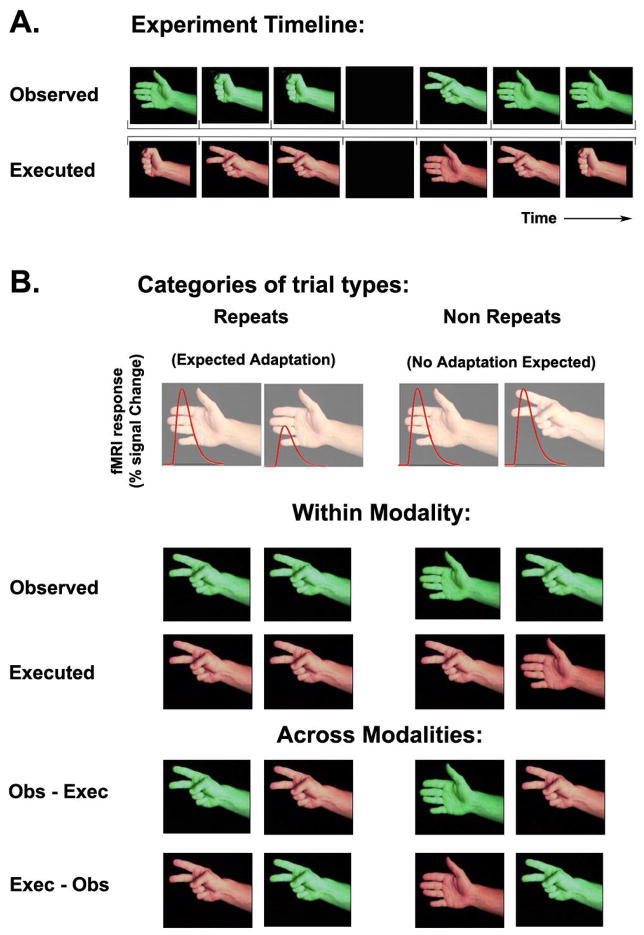
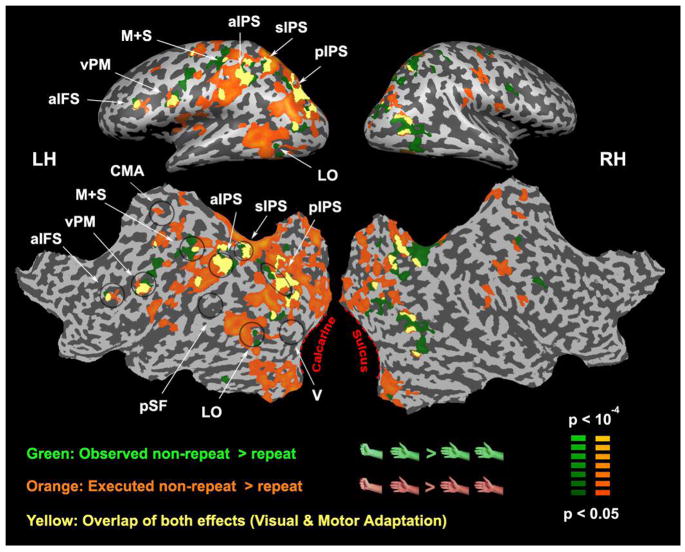
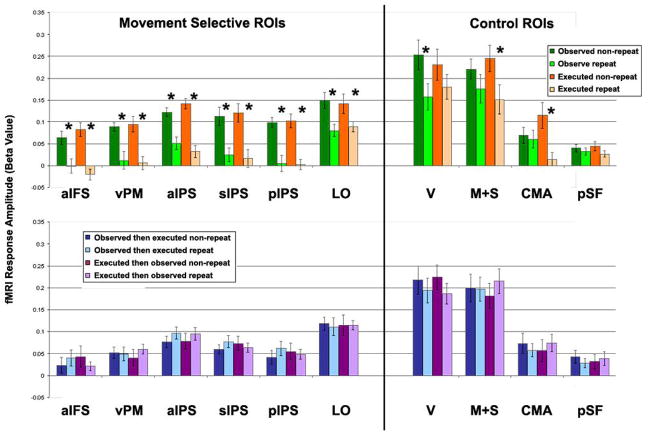
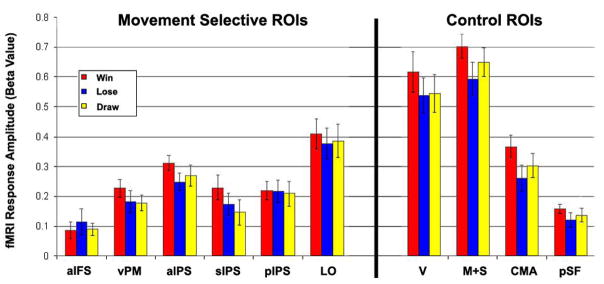
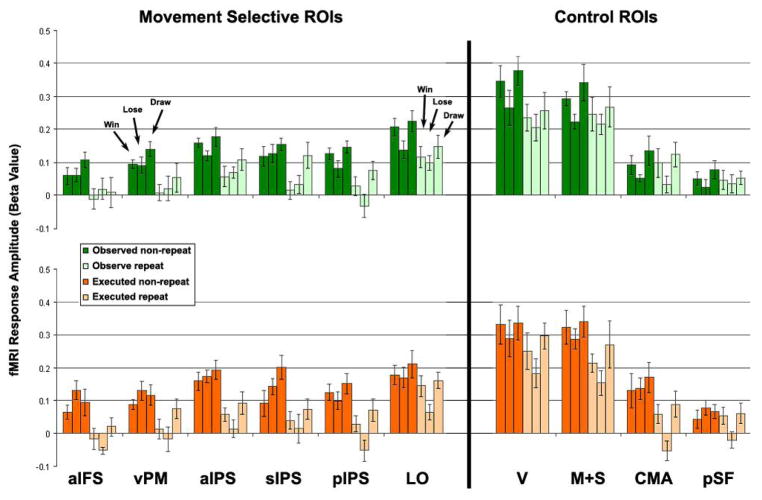
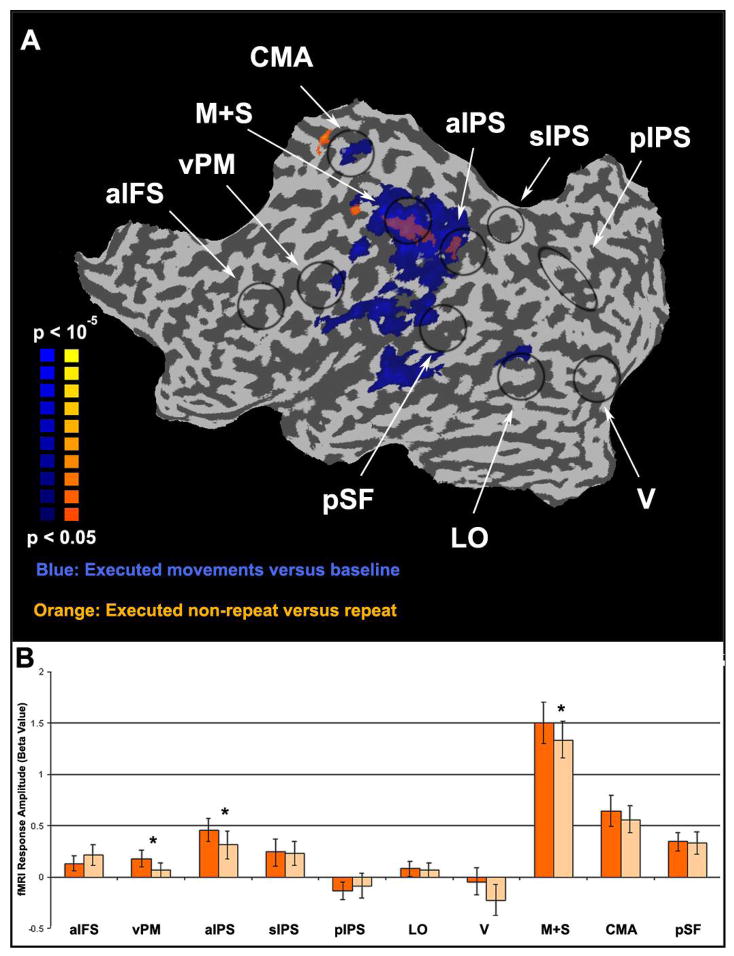
When observing a particular movement a subset of movement-selective visual and visuomotor neurons are active in the observer's brain, forming a representation of the observed movement. Similarly, when executing a movement a subset of movement-selective motor and visuomotor neurons are active, forming a representation of the executed movement. In this study we used an fMRI-adaptation protocol to assess cortical response selectivity to observed and executed movements simultaneously. Subjects freely played the rock-paper-scissors game against a videotaped opponent, sometimes repeatedly observing or executing the same movement on subsequent trials. Numerous brain areas exhibited adaptation (repetition suppression) during either repeated observations or repeated executions of the same movement. A subset of areas exhibited an overlap of both effects, containing neurons with selective responses for both executed and observed movements. We describe the function of these movement representation areas in the context of the human mirror system, which is expected to respond selectively to both observed and executed movements.
Figures

References
-
- Arbib MA, Mundhenk TN. Schizophrenia and the mirror system: an essay. Neuropsychologia. 2005;43:268–280. - PubMed
-
- Astafiev SV, Stanley CM, Shulman GL, Corbetta M. Extrastriate body area in human occipital cortex responds to the performance of motor actions. Nat Neurosci. 2004;7:542–548. - PubMed
-
- Avidan G, Hasson U, Hendler T, Zohary E, Malach R. Analysis of the neuronal selectivity underlying low fMRI signals. Curr Biol. 2002;12:964–972. - PubMed
-
- Blakemore SJ, Bristow D, Bird G, Frith C, Ward J. Somatosensory activations during the observation of touch and a case of vision-touch synaesthesia. Brain. 2005;128:1571–1583. - PubMed
Publication types
MeSH terms
Grants and funding
LinkOut - more resources
Full Text Sources
