


Aneuploidy and DNA replication in the normal human brain and Alzheimer's disease
- PMID: 17596434
- PMCID: PMC6672221
- DOI: 10.1523/JNEUROSCI.0379-07.2007
Aneuploidy and DNA replication in the normal human brain and Alzheimer's disease
Abstract
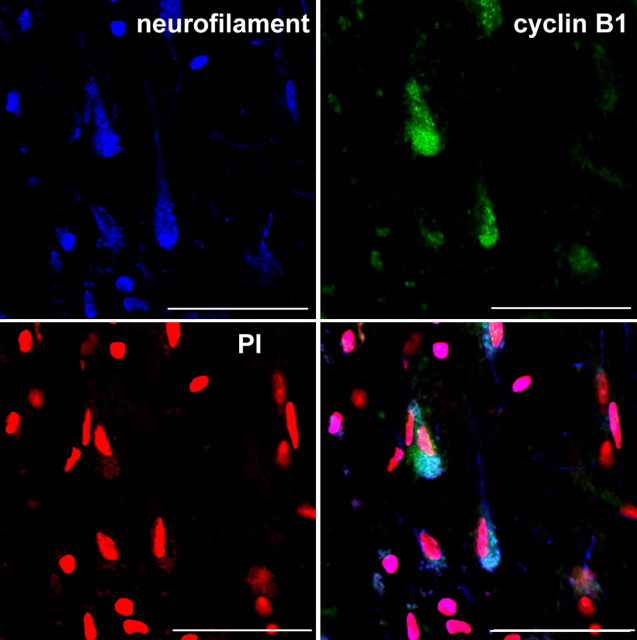
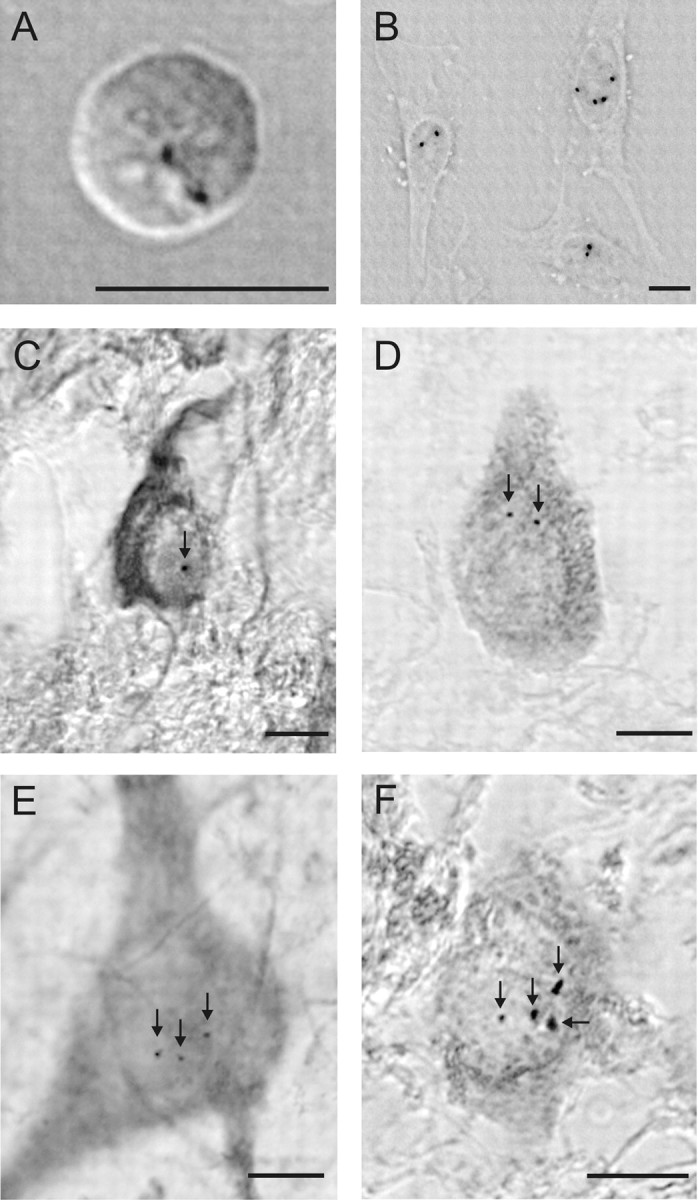
Reactivation of the cell cycle, including DNA replication, might play a major role in Alzheimer's disease (AD). A more than diploid DNA content in differentiated neurons might alternatively result from chromosome mis-segregation during mitosis in neuronal progenitor cells. It was our objective to distinguish between these two mechanisms for aneuploidy and to provide evidence for a functional cell cycle in AD. Using slide-based cytometry, chromogenic in situ hybridization, and PCR amplification of alu-repeats, we quantified the DNA amount of identified cortical neurons in normal human brain and AD and analyzed the link between a tetraploid DNA content and expression of the early mitotic marker cyclin B1. In the normal brain, the number of neurons with a more than diploid content amounts to approximately 10%. Less than 1% of neurons contains a tetraploid DNA content. These neurons do not express cyclin B1, most likely representing constitutional tetraploidy. This population of cyclin B1-negative tetraploid neurons, at a reduced number, is also present in AD. In addition, a population of cyclin B1-positive tetraploid neurons of approximately 2% of all neurons was observed in AD. Our results indicate that at least two different mechanisms need to be distinguished giving rise to a tetraploid DNA content in the adult brain. Constitutional aneuploidy in differentiated neurons might be more frequent than previously thought. It is, however, not elevated in AD. In addition, in AD some neurons have re-entered the cell cycle and entirely passed through a functional interphase with a complete DNA replication.
Figures




References
-
- Arendt T. Alzheimer's disease as a disorder of mechanisms underlying structural brain self-organization. Neuroscience. 2001;102:723–765. - PubMed
-
- Arendt T, Rodel L, Gartner U, Holzer M. Expression of the cyclin-dependent kinase inhibitor p16 in Alzheimer's disease. NeuroReport. 1996;7:3047–3049. - PubMed
-
- Arendt T, Holzer M, Gartner U. Neuronal expression of cycline dependent kinase inhibitors of the INK4 family in Alzheimer's disease. J Neural Transm. 1998;105:949–960. - PubMed
-
- Arendt T, Holzer M, Stobe A, Gartner U, Luth HJ, Bruckner MK, Ueberham U. Activated mitogenic signaling induces a process of dedifferentiation in Alzheimer's disease that eventually results in cell death. Ann NY Acad Sci. 2000;920:249–255. - PubMed
-
- Batzer MA, Deininger PL. Alu repeats and human genomic diversity. Nat Rev Genet. 2002;3:370–379. - PubMed
Publication types
MeSH terms
Substances
LinkOut - more resources
Full Text Sources
Other Literature Sources
Medical
Miscellaneous
