


Interfacing neurons with carbon nanotubes: electrical signal transfer and synaptic stimulation in cultured brain circuits
- PMID: 17596441
- PMCID: PMC6672220
- DOI: 10.1523/JNEUROSCI.1051-07.2007
Interfacing neurons with carbon nanotubes: electrical signal transfer and synaptic stimulation in cultured brain circuits
Abstract
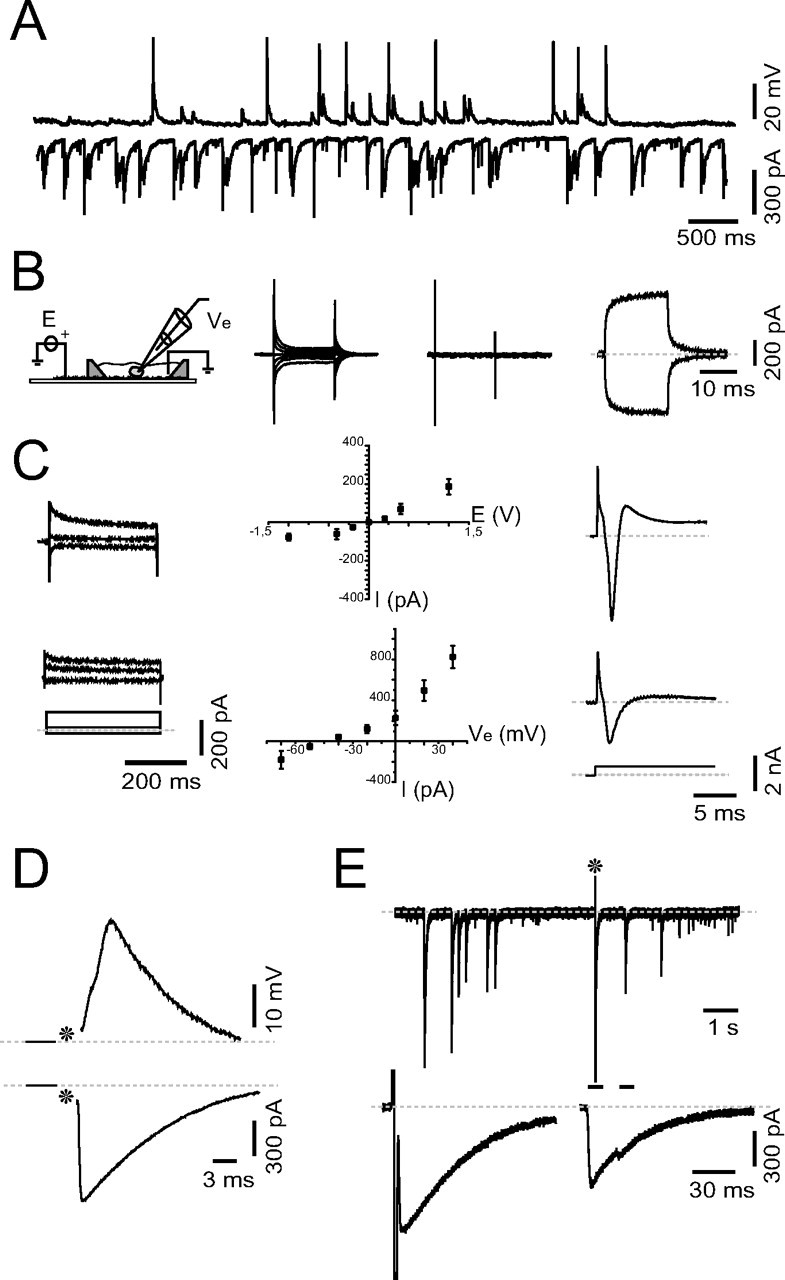
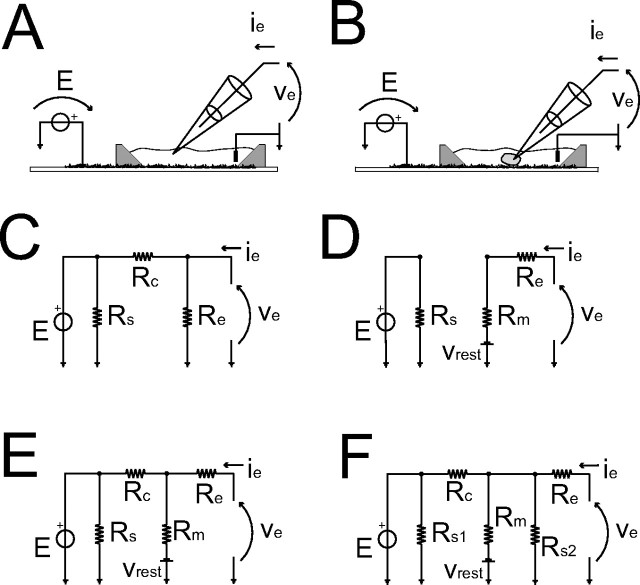
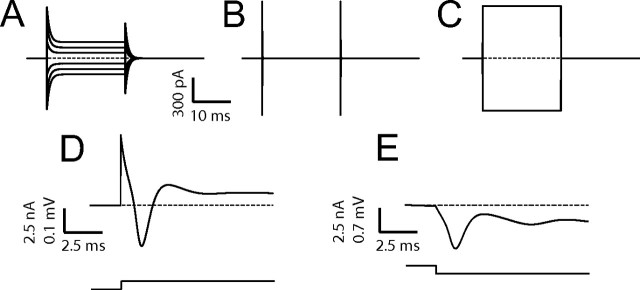
The unique properties of single-wall carbon nanotubes (SWNTs) and the application of nanotechnology to the nervous system may have a tremendous impact in the future developments of microsystems for neural prosthetics as well as immediate benefits for basic research. Despite increasing interest in neuroscience nanotechnologies, little is known about the electrical interactions between nanomaterials and neurons. We developed an integrated SWNT-neuron system to test whether electrical stimulation delivered via SWNT can induce neuronal signaling. To that aim, hippocampal cells were grown on pure SWNT substrates and patch clamped. We compared neuronal responses to voltage steps delivered either via conductive SWNT substrates or via the patch pipette. Our experimental results, supported by mathematical models to describe the electrical interactions occurring in SWNT-neuron hybrid systems, clearly indicate that SWNTs can directly stimulate brain circuit activity.
Figures
References
-
- Arancio O, Kandel ER, Hawkins RD. Activity-dependent long-term enhancement of transmitter release by presynaptic 3′,5′-cyclic-GMP in cultured hippocampal neurons. Nature. 1995;376:74–80. - PubMed
-
- Benabid AL, Wallace B, Mitrofanis J, Xia C, Piallat B, Fraix V, Batir A, Krack P, Pollak P, Berger F. Therapeutic electrical stimulation of the central nervous system. C R Biol. 2005;328:177–186. - PubMed
-
- Fromherz P. Electrical interfacing of nerve cells and semiconductor chips. Chemphyschem. 2002;3:276–284. - PubMed
Publication types
MeSH terms
Substances
LinkOut - more resources
Full Text Sources
Other Literature Sources
