Comparative Study
doi: 10.2105/AJPH.2006.101071.
Epub 2007 Jun 28.
Implications of the normative fallacy in young adult smokers aged 19-24 years
Affiliations
- PMID: 17600252
- PMCID: PMC1931445
- DOI: 10.2105/AJPH.2006.101071
Item in Clipboard
Comparative Study
Implications of the normative fallacy in young adult smokers aged 19-24 years
Am J Public Health.
2007 Aug.
Erratum in
- Am J Public Health. 2007 Dec;97(12):2121
Abstract
We used a random-digit-dialed survey of 434 smokers to demonstrate that approximately three quarters of young adult (aged 19-24 years) smokers overestimated by 20% or more the proportion of their peers who smoked. The effect of this normative fallacy was significantly greater in young adult smokers than in smokers aged 25 years or older. Because of the strength of this false consensus effect in young adult smokers, normative feedback interventions might be especially effective in this age group.
Figures
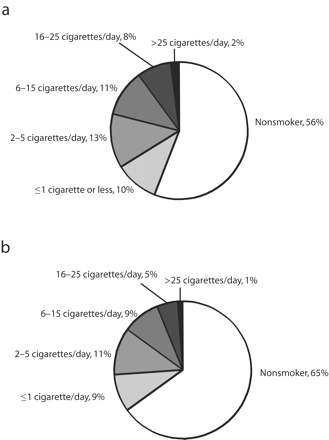
Example of a normative feedback graphic for use with young adult smokers showing actual smoking rates of young adult smokers aged 25–29 years for (a) men and (b) women. Source. From reference .
References
-
- Botvin GJ, Botvin EM, Baker E, Dusenbury L, Goldberg CJ. The false consensus effect: predicting adolescents’ tobacco use from normative expectations. Psychol Rep. 1992;70:171–178. - PubMed
-
- Stewart-Knox BJ, Sittlington J, Rugkasa J, Harrisson S, Treacy M, Abaunza PS. Smoking and peer groups: results from a longitudinal qualitative study of young people in Northern Ireland. Br J Soc Psychol. 2005;44(Pt 3):397–414. - PubMed
-
- Wiium N, Torsheim T, Wold B. Normative processes and adolescents’ smoking behaviour in Norway: a multilevel analysis. Soc Sci Med. 2006;62: 1810–1818. - PubMed
-
- Lai MK, Ho SY, Lam TH. Perceived peer smoking prevalence and its association with smoking behaviours and intentions in Hong Kong Chinese adolescents. Addiction. 2004;99:1195–1205. - PubMed
-
- Gillmore MR, Wells EA, Simpson EE, et al. Children’s beliefs about smoking. Nicotine Tob Res. 2002;4: 177–183. - PubMed
Publication types
MeSH terms
LinkOut - more resources
Full Text Sources