


TGF-beta1 stimulates human AT1 receptor expression in lung fibroblasts by cross talk between the Smad, p38 MAPK, JNK, and PI3K signaling pathways
- PMID: 17601799
- PMCID: PMC2413071
- DOI: 10.1152/ajplung.00099.2007
TGF-beta1 stimulates human AT1 receptor expression in lung fibroblasts by cross talk between the Smad, p38 MAPK, JNK, and PI3K signaling pathways
Retraction in
-
Retraction.Am J Physiol Lung Cell Mol Physiol. 2012 Apr 1;302(7):L719. doi: 10.1152/ajplung.zh5-6097-retr.2012. Am J Physiol Lung Cell Mol Physiol. 2012. PMID: 22467678 Free PMC article. No abstract available.
Abstract
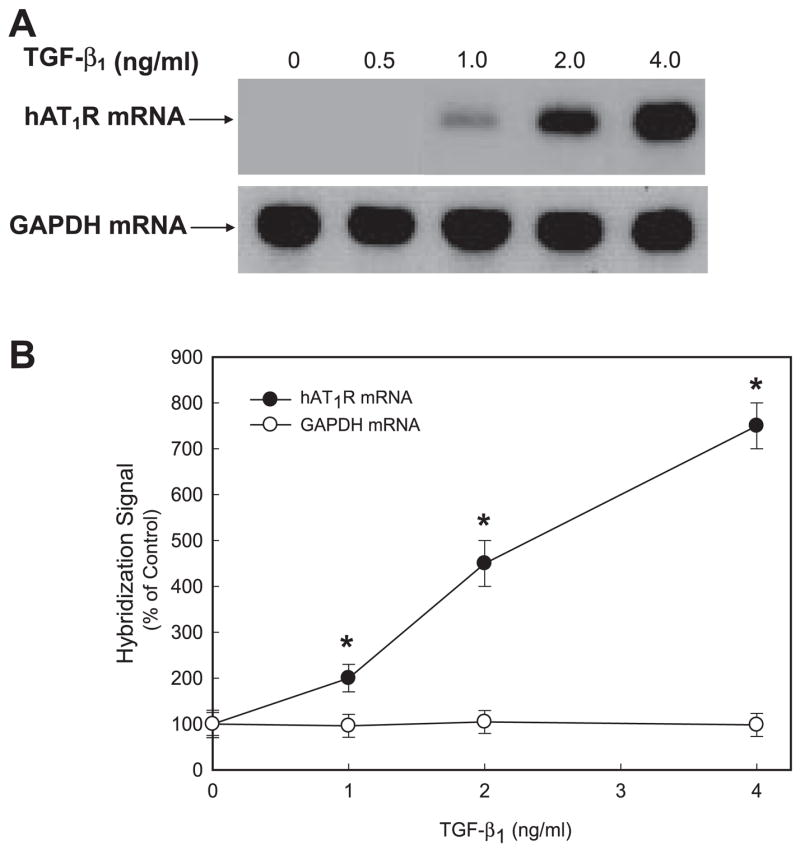
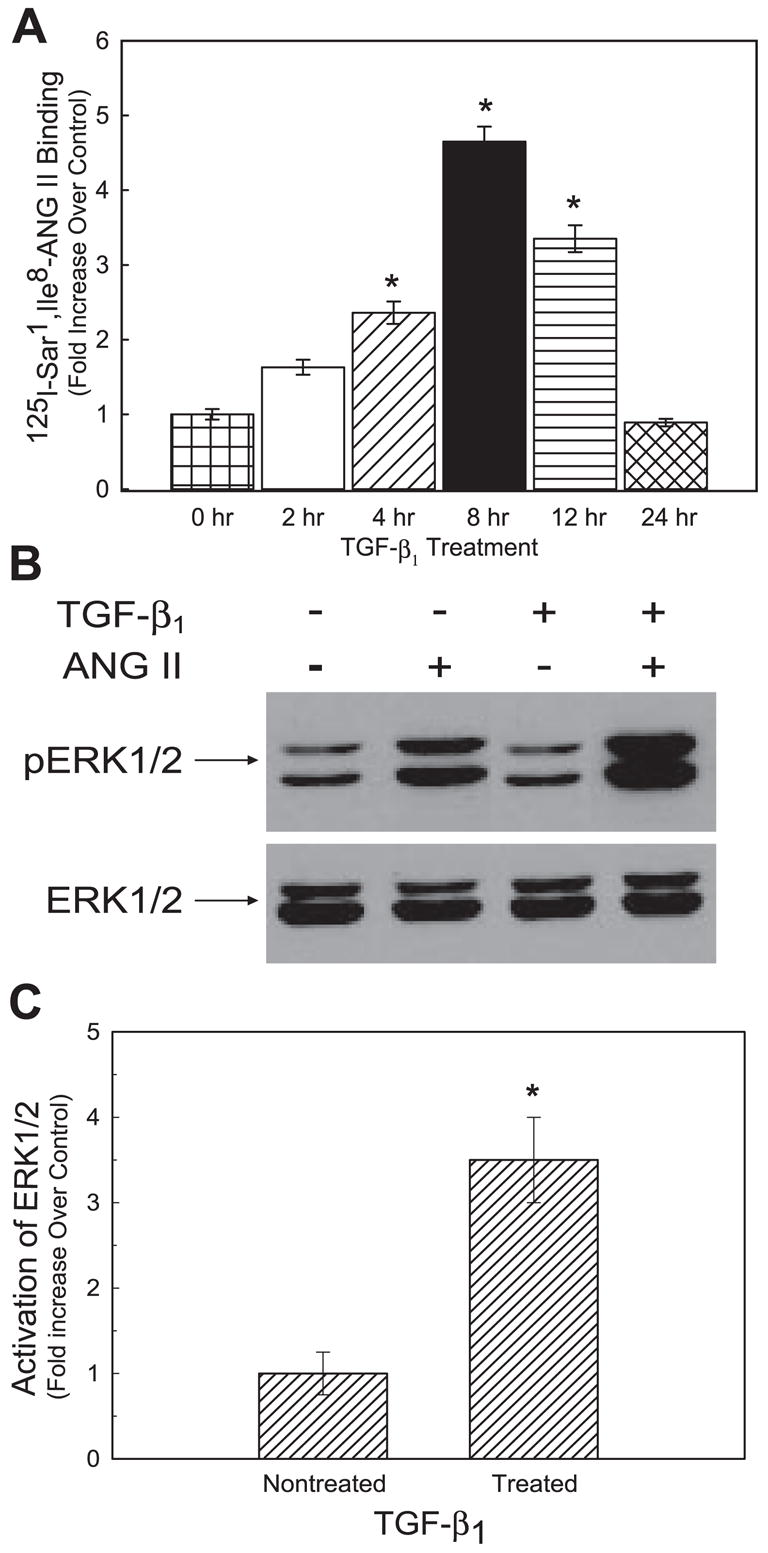
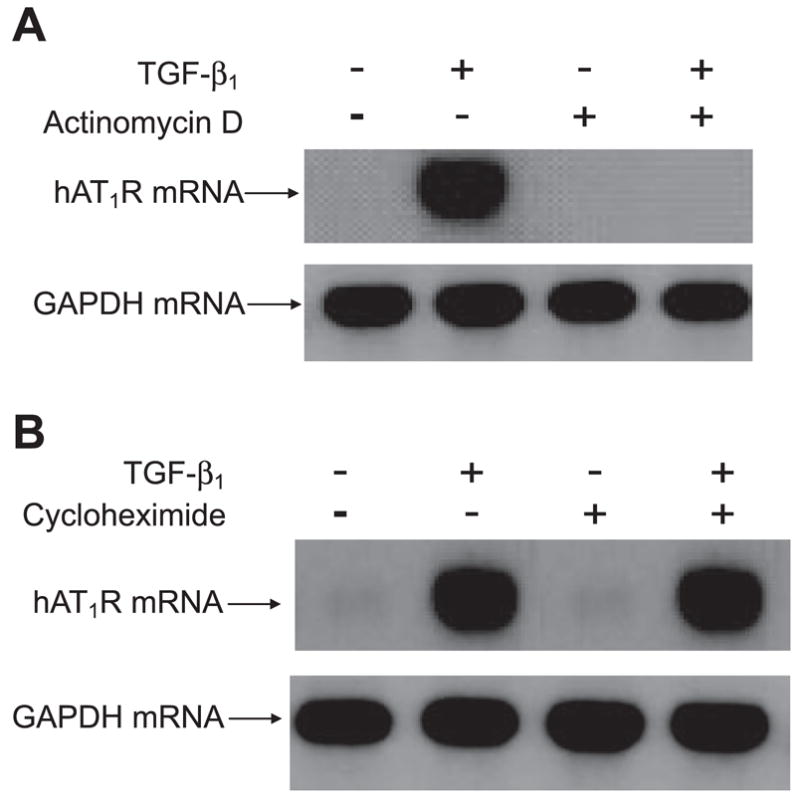
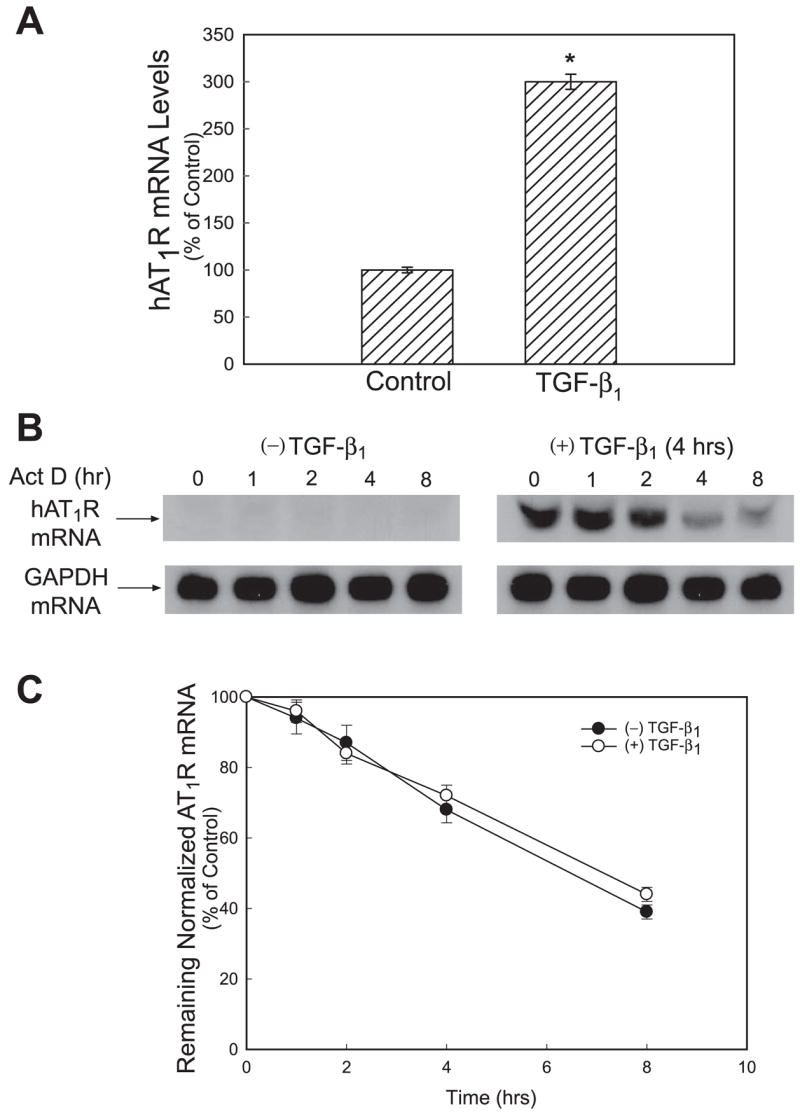
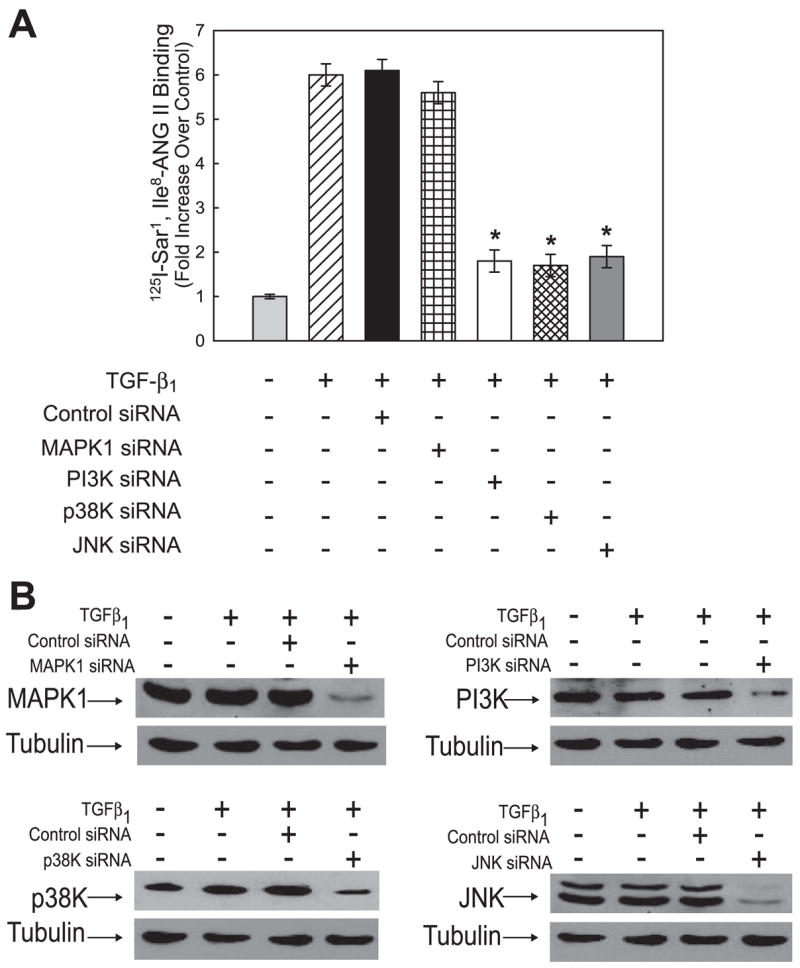
Both angiotensin II (ANG II) and transforming growth factor-beta1 (TGF-beta1) are thought to be involved in mediating pulmonary fibrosis. Interactions between the renin-angiotensin system (RAS) and TGF-beta1 have been well documented, with most studies describing the effect of ANG II on TGF-beta1 expression. However, recent gene expression profiling experiments demonstrated that the angiotensin II type 1 receptor (AT(1)R) gene was a novel TGF-beta1 target in human adult lung fibroblasts. In this report, we show that TGF-beta1 augments human AT(1)R (hAT(1)R) steady-state mRNA and protein levels in a dose- and time-dependent manner in primary human fetal pulmonary fibroblasts (hPFBs). Nuclear run-on experiments demonstrate that TGF-beta1 transcriptionally activates the hAT(1)R gene and does not influence hAT(1)R mRNA stability. Pharmacological inhibitors and specific siRNA knockdown experiments demonstrate that the TGF-beta1 type 1 receptor (TbetaRI/ALK5), Smad2/3, and Smad4 are essential for TGF-beta1-stimulated hAT(1)R expression. Additional pharmacological inhibitor and small interference RNA experiments also demonstrated that p38 MAPK, JNK, and phosphatidylinositol 3-kinase (PI3K) signaling pathways are also involved in the TGF-beta1-stimulated increase in hAT(1)R density. Together, our results suggest an important role for cross talk among Smad, p38 MAPK, JNK, and PI3K pathways in mediating the augmented expression of hAT(1)R following TGF-beta1 treatment in hPFB. This study supports the hypothesis that a self-potentiating loop exists between the RAS and the TGF-beta1 signaling pathways and suggests that ANG II and TGF-beta1 may cooperate in the pathogenesis of pulmonary fibrosis. The synergy between these systems may require that both pathways be simultaneously inhibited to treat fibrotic lung disease.
Figures




Comment in
-
Findings of research misconduct.NIH Guide Grants Contracts (Bethesda). 2013 Jan 18:NOT-OD-13-023. NIH Guide Grants Contracts (Bethesda). 2013. PMID: 23367540 Free PMC article. No abstract available.
References
-
- Bakin AV, Tomlinson AK, Bhowmick NA, Moses HL, Arteaga CL. Phosphatidylinositol 3-kinase function is required for transforming growth factor β-mediated epithelial to mesenchymal transition and cell migration. J Biol Chem. 2000;275:36803–36810. - PubMed
-
- Bartram U, Speer CP. The role of transforming growth factor beta in lung development and disease. Chest. 2004;125:754–765. - PubMed
-
- Brezniceanu ML, Wei CC, Zhang SL, Hsieh TJ, Guo DF, Hebert MJ, Ingelfinger JR, Filep JG, Chan JSD. Transforming growth factor-β1 stimulates angiotensinogen gene expression in kidney proximal tubular cells. Kidney Int. 2006;69:1977–1985. - PubMed
-
- Bullock GR, Steyaert I, Bulbe G, Carey RM, Kips J, DePaepe B, Pauwels R, Praet M, Siragy HM, de Gasparo M. Distribution of type-1 and type-2 angiotensin receptors in the normal human lung and in lungs from patients with chronic obstructive pulmonary disease. Histochem Cell Biol. 2001;115:117–124. - PubMed
Publication types
MeSH terms
Substances
Grants and funding
LinkOut - more resources
Full Text Sources
Research Materials
Miscellaneous
