The molecular signature and cis-regulatory architecture of a C. elegans gustatory neuron
- PMID: 17606643
- PMCID: PMC1899474
- DOI: 10.1101/gad.1560107
The molecular signature and cis-regulatory architecture of a C. elegans gustatory neuron
Abstract
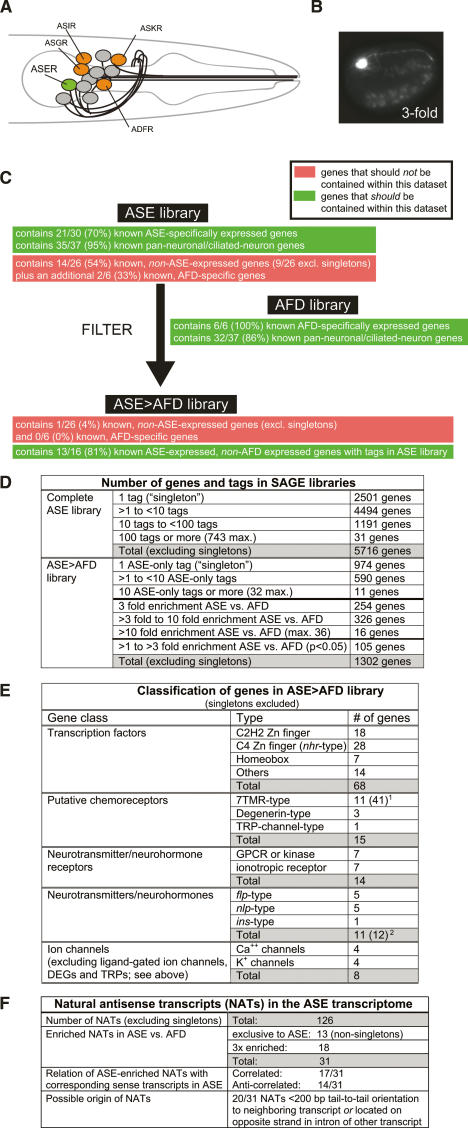
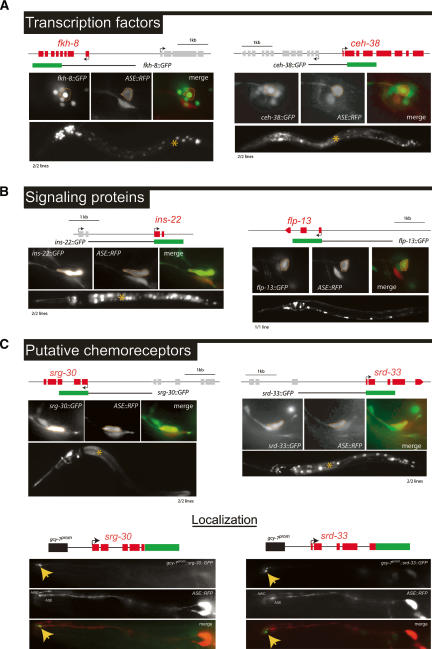
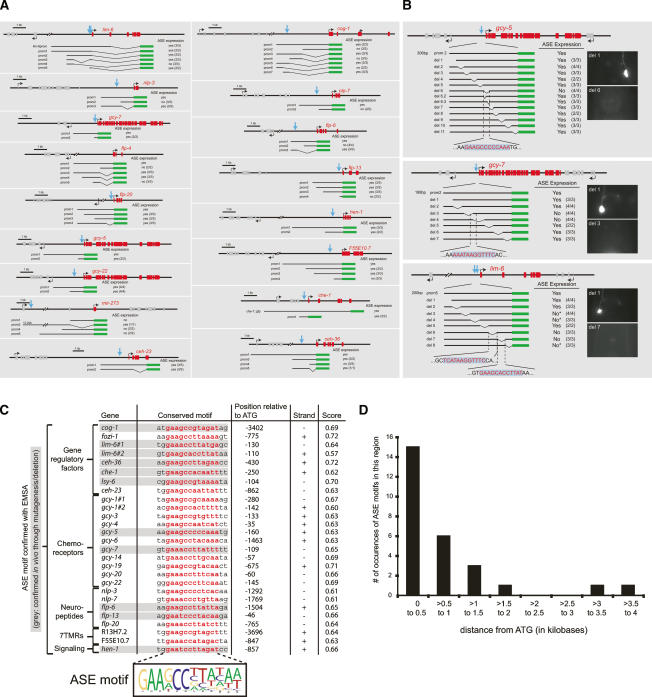
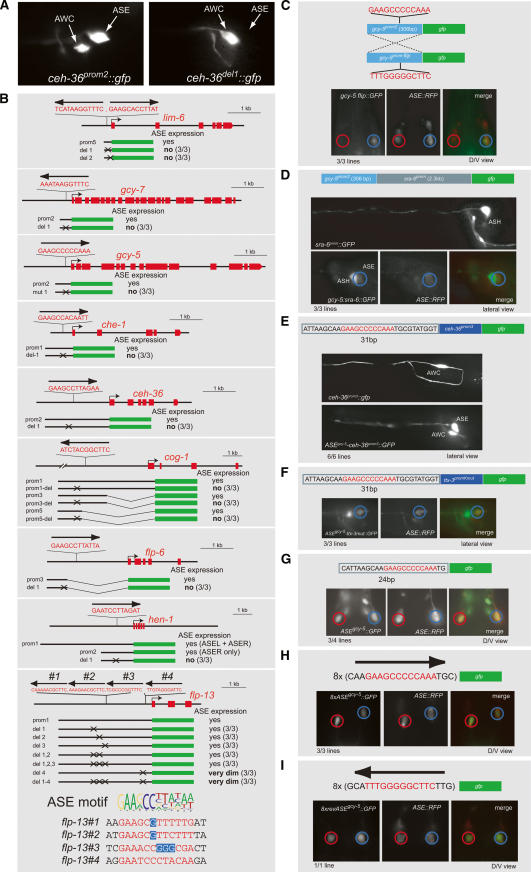
Taste receptor cells constitute a highly specialized cell type that perceives and conveys specific sensory information to the brain. The detailed molecular composition of these cells and the mechanisms that program their fate are, in general, poorly understood. We have generated serial analysis of gene expression (SAGE) libraries from two distinct populations of single, isolated sensory neuron classes, the gustatory neuron class ASE and the thermosensory neuron class AFD, from the nematode Caenorhabditis elegans. By comparing these two libraries, we have identified >1000 genes that define the ASE gustatory neuron class on a molecular level. This set of genes contains determinants of the differentiated state of the ASE neuron, such as a surprisingly complex repertoire of transcription factors (TFs), ion channels, neurotransmitters, and receptors, as well as seven-transmembrane receptor (7TMR)-type putative gustatory receptor genes. Through the in vivo dissection of the cis-regulatory regions of several ASE-expressed genes, we identified a small cis-regulatory motif, the "ASE motif," that is required for the expression of many ASE-expressed genes. We demonstrate that the ASE motif is a binding site for the C2H2 zinc finger TF CHE-1, which is essential for the correct differentiation of the ASE gustatory neuron. Taken together, our results provide a unique view of the molecular landscape of a single neuron type and reveal an important aspect of the regulatory logic for gustatory neuron specification in C. elegans.
Figures
References
-
- Bargmann C.I., Horvitz H.R., Horvitz H.R. Chemosensory neurons with overlapping functions direct chemotaxis to multiple chemicals in C. elegans. Neuron. 1991;7:729–742. - PubMed
-
- Benos P.V., Lapedes A.S., Stormo G.D., Lapedes A.S., Stormo G.D., Stormo G.D. Probabilistic code for DNA recognition by proteins of the EGR family. J. Mol. Biol. 2002;323:701–727. - PubMed
-
- Blackshaw S., Fraioli R.E., Furukawa T., Cepko C.L., Fraioli R.E., Furukawa T., Cepko C.L., Furukawa T., Cepko C.L., Cepko C.L. Comprehensive analysis of photoreceptor gene expression and the identification of candidate retinal disease genes. Cell. 2001;107:579–589. - PubMed
-
- Blacque O.E., Perens E.A., Boroevich K.A., Inglis P.N., Li C., Warner A., Khattra J., Holt R.A., Ou G., Mah A.K., Perens E.A., Boroevich K.A., Inglis P.N., Li C., Warner A., Khattra J., Holt R.A., Ou G., Mah A.K., Boroevich K.A., Inglis P.N., Li C., Warner A., Khattra J., Holt R.A., Ou G., Mah A.K., Inglis P.N., Li C., Warner A., Khattra J., Holt R.A., Ou G., Mah A.K., Li C., Warner A., Khattra J., Holt R.A., Ou G., Mah A.K., Warner A., Khattra J., Holt R.A., Ou G., Mah A.K., Khattra J., Holt R.A., Ou G., Mah A.K., Holt R.A., Ou G., Mah A.K., Ou G., Mah A.K., Mah A.K., et al. Functional genomics of the cilium, a sensory organelle. Curr. Biol. 2005;15:935–941. - PubMed
-
- Branicky R., Hekimi S., Hekimi S. Specification of muscle neurotransmitter sensitivity by a Paired-like homeodomain protein in Caenorhabditis elegans. Development. 2005;132:4999–5009. - PubMed
Publication types
MeSH terms
Substances
Grants and funding
LinkOut - more resources
Full Text Sources
Miscellaneous