


Combined modalities of resistance in an oxaliplatin-resistant human gastric cancer cell line with enhanced sensitivity to 5-fluorouracil
- PMID: 17609664
- PMCID: PMC2360324
- DOI: 10.1038/sj.bjc.6603866
Combined modalities of resistance in an oxaliplatin-resistant human gastric cancer cell line with enhanced sensitivity to 5-fluorouracil
Abstract
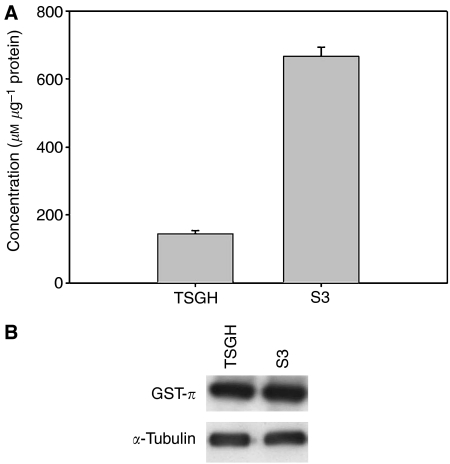
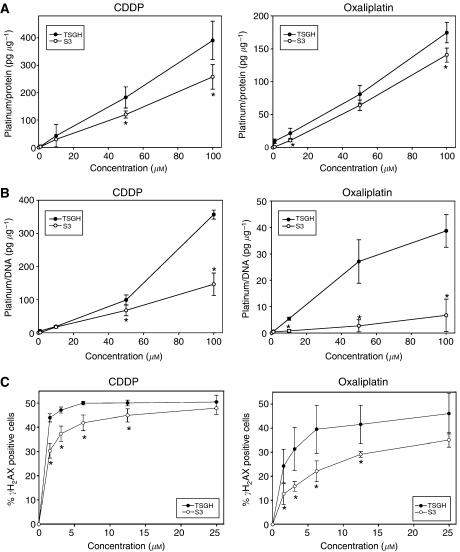
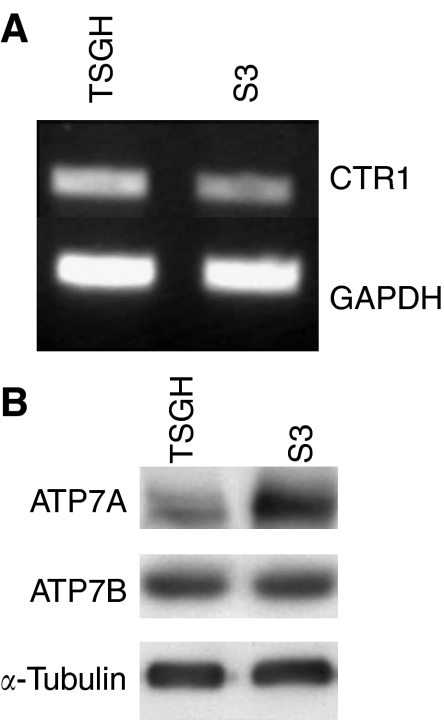
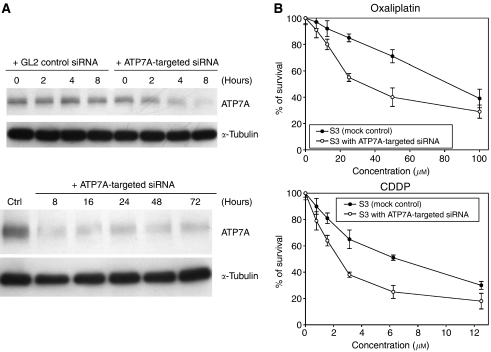
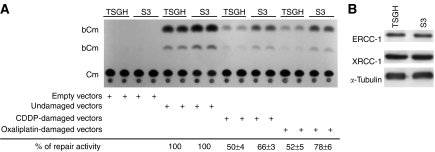
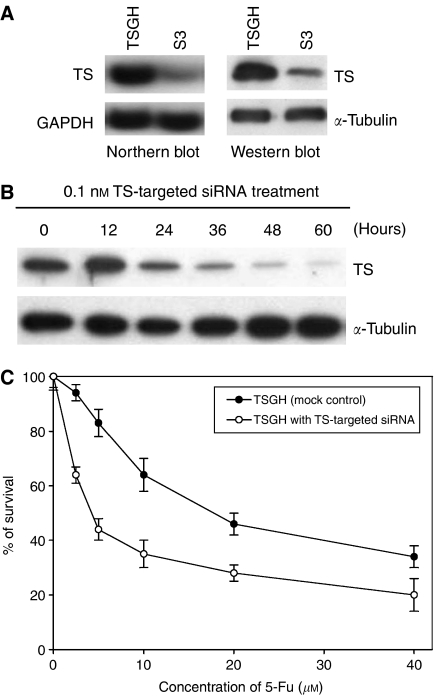
To identify mechanisms underlying oxaliplatin resistance, a subline of the human gastric adenocarcinoma TSGH cell line, S3, was made resistant to oxaliplatin by continuous selection against increasing drug concentrations. Compared with the parental TSGH cells, the S3 subline showed 58-fold resistance to oxaliplatin; it also displayed 11-, 2-, and 4.7-fold resistance to cis-diammine-dichloroplatinum (II) (CDDP), copper sulphate, and arsenic trioxide, respectively. Interestingly, S3 cells were fourfold more susceptible to 5-fluorouracil-induced cytotoxicity due to downregulation of thymidylate synthase. Despite elevated glutathione levels in S3 cells, there was no alteration of resistant phenotype to oxaliplatin or CDDP when cells were co-treated with glutathione-depleting agent, l-buthionine-(S,R)-sulphoximine. Cellular CDDP and oxaliplatin accumulation was decreased in S3 cells. In addition, amounts of oxaliplatin- and CDDP-DNA adducts in S3 cells were about 15 and 40% of those seen with TSGH cells, respectively. Western blot analysis showed increased the expression level of copper transporter ATP7A in S3 cells compared with TSGH cells. Partial reversal of the resistance of S3 cells to oxaliplatin and CDDP was observed by treating cell with ATP7A-targeted siRNA oligonucleotides or P-type ATPase-inhibitor sodium orthovanadate. Besides, host reactivation assay revealed enhanced repair of oxaliplatin- or CDDP-damaged DNA in S3 cells compared with TSGH cells. Together, our results show that the mechanism responsible for oxaliplatin and CDDP resistance in S3 cells is the combination of increased DNA repair and overexpression of ATP7A. Downregulation of thymidylate synthase in S3 cells renders them more susceptible to 5-fluorouracil-induced cytotoxicity. These findings could pave ways for future efforts to overcome oxaliplatin resistance.
Figures
References
-
- Andrews PA, Murphy MP, Howell SB (1985) Differential potentiation of alkylating and platinating agent cytotoxicity in human ovarian carcinoma cells by glutathione depletion. Cancer Res 45: 6250–6253 - PubMed
-
- Banath JP, Olive PL (2003) Expression of phosphorylated histone H2AX as a surrogate of cell killing by drugs that create DNA double-strand breaks. Cancer Res 63: 4347–4350 - PubMed
-
- Cavanna L, Artioli F, Codignola C, Lazzaro A, Rizzi A, Gamboni A, Rota L, Rodino C, Boni F, Iop A, Zaniboni A (2006) Oxaliplatin in combination with 5-fluorouracil (5-FU) and leucovorin (LV) in patients with metastatic gastric cancer (MGC). Am J Clin Oncol 29: 371–375 - PubMed
-
- Cullen KJ, Newkirk KA, Schumaker LM, Aldosari N, Rone JD, Haddad BR (2003) Glutathione S-transferase pi amplification is associated with cisplatin resistance in head and neck squamous cell carcinoma cell lines and primary tumors. Cancer Res 63: 8097–8102 - PubMed
Publication types
MeSH terms
Substances
LinkOut - more resources
Full Text Sources
Medical
