Crystallization and preliminary X-ray diffraction analysis of the hyperthermophilic Sulfolobus solfataricus phosphotriesterase
- PMID: 17620708
- PMCID: PMC2335143
- DOI: 10.1107/S1744309107023512
Crystallization and preliminary X-ray diffraction analysis of the hyperthermophilic Sulfolobus solfataricus phosphotriesterase
Abstract
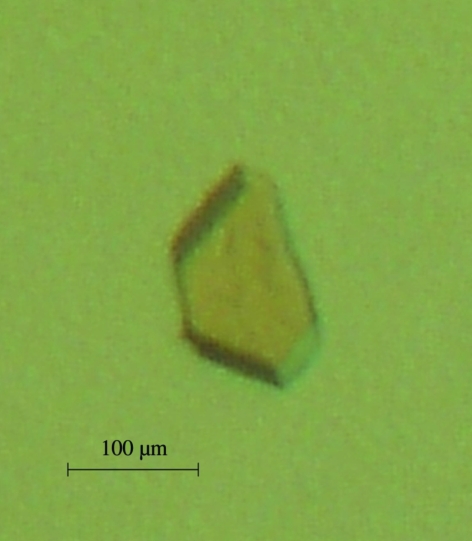
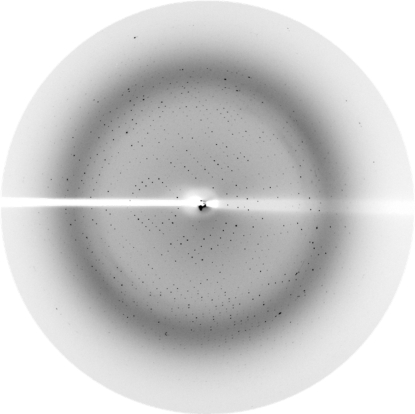
Organophosphates constitute the largest class of insecticides used worldwide and some of them are potent nerve agents. Consequently, organophosphate-degrading enzymes are of paramount interest as they could be used as bioscavengers and biodecontaminants. Phosphotriesterases (PTEs) are capable of hydrolyzing these toxic compounds with high efficiency. A distant and hyperthermophilic representative of the PTE family was cloned from the archeon Sulfolobus solfataricus MT4, overexpressed in Escherichia coli and crystallized; the crystals diffracted to 2.54 A resolution. Owing to its exceptional thermostability, this PTE may be an excellent candidate for obtaining an efficient organophosphate biodecontaminant. Here, the crystallization conditions and data collection for the hyperthermophilic S. solfataricus PTE are reported.
Figures
References
-
- Afriat, L., Roodvelt, C., Manco, G. & Tawfik, D. (2006). Biochemistry, 45, 13677–13686. - PubMed
-
- Aubert, S. D., Li, Y. & Raushel, F. M. (2004). Biochemistry, 43, 5707–5715. - PubMed
-
- Collaborative Computational Project, Number 4 (1994). Acta Cryst. D50, 760–763. - PubMed
-
- Cowtan, K. D. & Zhang, K. Y. (1999). Prog. Biophys. Mol. Biol.72, 245–270. - PubMed
Publication types
MeSH terms
Substances
LinkOut - more resources
Full Text Sources
Other Literature Sources