. 2007 Jul 11;2(7):e589.
doi: 10.1371/journal.pone.0000589.

Transcription factor NF-kappaB is transported to the nucleus via cytoplasmic dynein/dynactin motor complex in hippocampal neurons

Affiliations

Transcription factor NF-kappaB is transported to the nucleus via cytoplasmic dynein/dynactin motor complex in hippocampal neurons

Ilja Mikenberg et al. PLoS One. .

Abstract

Background: Long-term changes in synaptic plasticity require gene transcription, indicating that signals generated at the synapse must be transported to the nucleus. Synaptic activation of hippocampal neurons is known to trigger retrograde transport of transcription factor NF-kappaB. Transcription factors of the NF-kappaB family are widely expressed in the nervous system and regulate expression of several genes involved in neuroplasticity, cell survival, learning and memory.

Principal findings: In this study, we examine the role of the dynein/dynactin motor complex in the cellular mechanism targeting and transporting activated NF-kappaB to the nucleus in response to synaptic stimulation. We demonstrate that overexpression of dynamitin, which is known to dissociate dynein from microtubules, and treatment with microtubule-disrupting drugs inhibits nuclear accumulation of NF-kappaB p65 and reduces NF-kappaB-dependent transcription activity. In this line, we show that p65 is associated with components of the dynein/dynactin complex in vivo and in vitro and that the nuclear localization sequence (NLS) within NF-kappaB p65 is essential for this binding.

Conclusion: This study shows the molecular mechanism for the retrograde transport of activated NF-kappaB from distant synaptic sites towards the nucleus.


Conflict of interest statement

Competing Interests: The authors have declared that no competing interests exist.

Figures

Figure 1
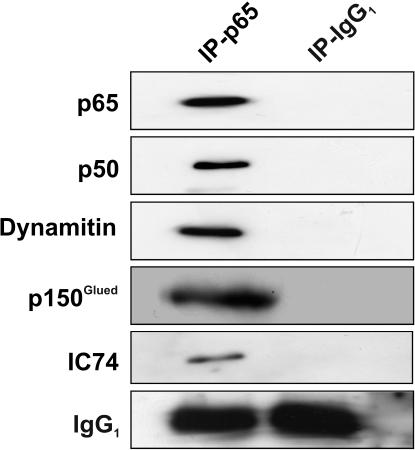
Figure 1. NF-κB exists in a complex with dynein/dynactin in vivo.
NF-κB p65 co-immunoprecipitates with dynactin and cytoplasmic dynein. 10 mg soluble rat brain extract were cross-linked with DSP to stabilize transient protein-protein interactions and subsequent immunoprecipitated with an anti-p65 antibody. Immunoprecipitates were analyzed by western blotting with an anti- NF-κB p65 or NF-κB p50 antibody or with antibodies against dynein intermediate chain (IC 74) or the motor-associated proteins dynamitin and p150Glued. Control IP was done with a non-immune monoclonal antibody.
Figure 2
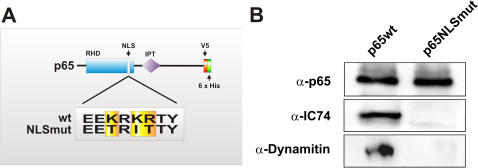
Figure 2. The functional nuclear localization signal (NLS) of p65 is essential for its interaction with dynein/dynactin in vitro.
(A) Nuclear localization signal (NLS) of wild-type NF-κB p65 and its NLS mutant (NLSmut). The NLS of NF-κB p65 consists of a stretch of a basic amino acids, arginines and lysines. The three point mutations were introduced into the NLS (depicted in yellow). The construct was tagged with polyhistidine to enable purification from bacterial extracts and pull-down assays. (B) Polyhistidine-tagged wild-type p65 and p65 with mutant NLS (NLSmut) purified from bacterial extracts were immobilized separately on nickel-coated matrix and incubated with the rat brain extract. The bound material was eluted from the matrices, fractionated by SDS–PAGE and examined by Western blot with anti-IC74 and anti-dynactin p50 antibodies. As expected, wild-type p65 associates with dynein/dynactin in vitro. In contrast, p65 with mutant NLS failed to form this complex.
Figure 3
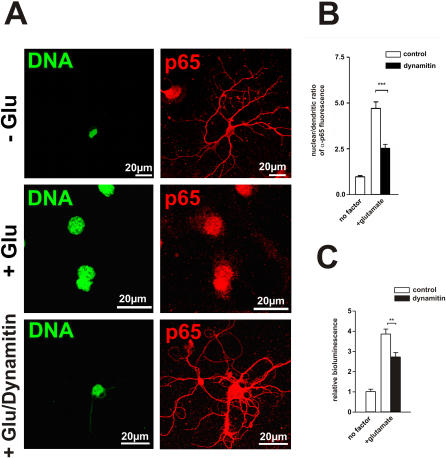
Figure 3. Inhibition of dynein function by overexpression of dynamitin impairs nuclear accumulation of NF-κB and reduces NF-κB-dependent transcription activity.
(A) Cultured hippocampal neurons transfected with dynamitin or mock vector were left untreated or incubated with 300 µM glutamate for 5 min. After 90 min neurons were fixed and analyzed for subcellular NF-κB p65 destribution. Nuclei were stained with SYTOX (green). Anti-p65 immunoreactivity is depicted in red. (B) Quantification of nuclear/dendritic ratio of α-p65 fluorescence in dynamitin-transfected and control-transfected neurons with and without glutamate stimulation. Note that transfection with dynamitin impaired redistribution of NF-κB p65 from distal sites to the nucleus following glutamate stimulation. Fluorescence measurements were made from 20 to30 neurons in each experimental condition. (C) Reporter gene assay showed reduced NF-κB-dependent transcription activity in neurons overexpressing dynamitin.
Figure 4
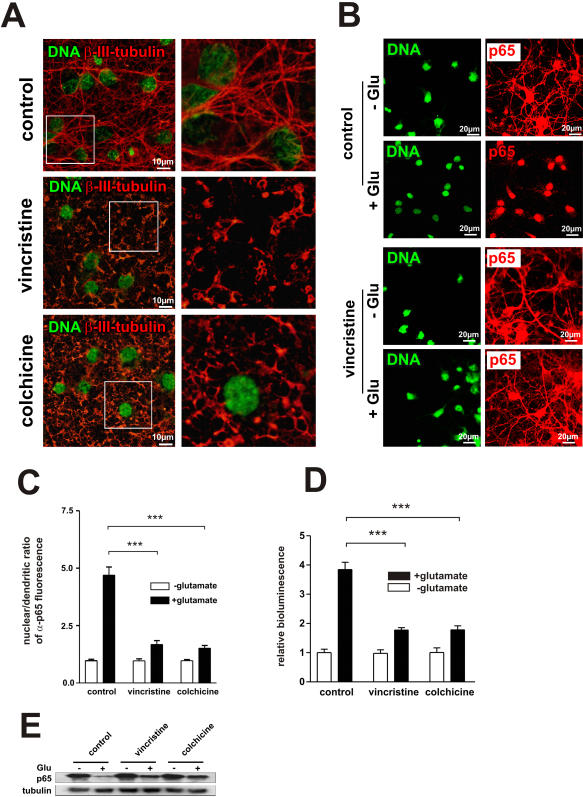
Figure 4. Microtubule-perturbing drugs inhibit neuronal transport of NF-κB.
(A) Effect of microtubule-perturbing drugs on the organization of neuronal microtubule network. Microtubule network was visualized by α−tubulin immunostaining. Treatment of hippocampal neurons with 200 nM colchicine or 100 nM vincristine resulted in efficient depolymerisation, as shown by the diffuse tubulin staining and the loss of the well-organized microtubule patterns seen in untreated cells.(B) Hippocampal neurons treated with 300 µM glutamate for 5 min, either alone or after pre-treatment with 200 nM colchicine or 100 nM vincristine for 30 min were fixed (90 min after glutamate exposure) and visualised by SYTOX nuclear staining (green) and anti-NF-κB p65 immunofluorescence (red) to monitor neuronal transport of NF-κB (C) Quantification of nuclear/dendritic ratio of α-p65 fluorescence in neurons with functional or disrupted microtubules. Note that microtubule-perturbing drugs impaired dendritic to nuclear redistribution of NF-κB p65 after glutamate stimulation. (D) Reporter gene assay showed reduced NF-κB-dependent transcription activity in neurons with not functional microtubules. (E) In order to confirm the data obtained by microscopy, the subcellular localization of p65 was examined by cell fractionation and Western blotting. 250 µg of soluble protein from cytoplasmic extracts were immunoblotted for p65 protein level. In agreement, with the above experiments, pre-treatment with vincristine or colchicines before exposure to glutamate resulted in reduced relocation of p65 from cytoplasm to the nucleus.
Figure 5
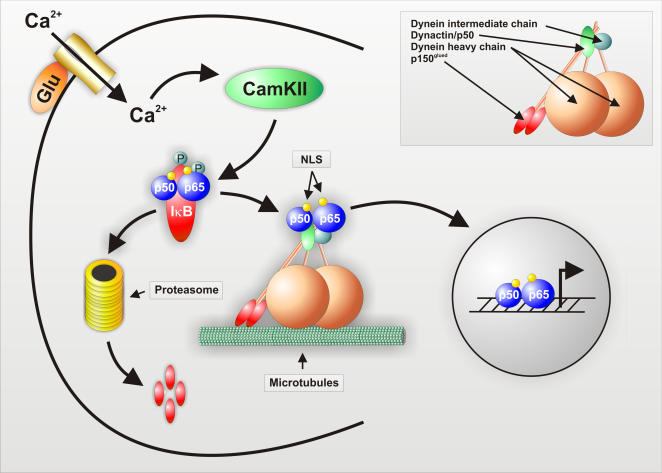
Figure 5. Schematic presentation for the NF-κB activation by synaptic activity and its dynein-mediated retrograde transport to the nucleus along microtubules.
Upon stimulation of primary neurons with glutamate, different signalling pathways (represented here by CaMKII) originating from intracellular Ca2+ elevation induces phosphorylation of IκB, which subsequently leads to its degradation within the proteasome. Thereby, the nuclear localisation signals (NLS) of NF-κB subunits are unmasked, allowing its binding to importin α/β heterodimer. This complex is then transported retrogradely towards the nucleus via an association with motor protein dynein/dynactin, where it activates NF-κB target genes.

References

    1. Bonizzi G, Karin M. The two NF-kappaB activation pathways and their role in innate and adaptive immunity. Trends Immunol. 2004;25:280–288. - PubMed
    1. Ghosh S, Karin M. Missing pieces in the NF-kappaB puzzle. Cell 109 Suppl. 2002:S81–96. - PubMed
    1. Karin M, Lin A. NF-kappaB at the crossroads of life and death. Nat Immunol. 2002;3:221–227. - PubMed
    1. Li Q, Verma IM. NF-kappaB regulation in the immune system. Nat Rev Immunol. 2002;2:725–734. - PubMed
    1. Dingwall C, Laskey RA. Nuclear targeting sequences–a consensus? Trends Biochem Sci. 1991;16:478–481. - PubMed

Publication types

MeSH terms