


Aromatase inhibition by bioavailable methylated flavones
- PMID: 17624765
- PMCID: PMC2024906
- DOI: 10.1016/j.jsbmb.2007.01.006
Aromatase inhibition by bioavailable methylated flavones
Abstract
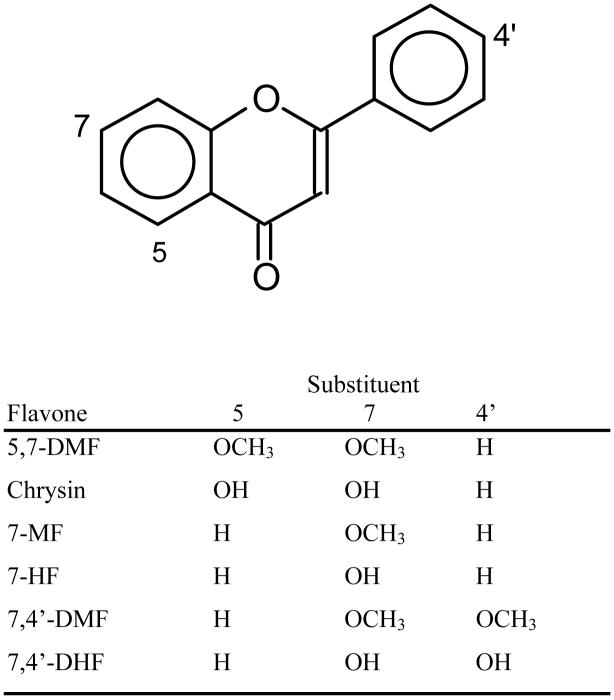
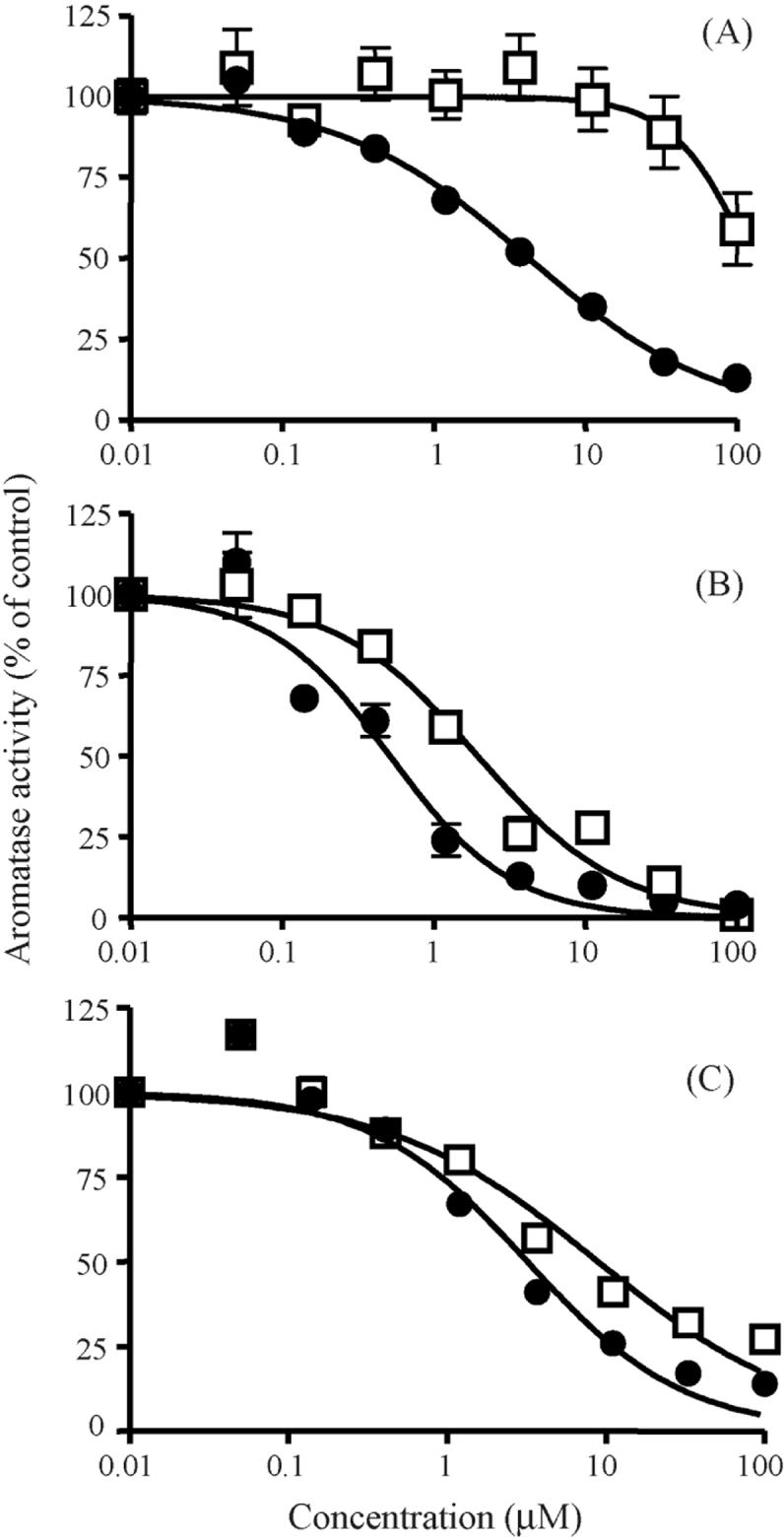
Previous studies have shown chrysin, 7-hydroxyflavone and 7,4'-dihydroxyflavone to be the most potent flavonoid inhibitors of aromatase. However, very poor oral bioavailability is a major limitation for the successful use of dietary flavonoids as chemopreventive agents. We have recently shown that methylated flavones, including 5,7-dimethoxyflavone, 7-methoxyflavone and 7,4'-dimethoxyflavone, are much more resistant to metabolism than their unmethylated analogs and have much higher intestinal absorption. In this study, we examined these fully methylated flavones as potential aromatase inhibitors for the prevention and/or treatment of hormone-dependent cancers. Whereas 5,7-dimethoxyflavone had poor effect compared to its unmethylated analog chrysin, 7-methoxyflavone and 7,4'-dimethoxyflavone were almost equipotent to their unmethylated analogs with IC(50) values of 2-9 microM. Thus, some fully methylated flavones appear to have great potential as cancer chemopreventive/chemotherapeutic agents.
Figures
References
-
- Brueggemeier RW, Hackett JC, Diaz-Cruz ES. Aromatase inhibitors in the treatment of breast cancer. Endocr. Rev. 2005;26:331–45. - PubMed
-
- Weinberg OK, Marquez-Garban DC, Fishbein MC, Goodglick L, Garban HJ, Dubinett SM, Pietras RJ. Aromatase inhibitors in human lung cancer therapy. Cancer Res. 2005;65:11287–91. - PubMed
-
- Gambelunghe C, Rossi R, Sommavilla M, Ferranti C, Rossi R, Ciculi C, Gizzi S, Micheletti A, Rufini S. Effects of chrysin on urinary testosterone levels in human males. J. Med. Food. 2003;6:387–90. - PubMed
Publication types
MeSH terms
Substances
Grants and funding
LinkOut - more resources
Full Text Sources
