The calcium binding protein, S100B, is increased in the amniotic fluid of women with intra-amniotic infection/inflammation and preterm labor with intact or ruptured membranes
- PMID: 17624933
- PMCID: PMC2587429
- DOI: 10.1515/JPM.2007.101
The calcium binding protein, S100B, is increased in the amniotic fluid of women with intra-amniotic infection/inflammation and preterm labor with intact or ruptured membranes
Abstract
Objective: S100B is produced by glia of the central and peripheral nervous systems and is considered a marker of neurologic injury in the perinatal period. Indeed, increased neonatal urine S100B concentration is associated with adverse neurological outcomes including intraventricular hemorrhage and hypoxic-ischemic encephalopathy, while elevated adult serum concentrations are associated with infectious diseases/sepsis. The objective of this study was to determine whether amniotic fluid (AF) S100B concentrations change with advancing gestational age and intra-amniotic infection (IAI).
Study design: S100B concentration was measured in the AF of women in midtrimester, at term, and in pregnancies with preterm labor and intact membranes (PTL) or preterm premature rupture of membranes (PPROM), with and without IAI. Placental pathology was performed and neonatal outcomes were analyzed.
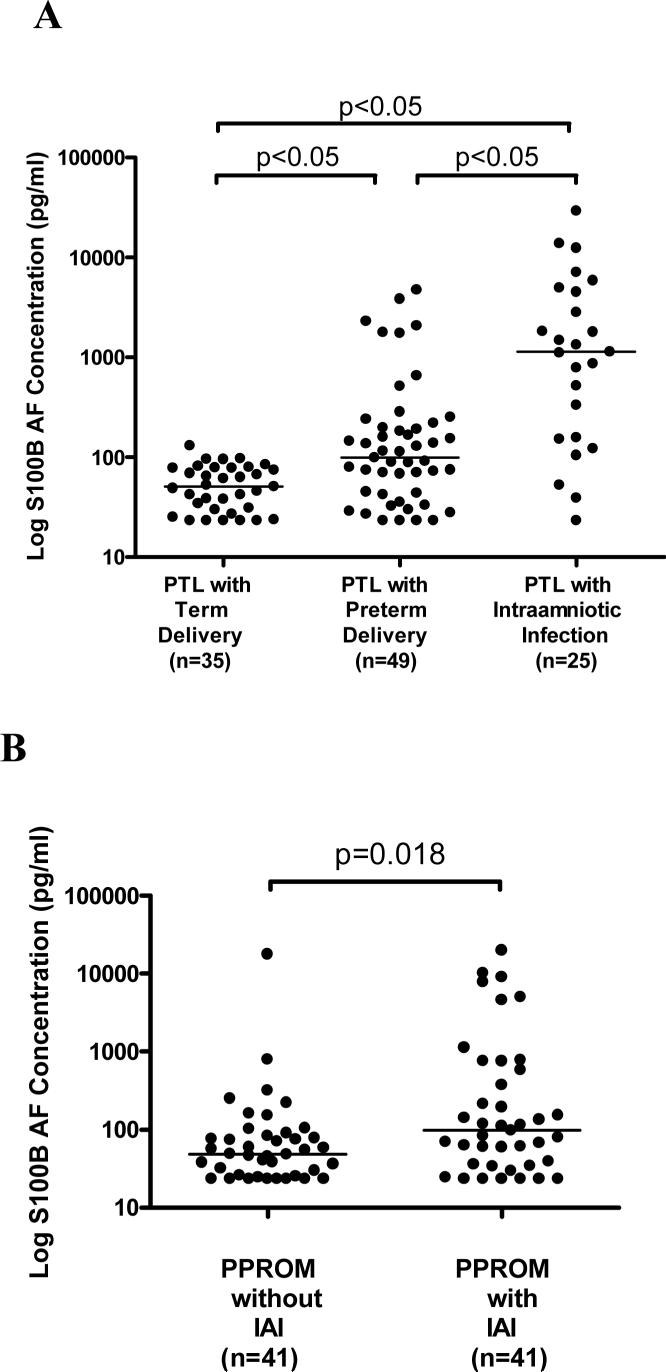
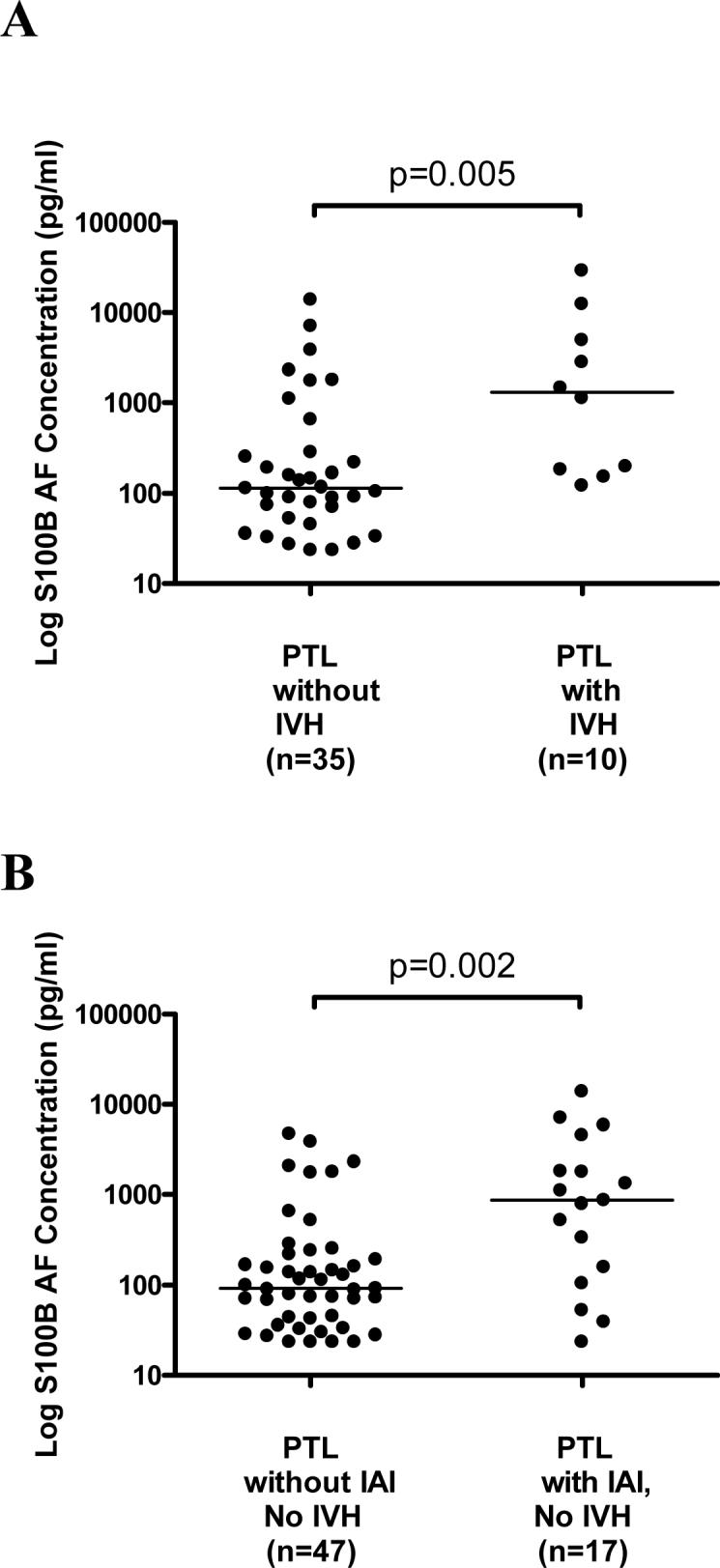
Results: (1) AF S100B concentration did not change during gestation; (2) patients with IAI had significantly higher AF S100B concentration than those without IAI following an episode of PTL or PPROM and; (3) neonates who had morbidity/mortality had had an elevated AF S100B concentration; however, this could be explained by the association with intra-amniotic infection/inflammation. Thus, AF S100B concentration was not an independent predictor of neonatal morbidity or fetal/neonatal death.
Conclusions: An elevated concentration of AF S100B may reflect intra-amniotic infection/inflammation and not necessarily fetal neurologic damage.
Figures
References
-
- Anderson RE, Hansson LO, Nilsson O, jlai-Merzoug R, Settergren G. High serum S100B levels for trauma patients without head injuries. Neurosurgery. 2001;48:1255–1258. - PubMed
-
- Becker T, Gerke V, Kube E, Weber K. S100P, a novel Ca(2+)-binding protein from human placenta. cDNA cloning, recombinant protein expression and Ca2+ binding properties. Eur J Biochem. 1992 Jul 15;207:541–547. 1992. - PubMed
-
- Bertsch T, Casarin W, Kretschmar M, Zimmer W, Walter S, Sommer C, et al. Protein S-100B: a serum marker for ischemic and infectious injury of cerebral tissue. Clin Chem Lab Med. 2001;39:319–323. - PubMed
-
- Florio P, Marinoni E, Di IR, Bashir M, Ciotti S, Sacchi R, et al. Urinary S100B protein concentrations are increased in intrauterine growth-retarded newborns. Pediatrics. 2006;118:e747–e754. - PubMed
-
- Florio P, Michetti F, Bruschettini M, Lituania M, Bruschettini P, Severi FM, et al. Amniotic fluid S100B protein in mid-gestation and intrauterine fetal death. Lancet. 2004;364:270–272. - PubMed
Publication types
MeSH terms
Substances
Grants and funding
LinkOut - more resources
Full Text Sources
Other Literature Sources
Medical
Miscellaneous