


Pharmacological actions of NGB 2904, a selective dopamine D3 receptor antagonist, in animal models of drug addiction
- PMID: 17627675
- PMCID: PMC3771110
- DOI: 10.1111/j.1527-3458.2007.00013.x
Pharmacological actions of NGB 2904, a selective dopamine D3 receptor antagonist, in animal models of drug addiction
Abstract
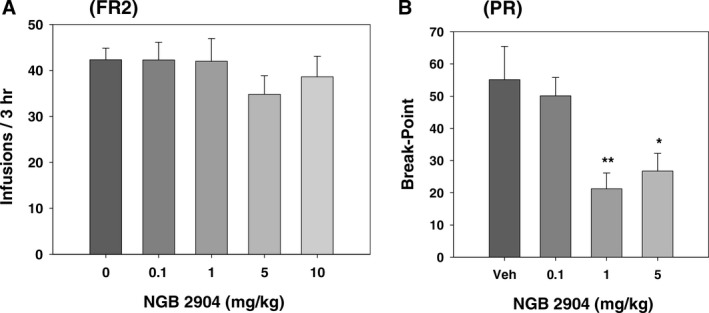
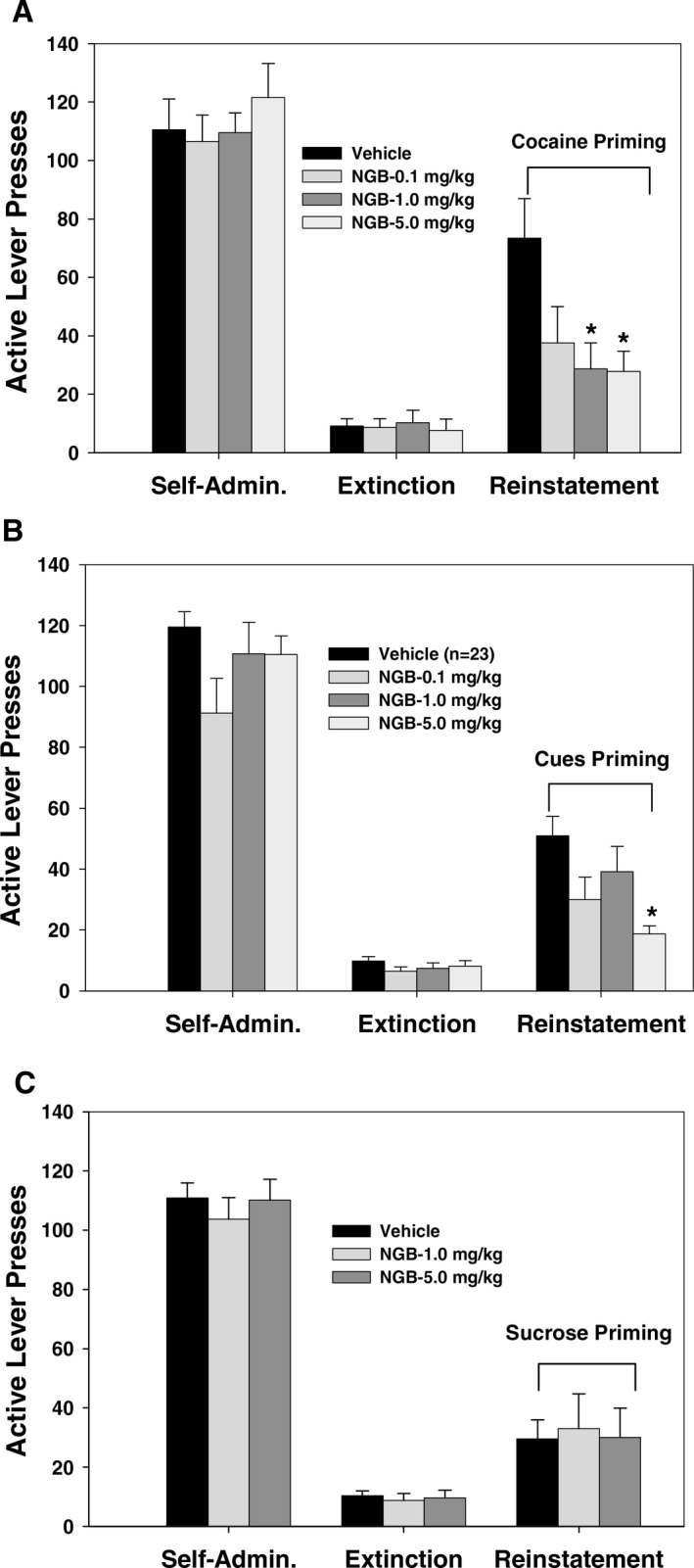
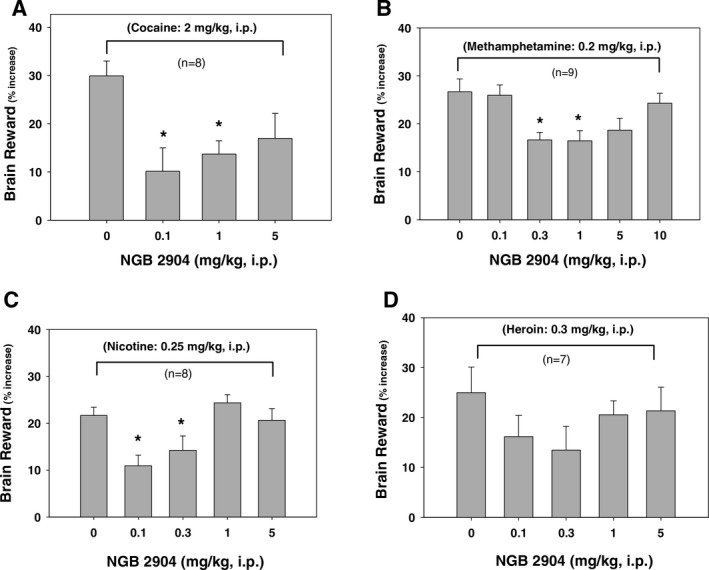
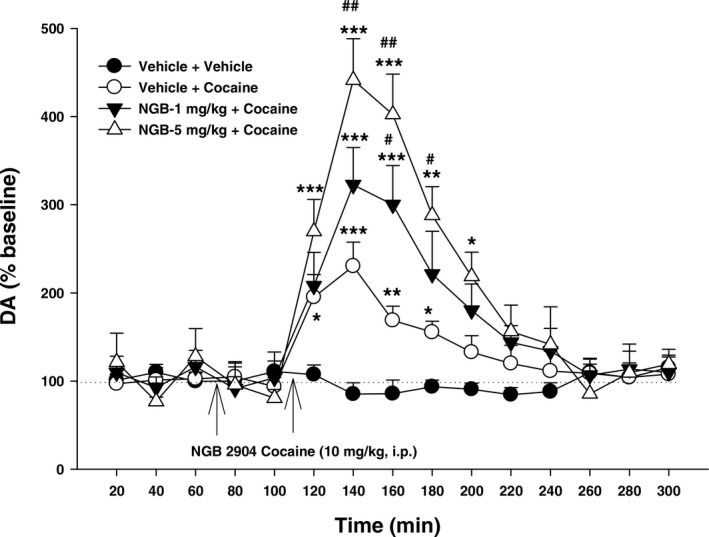
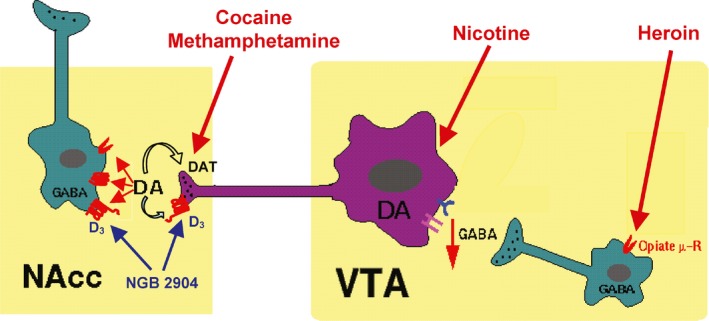
As a continuation of our work with SB-277011A, we have examined the effects of another highly elective dopamine (DA) D3 receptor antagonist, N-(4-[4-{2,3-dichlorophenyl}-1-piperazinyl]butyl)-2-fluorenylcarboxamide (NGB 2904), in animal models of addiction. Our results indicate that by systemic administration, NGB 2904 inhibits intravenous cocaine self-administration maintained under a progressive-ratio (PR) reinforcement schedule, cocaine- or cocaine cue-induced reinstatement of cocaine-seeking behavior, and cocaine- or other addictive drug-enhanced brain stimulation reward (BSR). The action of NGB 2904 on PR cocaine self-administration was long-lasting (1-2 days) after a single injection, supporting its potential use in treatment of cocaine addiction. The effects of NGB 2904 in the BSR paradigm were dose-dependent for both NGB 2904 and cocaine; that is, only lower doses of NGB 2904 were effective, and their putative antiaddiction effect could be overcome by increasing the doses of cocaine or other addictive drugs. A dopamine-dependent mechanism is proposed to explain the effects of NGB 2904 on cocaine's actions in these animal models of drug addiction. The data reviewed in this paper suggest that NGB 2904 or other D3-selective antagonists may have potential in controlling motivation for drug-taking behavior or relapse to drug-seeking behavior, but may have a limited role in antagonizing the acute rewarding effects produced by cocaine or other addictive drugs. In addition, NGB 2904 may also act as a useful tool to study the role of D3 receptors in drug addiction.
Figures
References
-
- Austin NE, Baldwin SJ, Cutler L, Deeks N, Kelly PJ, Nash M, Shardlow CE, Stemp G, Thewlis K, Ayrton A, et al. (2001) Pharmacokinetics of the novel, high affinity and selective dopamine D3 receptor antagonist SB‐277011 in rat, dog and monkey: In vitro/in vivo correlation and the role of aldehyde oxidase. Xenobiotica 31:677‐686. - PubMed
-
- Bardo MT (1998) Neuropharmacological mechanisms of drug reward: Beyond dopamine in the nucleus accumbens. Crit Rev Neurobiol 12:37‐67. - PubMed
-
- Bauco P, Wise RA (1997) Synergistic effects of cocaine with lateral hypothalamic brain stimulation reward: Lack of tolerance or sensitization. J Pharmacol Exp Ther 283:1160‐1167. - PubMed
-
- Boeckler F, Gmeiner P (2006) The structural evolution of dopamine D3 receptor ligands: Structure‐activity relationships and selected neuropharmacological aspects. Pharmacol Ther 112:281‐333. - PubMed
-
- Bressan RA, Crippa JA (2005) The role of dopamine in reward and pleasure behaviour—review of data from preclinical research. Acta Psychiatr Scand 111(suppl 437) 427 :14‐21. - PubMed
Publication types
MeSH terms
Substances
Grants and funding
LinkOut - more resources
Full Text Sources
Medical
Molecular Biology Databases
Research Materials
