


Recycling of chloroquine and its hydroxyl analogue to face bacterial, fungal and viral infections in the 21st century
- PMID: 17629679
- PMCID: PMC7126847
- DOI: 10.1016/j.ijantimicag.2007.05.015
Recycling of chloroquine and its hydroxyl analogue to face bacterial, fungal and viral infections in the 21st century
Abstract
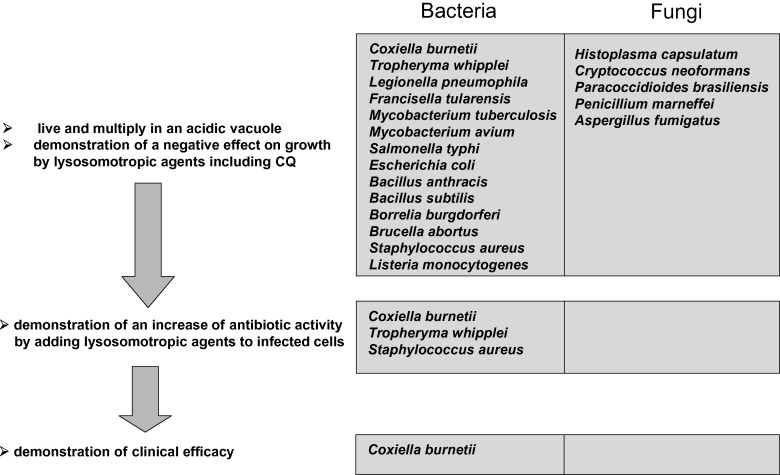
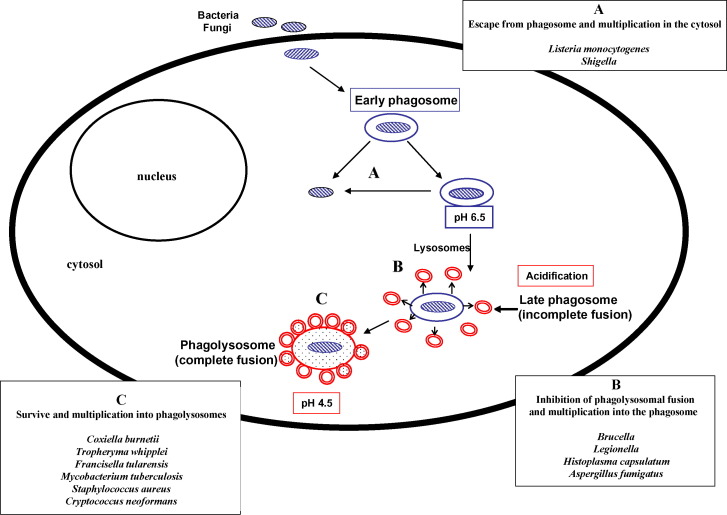
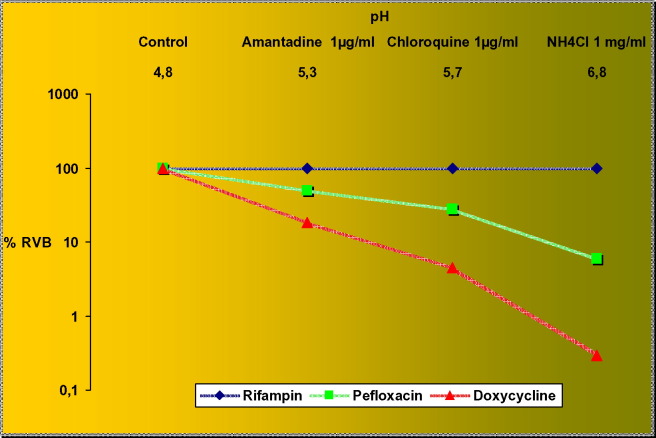
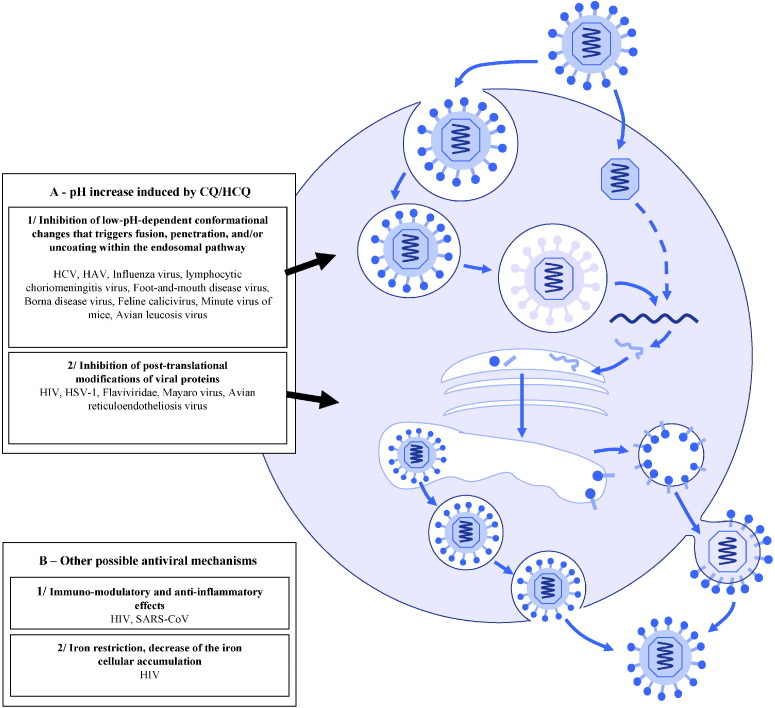
Chloroquine (CQ) and its hydroxyl analogue hydroxychloroquine (HCQ) are weak bases with a half-century long use as antimalarial agents. Apart from this antimalarial activity, CQ and HCQ have gained interest in the field of other infectious diseases. One of the most interesting mechanisms of action is that CQ leads to alkalinisation of acid vesicles that inhibit the growth of several intracellular bacteria and fungi. The proof of concept of this effect was first used to restore intracellular pH allowing antibiotic efficacy for Coxiella burnetii, the agent of Q fever, and doxycycline plus HCQ is now the reference treatment for chronic Q fever. There is also strong evidence of a similar effect in vitro against Tropheryma whipplei, the agent of Whipple's disease, and a clinical trial is in progress. Other bacteria and fungi multiply in an acidic environment and encouraging in vitro data suggest that this concept may be generalised for all intracellular organisms that multiply in an acidic environment. For viruses, CQ led to inhibition of uncoating and/or alteration of post-translational modifications of newly synthesised proteins, especially inhibition of glycosylation. These effects have been well described in vitro for many viruses, with human immunodeficiency virus (HIV) being the most studied. Preliminary in vivo clinical trials suggest that CQ alone or in combination with antiretroviral drugs might represent an interesting way to treat HIV infection. In conclusion, our review re-emphasises the paradigm that activities mediated by lysosomotropic agents may offer an interesting weapon to face present and future infectious diseases worldwide.
Figures
References
-
- Wellems T.E., Plowe C.V. Chloroquine-resistant malaria. J Infect Dis. 2001;184:770–776. - PubMed
-
- Savarino A., Lucia M.B., Rastrelli E. Anti-HIV effects of chloroquine: inhibition of viral particle glycosylation and synergism with protease inhibitors. J Acquir Immune Defic Syndr. 2004;35:223–232. - PubMed
-
- O’Neill P.M., Bray P.G., Hawley S.R., Ward S.A., Park B.K. 4-Aminoquinolines—past, present, and future: a chemical perspective. Pharmacol Ther. 1998;77:29–58. - PubMed
-
- Maurin M., Benoliel A.M., Bongrand P., Raoult D. Phagolysosomal alkalinization and the bactericidal effect of antibiotics: the Coxiella burnetii paradigm. J Infect Dis. 1992;166:1097–1102. - PubMed
Publication types
MeSH terms
Substances
LinkOut - more resources
Full Text Sources
Other Literature Sources
Medical
