


Examination of bacterial contamination at the time of embryo transfer, and its impact on the IVF/pregnancy outcome
- PMID: 17636439
- PMCID: PMC3454954
- DOI: 10.1007/s10815-007-9146-5
Examination of bacterial contamination at the time of embryo transfer, and its impact on the IVF/pregnancy outcome
Abstract
Purpose: This study was designed to examine the effect of bacterial contamination on in vitro fertilization treatment outcomes.
Method: In a prospective clinical trial, 152 patients aged 23-38 years, mean 33.3 +/- 4.6, undergoing IVF treatment were selected for this study. During embryo transfer, separate samples were collected for microbial examination from the following sites: the fundus of the vagina, the cervix, the embryo culture medium prior and post-embryo transfer, the tip of the catheter, and the external sheet. All the samples were separately cultured to identify any bacteria or yeast present.
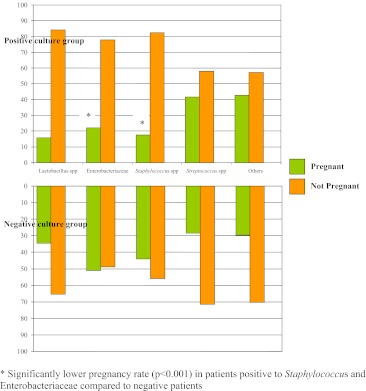
Results: Pregnancy rates in patients testing positive for Entrobacteriaceae (22.2% versus 51%) and Staphylococcus species (17.6% versus 44%) were significantly lower than those in the negative culture group (p < 0.001). The pregnancy rates do not seem to be affected by the other isolated microorganisms.
Conclusion: This study shows that the presence of vaginal-cervical microbial contamination at the time of embryo transfer is associated with significantly decreased pregnancy rates.
Figures
References
-
- Roseboom TJ, Vermeiden JPW, Schoute E, Lens JW, Schats R. The probability of pregnancy after embryo transfer is affected by the age of the patient, cause of infertility, number of embryos transferred and the average morphology score, as revealed by multiple logistic regression analysis. Hum Reprod. 1995;10:3035–3041. - PubMed
-
- Munne S, Alikani M, Tomkin G, Grifo J, Cohen J. Embryo morphology, developmental rate, and maternal age are correlated with chromosome abnormalities. Fertil Steril. 1995;64:382–391. - PubMed
Publication types
MeSH terms
LinkOut - more resources
Full Text Sources
Other Literature Sources
Medical
