


Loss of productivity due to neck/shoulder symptoms and hand/arm symptoms: results from the PROMO-study
- PMID: 17636455
- PMCID: PMC2039785
- DOI: 10.1007/s10926-007-9095-y
Loss of productivity due to neck/shoulder symptoms and hand/arm symptoms: results from the PROMO-study
Abstract
Introduction: The objective of the present study is to describe the extent of productivity loss among computer workers with neck/shoulder symptoms and hand/arm symptoms, and to examine associations between pain intensity, various physical and psychosocial factors and productivity loss in computer workers with neck/shoulder and hand/arm symptoms.
Methods: A cross-sectional design was used. The study population consisted of 654 computer workers with neck/shoulder or hand/arm symptoms from five different companies. Descriptive statistics were used to describe the occurrence of self-reported productivity loss. Logistic regression analyses were used to examine the associations.
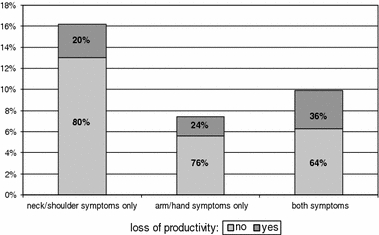
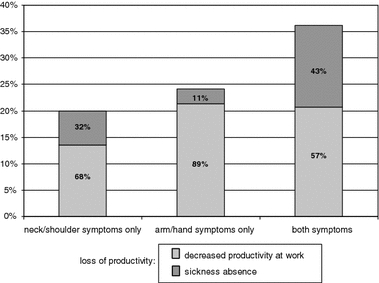
Results: In 26% of all the cases reporting symptoms, productivity loss was involved, the most often in cases reporting both symptoms (36%). Productivity loss involved sickness absence in 11% of the arm/hand cases, 32% of the neck/shoulder cases and 43% of the cases reporting both symptoms. The multivariate analyses showed statistically significant odds ratios for pain intensity (OR: 1.26; CI: 1.12-1.41), for high effort/no low reward (OR: 2.26; CI: 1.24-4.12), for high effort/low reward (OR: 1.95; CI: 1.09-3.50), and for low job satisfaction (OR: 3.10; CI: 1.44-6.67). Physical activity in leisure time, full-time work and overcommitment were not associated with productivity loss.
Conclusion: In most computer workers with neck/shoulder symptoms or hand/arm symptoms productivity loss derives from a decreased performance at work and not from sickness absence. Favorable psychosocial work characteristics might prevent productivity loss in symptomatic workers.
Figures
References
-
- European Agency for Safety and Health at Work (in press). Thematic report MSDs.
-
- Van den Heuvel, S. G., & Blatter, B. M. (2006). Trends in WAO-intrede door RSI. [Trends in incident chronic disability due to neck and upper limb symptoms]. In Dutch. Tijdschr Bedrijfs Verzekeringsgeneeskd, 14, 5–10.
-
- Stewart, W. F., Ricci, J. A., Chee, E., Morganstein, D., & Lipton R. (2003). Lost productive time and cost due to common pain conditions in the US workforce. JAMA, 290(18), 2443–2454. - PubMed
MeSH terms
LinkOut - more resources
Full Text Sources
Medical
