


Thyroid hormone replacement for subclinical hypothyroidism
- PMID: 17636722
- PMCID: PMC6610974
- DOI: 10.1002/14651858.CD003419.pub2
Thyroid hormone replacement for subclinical hypothyroidism
Abstract
Background: Subclinical hypothyroidism is defined as an elevated serum thyroid-stimulating hormone (TSH) level with normal free thyroid hormones values. The prevalence of subclinical hypothyroidism is 4% to 8% in the general population, and up to 15% to 18% in women who are over 60 years of age. There is considerable controversy regarding the morbidity, the clinical significance of subclinical hypothyroidism and if these patients should be treated.
Objectives: To assess the effects of thyroid hormone replacement for subclinical hypothyroidism.
Search strategy: We searched The Cochrane Library, MEDLINE, EMBASE and LILACS. Ongoing trials databases, reference lists and abstracts of congresses were scrutinized as well.
Selection criteria: All studies had to be randomised controlled trials comparing thyroid hormone replacement with placebo or no treatment in adults with subclinical hypothyroidism. Minimum duration of follow-up was one month.
Data collection and analysis: Two authors independently assessed trial quality and extracted data. We contacted study authors for missing or additional information.
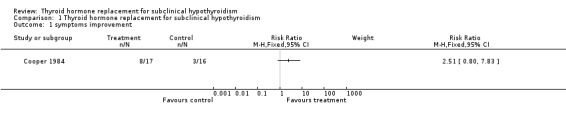
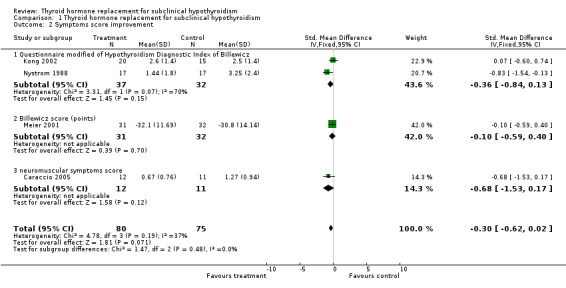
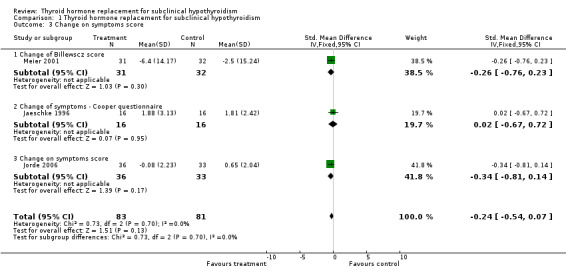
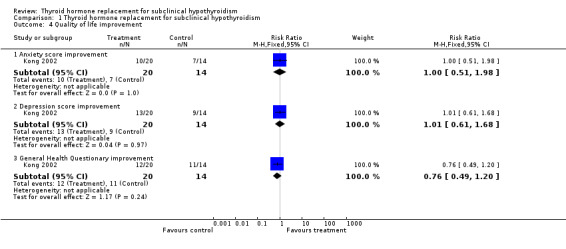
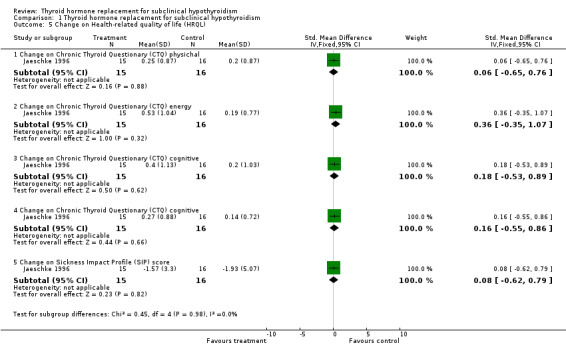
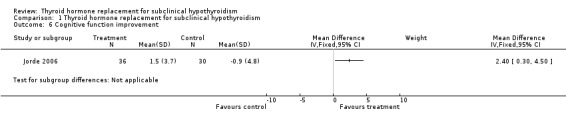
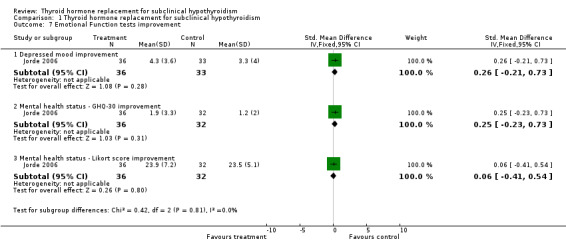
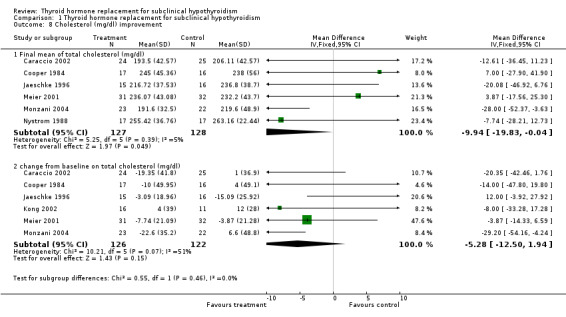
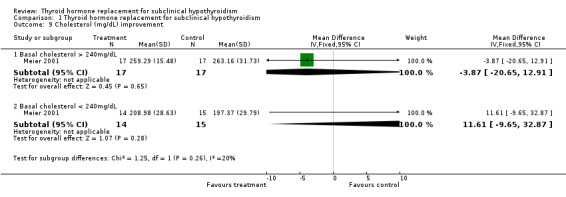
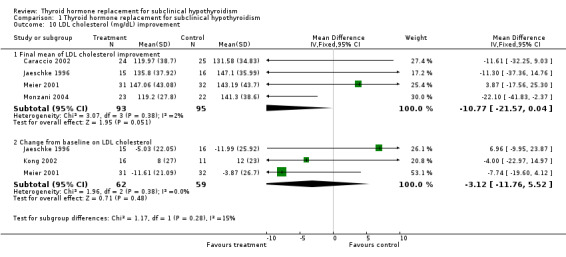
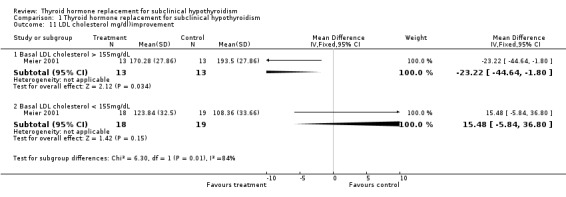
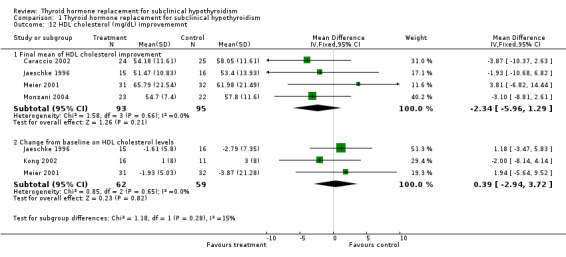
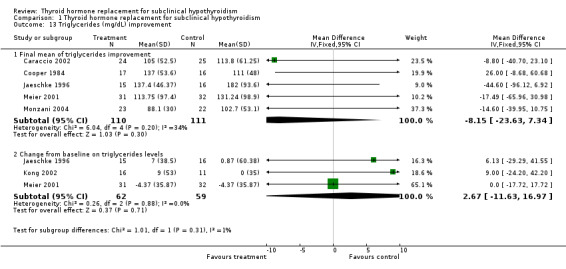
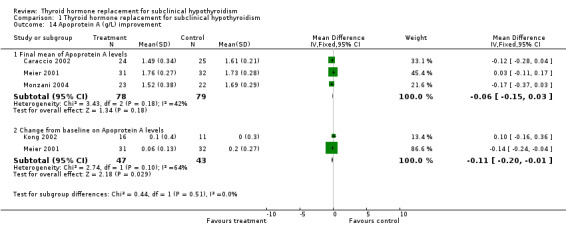
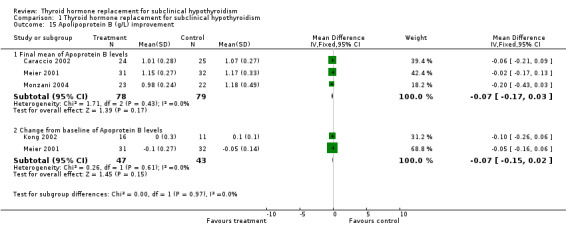
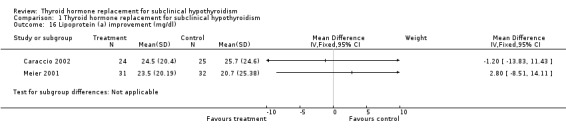
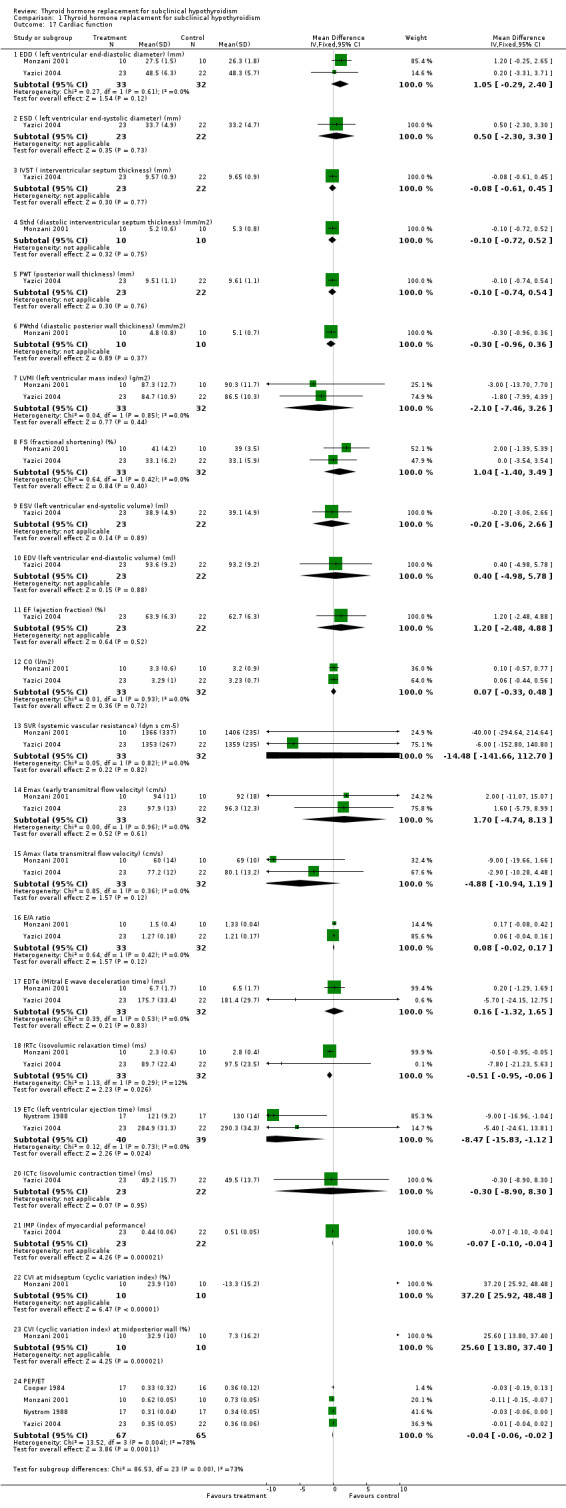
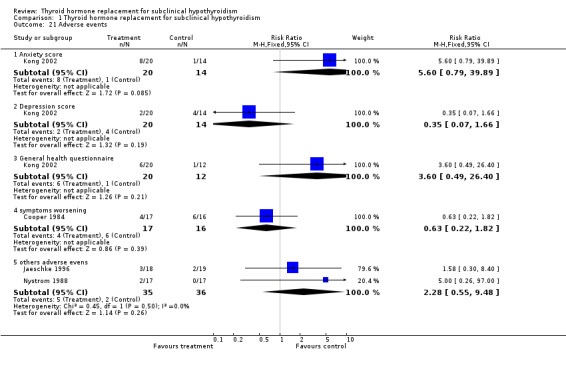
Main results: Twelve trials of six to 14 months duration involving 350 people were included. Eleven trials investigated levothyroxine replacement with placebo, one study compared levothyroxine replacement with no treatment. We did not identify any trial that assessed (cardiovascular) mortality or morbidity. Seven studies evaluated symptoms, mood and quality of life with no statistically significant improvement. One study showed a statistically significant improvement in cognitive function. Six studies assessed serum lipids, there was a trend for reduction in some parameters following levothyroxine replacement. Some echocardiographic parameters improved after levothyroxine replacement therapy, like myocardial relaxation, as indicated by a significant prolongation of the isovolumic relaxation time as well as diastolic dysfunction. Only four studies reported adverse events with no statistically significant differences between groups.
Authors' conclusions: In current RCTs, levothyroxine replacement therapy for subclinical hypothyroidism did not result in improved survival or decreased cardiovascular morbidity. Data on health-related quality of life and symptoms did not demonstrate significant differences between intervention groups. Some evidence indicates that levothyroxine replacement improves some parameters of lipid profiles and left ventricular function.
Conflict of interest statement
None known.
Figures
Comment in
-
Review: available evidence does not support a benefit for thyroid hormone replacement in adults with subclinical hypothyroidism.ACP J Club. 2008 Jan-Feb;148(1):6. ACP J Club. 2008. PMID: 18170993 No abstract available.
-
Review: Prophylactic use of granulocyte colony-stimulating factor reduces febrile neutropenia and short-term mortality in cancer.ACP J Club. 2008 Jan-Feb;148(1):7. ACP J Club. 2008. PMID: 18170994 No abstract available.
-
Review: available evidence does not support a benefit for thyroid hormone replacement in adults with subclinical hypothyroidism.Evid Based Med. 2008 Feb;13(1):22. doi: 10.1136/ebm.13.1.22. Evid Based Med. 2008. PMID: 18234930 No abstract available.
References
References to studies included in this review
-
- Caraccio N, Ferrannini E, Monzani F. Lipoprotein profile in subclinical hypothyroidism: response to levothyroxine replacement, a rndomized placebo‐controlled study. The Journal of Clinical Endocrinology and Metabolism 2002;87:1533‐8. - PubMed
-
- Caraccio N, Natali A, Sironi A, Baldi S, Frascerra S, Dardano A, et al. Muscle metabolism and exercise tolerance in subclinical hypothyroidism: a controlled trial of levothyroxine. The Journal of Clinical endocrinology and Metabolism 2005;90:4057‐62. - PubMed
-
- Cooper DS, Halpern R, Wood L, Levin A, Ridgway C. L‐Thyroxine therapy in subclinical hypothyroidism. Annals of Internal Medicine 1984;101:18‐24. - PubMed
-
- Jaeschke R, Guyatt G, Gerstein H, Patterson C, Molloy W, Cook D, et al. Does treatment with L‐thyroxine influence health status in middle‐aged and older adults with subclinical hypothyroidism?. Journal of General Internal Medicine 1996;11:744‐9. - PubMed
-
- Jorde R, Waterloo K, Storhaug I, Nyrnes A, Sundsfjrd J, Jenssen G. Neuropsychological function and symptoms in subjects with subclinical hypothyroidism and the effect of thyroxine treatment. The Journal of Clinical Endocrinology and Metabolism 2006;91:145‐53. - PubMed
References to studies excluded from this review
-
-
EMPTY
-
-
- Biondi B, Palmieri EA, Lombardi G, Fazio S. Effect of subclinical hypothyroidism dysfunction in the heart. Annals of Internal Medicine 2002;137:904‐14. - PubMed
-
- Christ‐Crain M, Meier C, Guglielmetti M, Huber PR, Riese W, Staub JJ, Muller B. Elevated c‐reactive protein and homocysteine values: cardiovascular risk factors in hypothyroidism? A cross‐sectional and a double‐blind, placebo‐controlled trial. Atherosclerosis 2003;166:379‐86. - PubMed
-
- Christ‐Crain M, Morgenthaler NG, Meier C, Muller C, Nussbaumer C, Bergmann A, et al. Pro‐A‐type and N‐terminal pro‐B‐type natriuretic peptides in different thyroid function states. Swiss Medical Weekly 2005;135:549‐54. - PubMed
-
- Jensovsky J, Ruzicka E, Spackova N, Heidukova B. Changes of event related potential and cognitive process in patients with subclinical hypothyroidism after thyroxine treatment. Endocrine regulations 2002;36:115‐22. - PubMed
References to studies awaiting assessment
-
- Fadeyev VV, Sytch J, Kalashnikov V, Rojtman A, Syrkin A, Melnichenko G. Levothyroxine replacement therapy in patients with subclinical hypothyroidisd coronary artery disease. Endocrine Practice 2006;12(1):5‐17. - PubMed
References to ongoing studies
-
- Thyroid dysfunction in the elderly: Quantifying the association between sub‐clinical disease and (i) atrial fibrillation (and thus stroke) (ii) depression and (iii) cognitive dysfunction. A community based survey and clinical trial of thyroxine therapy. Ongoing study 12 September 2002.
-
- Subclinical hypothyroidism (SCH), cardiovascular risk and quality of life. Ongoing study 01 February 2003.
Additional references
-
- Alghini‐Lombardi F, Antonangelli L, Martino E, Vitti P, Maccherini FL, Leoli F, et al. The spectrum of thyroid disorders in an iodine‐deficient community: The Pescopagano Survey. The Journal Clinical of Endocrinology and Metabolism 1999;84:561. - PubMed
-
- Althaus BU, Staub JJ, Ryff‐De Leche A, Oberhansli A, Stahelin HB. LDL/HDL‐changes in subclinical hypothyroidism; possible risk factors for coronary heart disease. Clinical Endocrinology 1988;28:157‐63. - PubMed
-
- Ayala AR, Danese M, Landerson PW. When to treat mild hypothyroidism. Endocrinology and Metabolism Clinics of North America 2000;29(2):399‐415. - PubMed
-
- Bianchi GP, Zccheroni V, Solaroli E, Vescini F, Cerutti R, Zoli M, et al. Health‐related quality of life in patients with thyroid disorders. Quality of Life Research 2004;13:45‐54. - PubMed
-
- Biondi B, Fazio S, Palmieri EA, Carella C, Panza N, Cittadini A, et al. Left ventricular diastolic dysfunction in patients with subclinical hypothyroidism. The Journal of Clinical Endocrinology and Metabolism 1999;84:2064‐7. - PubMed
Publication types
MeSH terms
Substances
LinkOut - more resources
Full Text Sources
Medical
