


Burden of disease & molecular epidemiology of group A rotavirus infections in India
- PMID: 17642497
- PMCID: PMC2474761
Burden of disease & molecular epidemiology of group A rotavirus infections in India
Abstract
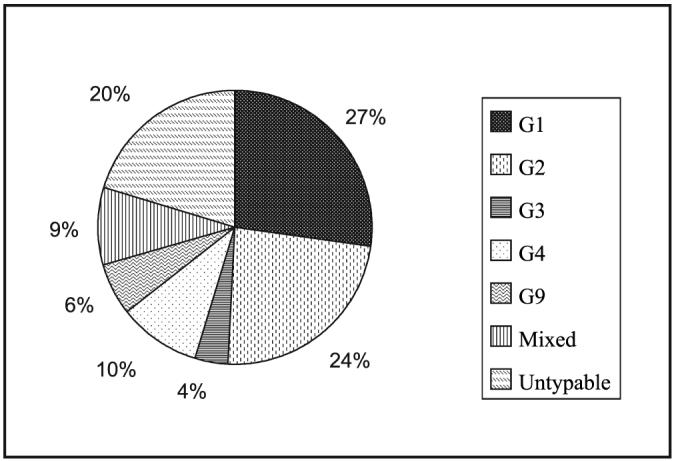
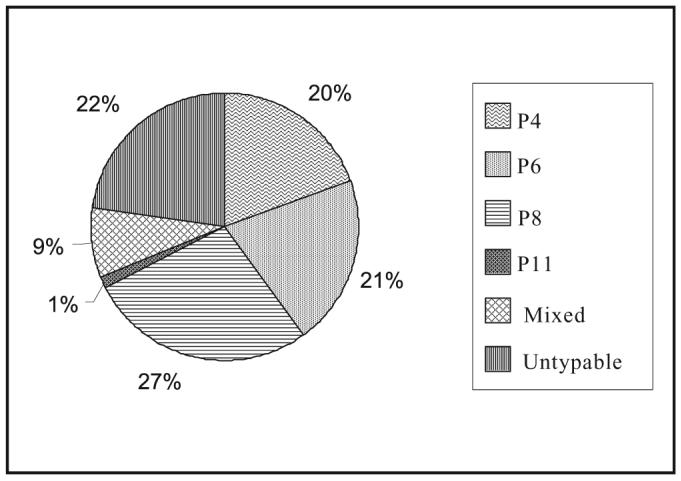
Rotavirus is the major cause of severe dehydrating diarrhoea in young children worldwide. Considerable research has been carried out on rotavirus disease in India. This review collated data from 46 epidemiological studies to determine rotavirus positivity rates and genotypes of infecting rotavirus strains from various settings in India. Studies on diarrhoea presenting to hospitals, neonatal rotavirus infections, symptomatic and asymptomatic infections in the community and nosocomial enteric infections were included. Rotavirus positivity rates varied greatly between different settings - diarrhoea hospitalizations (20%), neonatal infections (35%), symptomatic and asymptomatic infections in the community (15.1% and 6.3% respectively) and nosocomial enteric infections (22.5%). Among diarrhea hospitalizations, the commonest G types were G1 and G2 while commonest P types were P[8], P[6] and P[4]. Region specific neonatal infections by bovinehuman reassortants have been reported, in addition to several recently described unusual strains, which may be evidence of zoonotic infection and/or reassortment. The emergence of several new strains highlights the need for intensive strain surveillance before and after the introduction of a new vaccine.
Figures
References
-
- Prasad BVV, Estes MK. Electron cryomicroscopy and computer image processing techniques: use in structure-function studies of rotavirus. In: Gray JJ, Desselberger U, editors. Rotavirus methods and protocols. New Jersey: Humana Press; 2000. pp. 9–32. - PubMed
-
- Murphy TV, Gargiullo PM, Massoudi MS, Nelson DB, Jumaan AO, Okoro CA, et al. Intussusception among infants given an oral rotavirus vaccine. N Engl J Med. 2001;344:564–72. - PubMed
-
- Glass RI, Parashar UD. The promise of new rotavirus vaccines. N Engl J Med. 2006;354:75–7. - PubMed
-
- Vesikari T, Clark HF, Offit PA, Dallas MJ, Distefano DJ, Goveia MG, et al. Safety and efficacy of a pentavalent human-bovine (WC3) reassortant rotavirus vaccine. N Engl J Med. 2006;354:23–33. - PubMed
Publication types
MeSH terms
Grants and funding
LinkOut - more resources
Full Text Sources
Medical