


Advanced lipid peroxidation end products in oxidative damage to proteins. Potential role in diseases and therapeutic prospects for the inhibitors
- PMID: 17643134
- PMCID: PMC2199390
- DOI: 10.1038/sj.bjp.0707395
Advanced lipid peroxidation end products in oxidative damage to proteins. Potential role in diseases and therapeutic prospects for the inhibitors
Abstract
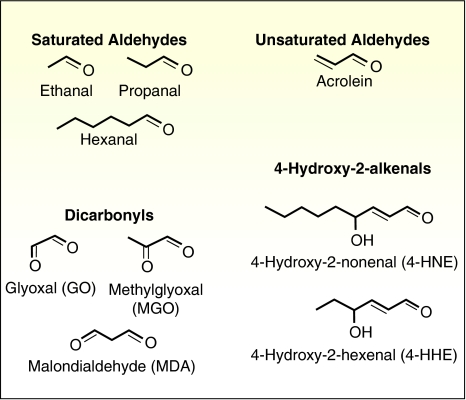
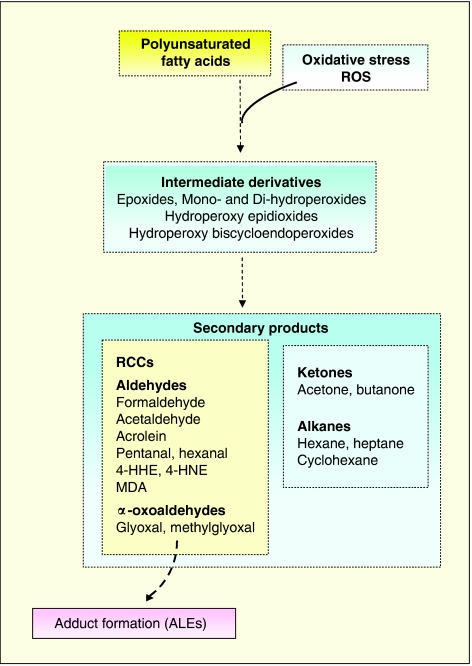
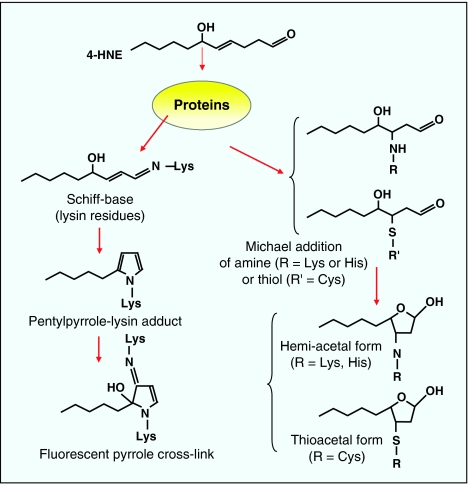
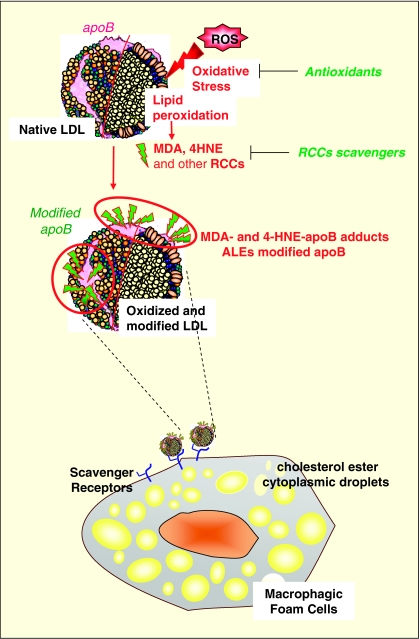
Reactive carbonyl compounds (RCCs) formed during lipid peroxidation and sugar glycoxidation, namely Advanced lipid peroxidation end products (ALEs) and Advanced Glycation end products (AGEs), accumulate with ageing and oxidative stress-related diseases, such as atherosclerosis, diabetes or neurodegenerative diseases. RCCs induce the 'carbonyl stress' characterized by the formation of adducts and cross-links on proteins, which progressively leads to impaired protein function and damages in all tissues, and pathological consequences including cell dysfunction, inflammatory response and apoptosis. The prevention of carbonyl stress involves the use of free radical scavengers and antioxidants that prevent the generation of lipid peroxidation products, but are inefficient on pre-formed RCCs. Conversely, carbonyl scavengers prevent carbonyl stress by inhibiting the formation of protein cross-links. While a large variety of AGE inhibitors has been developed, only few carbonyl scavengers have been tested on ALE-mediated effects. This review summarizes the signalling properties of ALEs and ALE-precursors, their role in the pathogenesis of oxidative stress-associated diseases, and the different agents efficient in neutralizing ALEs effects in vitro and in vivo. The generation of drugs sharing both antioxidant and carbonyl scavenger properties represents a new therapeutic challenge in the treatment of carbonyl stress-associated diseases.
Figures
References
-
- Aldini G, Dalle-Donne I, Colombo R, Maffei Facino R, Milzani A, Carini M. Lipoxidation-derived reactive carbonyl species as potential drug targets in preventing protein carbonylation and related cellular dysfunction. Chem Med Chem. 2006;1:1045–1058. - PubMed
-
- Almolki A, Taille C, Martin GF, Jose PJ, Zedda C, Conti M, et al. Heme oxygenase attenuates allergen-induced airway inflammation and hyperreactivity in guinea pigs. Am J Physiol Lung Cell Mol Physiol. 2004;287:L26–L34. - PubMed
-
- Altuntas Y, Guven M, Ince E, Acbay O, Caner M, Kanigur-Sultuybek G. The in vitro effects of captopril on the levels of lipid peroxidation and glutathione of erythrocytes in type II diabetes. J Basic Clin Physiol Pharmacol. 1995;6:281–288. - PubMed
-
- Andreoletti O, Levavasseur E, Uro-Coste E, Tabouret G, Sarradin P, Delisle MB, et al. Astrocytes accumulate 4-hydroxynonenal adducts in murine scrapie and human Creutzfeldt–Jakob disease. Neurobiol Dis. 2002;11:386–393. - PubMed
-
- Anekonda TS. Resveratrol—a boon for treating Alzheimer's disease. Brain Res Rev. 2006;52:316–326. - PubMed
Publication types
MeSH terms
Substances
LinkOut - more resources
Full Text Sources
Other Literature Sources
