


In vivo and in vitro effects of pilocarpine: relevance to ictogenesis
- PMID: 17645533
- PMCID: PMC3900294
- DOI: 10.1111/j.1528-1167.2007.01185.x
In vivo and in vitro effects of pilocarpine: relevance to ictogenesis
Abstract
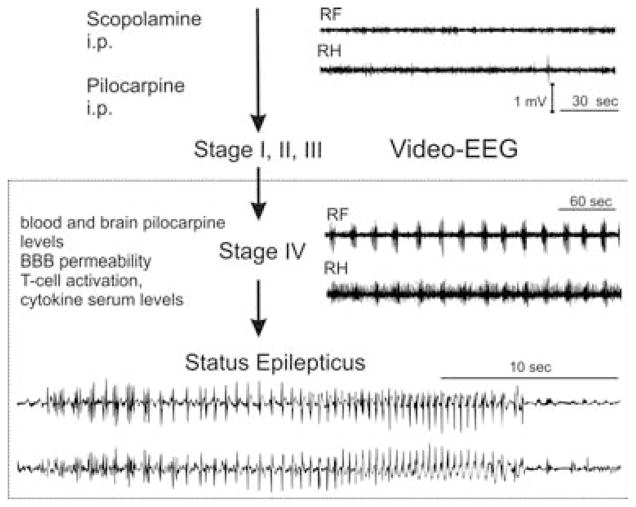
Objectives: A common experimental model of status epilepticus (SE) utilizes intraperitoneal administration of the cholinergic agonist pilocarpine preceded by methyl-scopolamine treatment. Currently, activation of cholinergic neurons is recognized as the only factor triggering pilocarpine SE. However, cholinergic receptors are also widely distributed systemically and pretreatment with methyl-scopolamine may not be sufficient to counteract the effects of systemically injected pilocarpine. The extent of such peripheral events and the contribution to SE are unknown and the possibility that pilocarpine also induces SE by peripheral actions is yet untested.
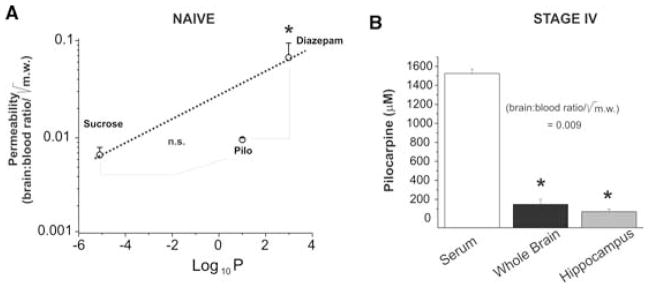
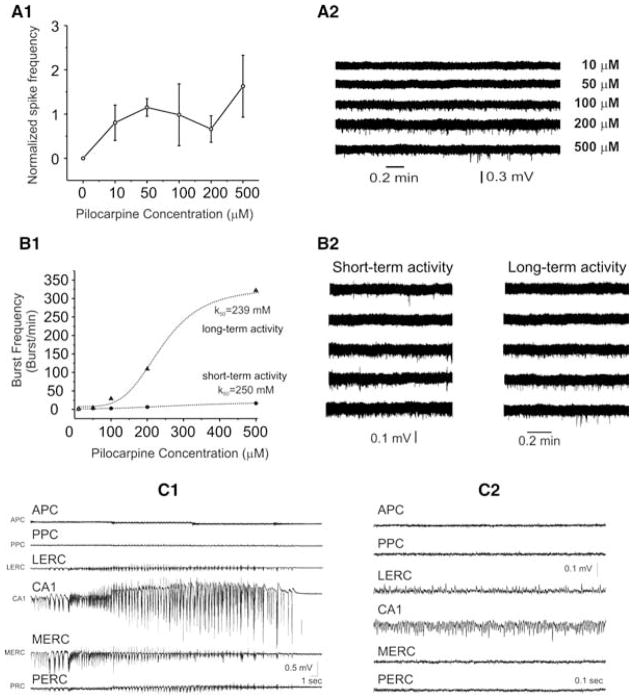
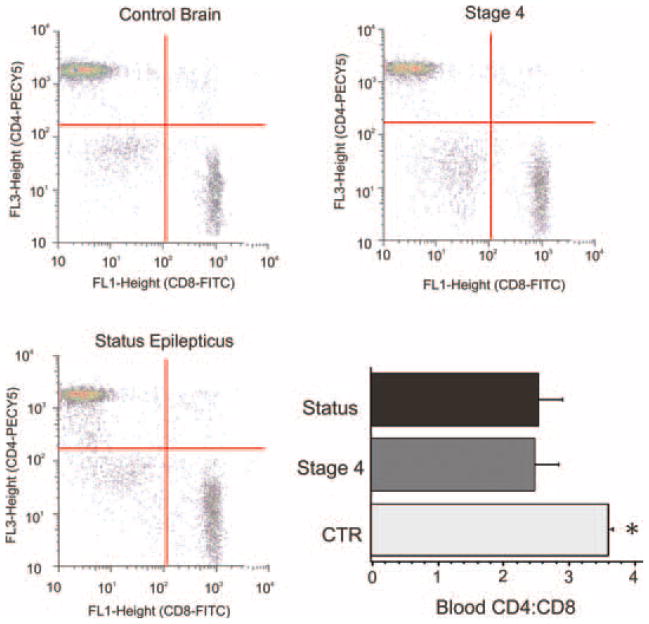
Methods: We measured in vivo at onset of SE: brain and blood pilocarpine levels, blood-brain barrier (BBB) permeability, T-lymphocyte activation and serum levels of IL-1beta and TNF-alpha. The effects of pilocarpine on neuronal excitability was assessed in vitro on hippocampal slices or whole guinea pig brain preparations in presence of physiologic or elevated [K+](out).
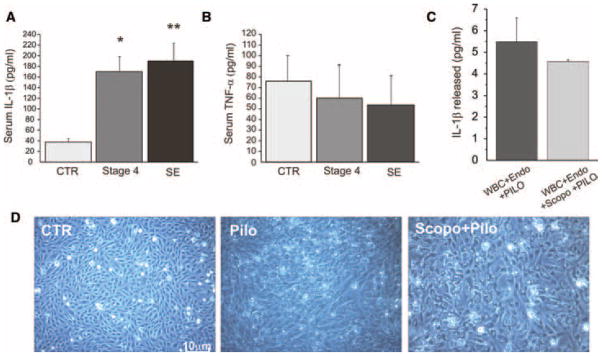
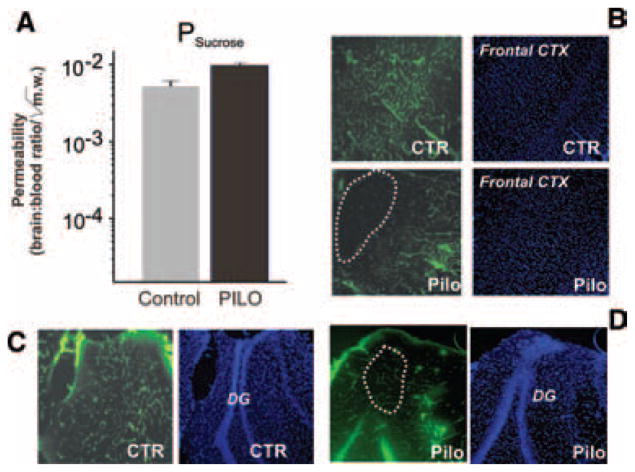
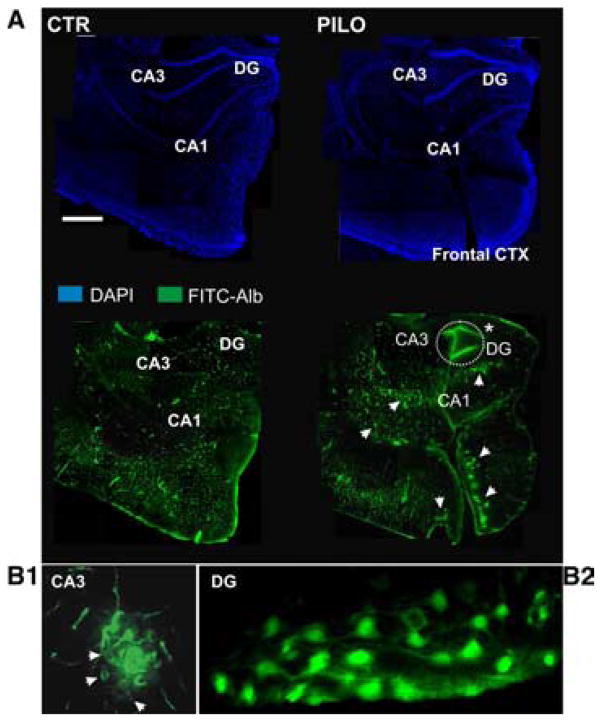
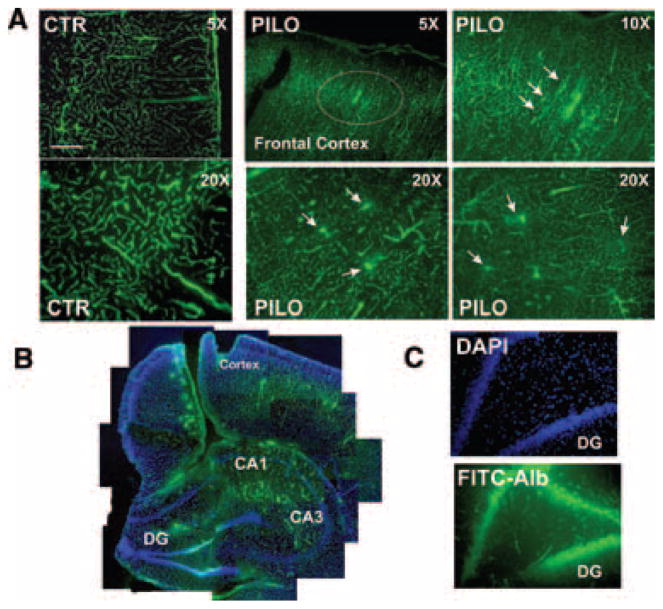
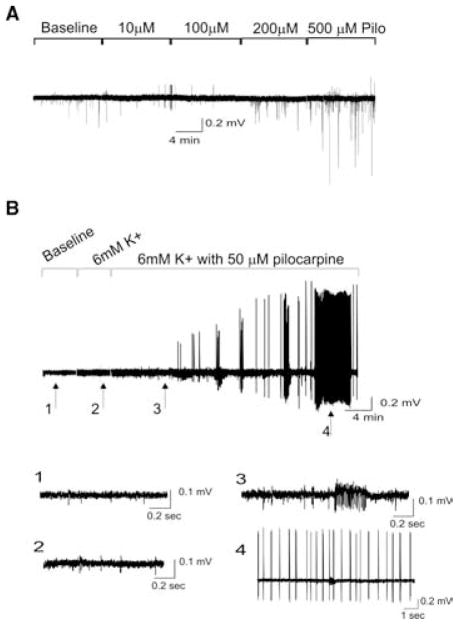
Results: Pilocarpine blood and brain levels at SE were 1400 +/- 200 microM and 200 +/- 80 microM, respectively. In vivo, after pilocarpine injection, increased serum IL-1beta, decreased CD4:CD8 T-lymphocyte ratios and focal BBB leakage were observed. In vitro, pilocarpine failed to exert significant synchronized epileptiform activity when applied at concentrations identical or higher to levels measured in vivo. Intense electrographic seizure-like events occurred only in the copresence of levels of K+ (6 mM) mimicking BBB leakage.
Conclusions: Early systemic events increasing BBB permeability may promote entry of cofactors (e. g. K+) into the brain leading to pilocarpine-induced SE. Disturbance of brain homeostasis represents an etiological factor contributing to pilocarpine seizures.
Figures
References
-
- Arzt ES, Fernandez-Castelo S, Diaz A, Finkielman S, Nahmod VE. The muscarinic agonist pilocarpine inhibits DNA and interferon-gamma synthesis in peripheral blood mononuclear cells. Int J Immunopharmacol. 1989;11:275–281. - PubMed
-
- Avoli M, D’Antuono M, Louvel J, Kohling R, Biagini G, Pumain R, D’Arcangelo G, Tancredi V. Network and pharmacological mechanisms leading to epileptiform synchronization in the limbic system in vitro. Prog Neurobiol. 2002;68:167–207. - PubMed
-
- Bawden HN, Racine RJ. Effects of bilateral kindling or bilateral sub-threshold stimulation of the amygdala or septum on muricide, ranacide, intraspecific aggression and passive avoidance in the rat. Physiol Behav. 1979;22:115–123. - PubMed
-
- Bymaster FP, Carter PA, Yamada M, Gomeza J, Wess J, Hamilton SE, Nathanson NM, McKinzie DL, Felder CC. Role of specific muscarinic receptor subtypes in cholinergic parasympathomimetic responses, in vivo phosphoinositide hydrolysis, and pilocarpine-induced seizure activity. Eur J Neurosci. 2003;17:1403–1410. - PubMed
-
- Carvey PM, Zhao CH, Hendey B, Lum H, Trachtenberg J, Desai BS, Snyder J, Zhu YG, Ling ZD. 6-Hydroxydopamine-induced alterations in blood-brain barrier permeability. Eur J Neurosci. 2005;22:1158–1168. - PubMed
Publication types
MeSH terms
Substances
Grants and funding
LinkOut - more resources
Full Text Sources
Other Literature Sources
Research Materials
