


Phenotypic plasticity and morphological integration in a marine modular invertebrate
- PMID: 17650324
- PMCID: PMC1959521
- DOI: 10.1186/1471-2148-7-122
Phenotypic plasticity and morphological integration in a marine modular invertebrate
Abstract
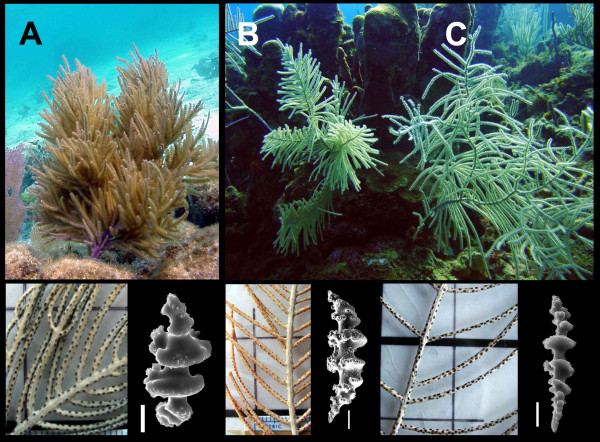
Background: Colonial invertebrates such as corals exhibit nested levels of modularity, imposing a challenge to the depiction of their morphological evolution. Comparisons among diverse Caribbean gorgonian corals suggest decoupling of evolution at the polyp vs. branch/internode levels. Thus, evolutionary change in polyp form or size (the colonial module sensu stricto) does not imply a change in colony form (constructed of modular branches and other emergent features). This study examined the patterns of morphological integration at the intraspecific level. Pseudopterogorgia bipinnata (Verrill) (Octocorallia: Gorgoniidae) is a Caribbean shallow water gorgonian that can colonize most reef habitats (shallow/exposed vs. deep/protected; 1-45 m) and shows great morphological variation.
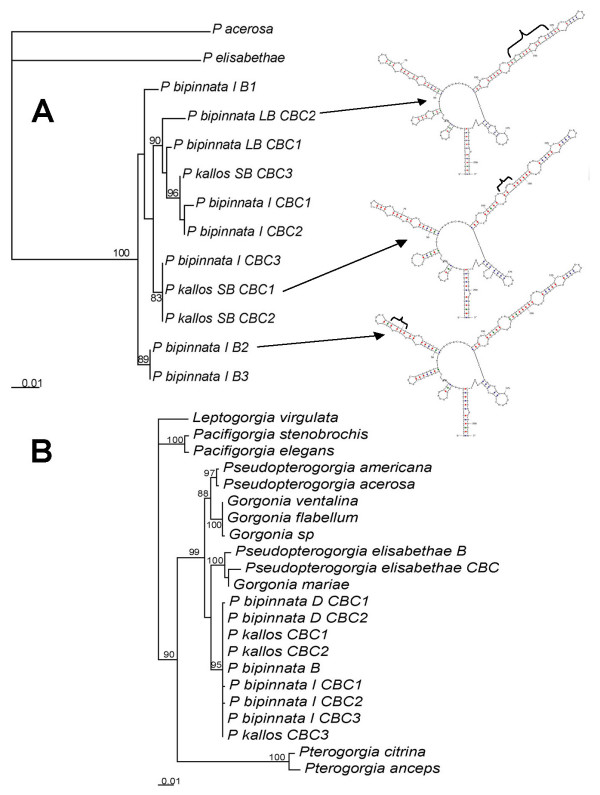
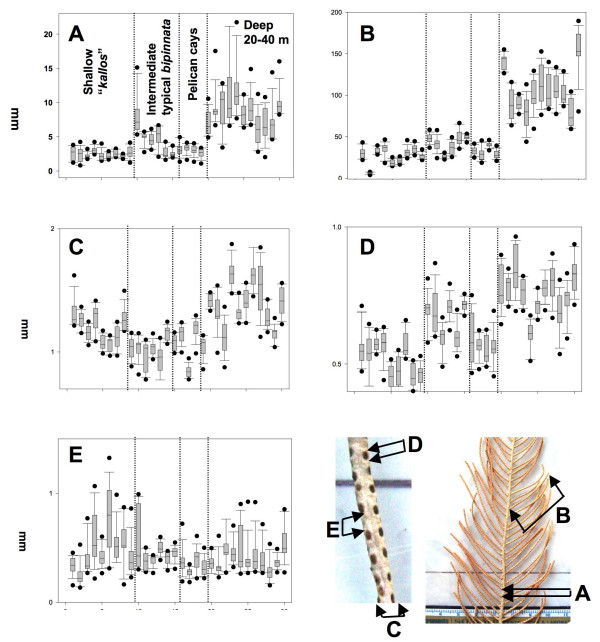
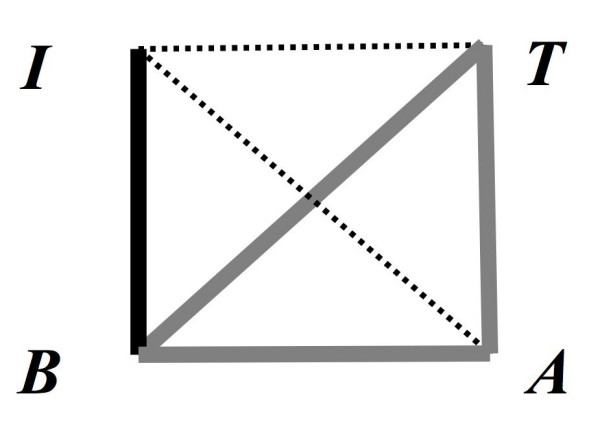
Results: To characterize the genotype/environment relationship and phenotypic plasticity in P. bipinnata, two microsatellite loci, mitochondrial (MSH1) and nuclear (ITS) DNA sequences, and (ITS2) DGGE banding patterns were initially compared among the populations present in the coral reefs of Belize (Carrie Bow Cay), Panama (Bocas del Toro), Colombia (Cartagena) and the Bahamas (San Salvador). Despite the large and discrete differentiation of morphotypes, there was no concordant genetic variation (DGGE banding patterns) in the ITS2 genotypes from Belize, Panama and Colombia. ITS1-5.8S-ITS2 phylogenetic analysis afforded evidence for considering the species P. kallos (Bielschowsky) as the shallow-most morphotype of P. bipinnata from exposed environments. The population from Carrie Bow Cay, Belize (1-45 m) was examined to determine the phenotypic integration of modular features such as branch thickness, polyp aperture, inter-polyp distance, internode length and branch length. Third-order partial correlation coefficients suggested significant integration between polypar and colonial traits. Some features did not change at all despite 10-fold differences in other integrated features. More importantly, some colonial features showed dependence on modular features.
Conclusion: Consequently, module integration in gorgonian corals can be shifted, switched or canalized along lineages. Modular marine organisms such as corals are variations on a single theme: their modules can couple or decouple, allowing them to adapt to all marine benthic environments.
Figures
References
-
- Magwene PM. New tools for studying integration and modularity. Evolution. 2001;55:1734–1745. - PubMed
-
- Lasker HR, Sánchez JA. Allometry and Astogeny of modular organisms. In: Hughes RN, editor. Reproductive Biology of Invertebrates Progress in Asexual Reproduction. XI. New York: John Wiley; 2002. pp. 207–253.
-
- Sánchez JA, Lasker HR. Patterns of Morphologic Integration in Branching Colonies of Marine Modular Organisms: supra-module organization in Gorgonian Corals. Proceedings of the Royal Society of London B. 2003;270:2039–2044. doi: 10.1098/rspb.2003.2471. doi: DOI: 10.1098/rspb.2003.2471. - DOI - PMC - PubMed
-
- Sánchez JA. Evolution and dynamics of branching colonial form in marine modular Cnidarians: Gorgonian Octocorals. Hydrobiologia. 2004;530:283–290. doi: 10.1007/s10750-004-2684-2. - DOI
Publication types
MeSH terms
Substances
LinkOut - more resources
Full Text Sources
Other Literature Sources
