


Fat and carbohydrate preferences in mice: the contribution of alpha-gustducin and Trpm5 taste-signaling proteins
- PMID: 17652359
- PMCID: PMC2375390
- DOI: 10.1152/ajpregu.00364.2007
Fat and carbohydrate preferences in mice: the contribution of alpha-gustducin and Trpm5 taste-signaling proteins
Abstract
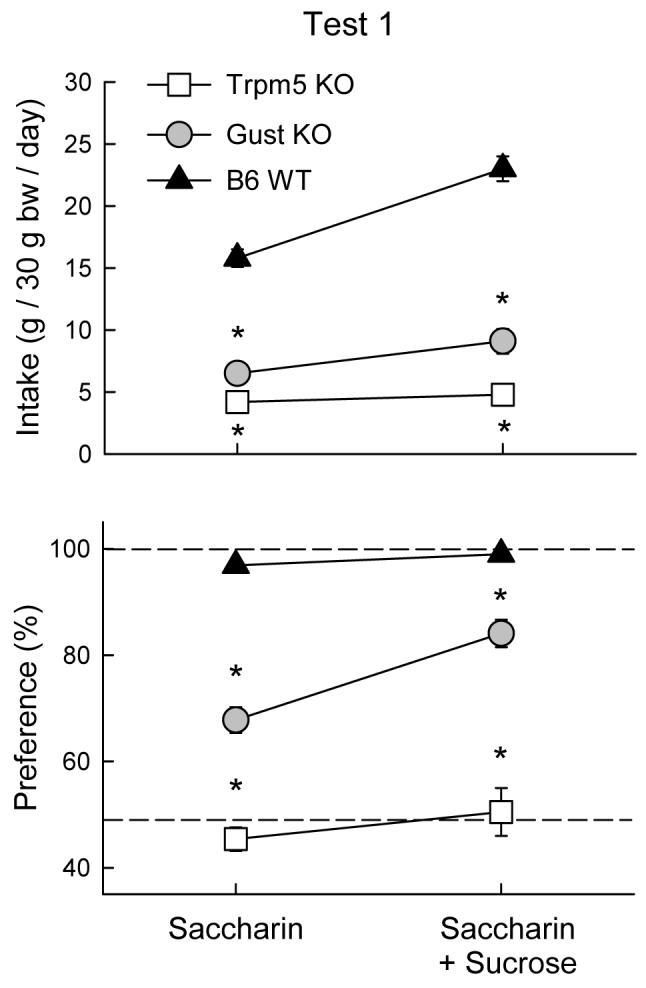
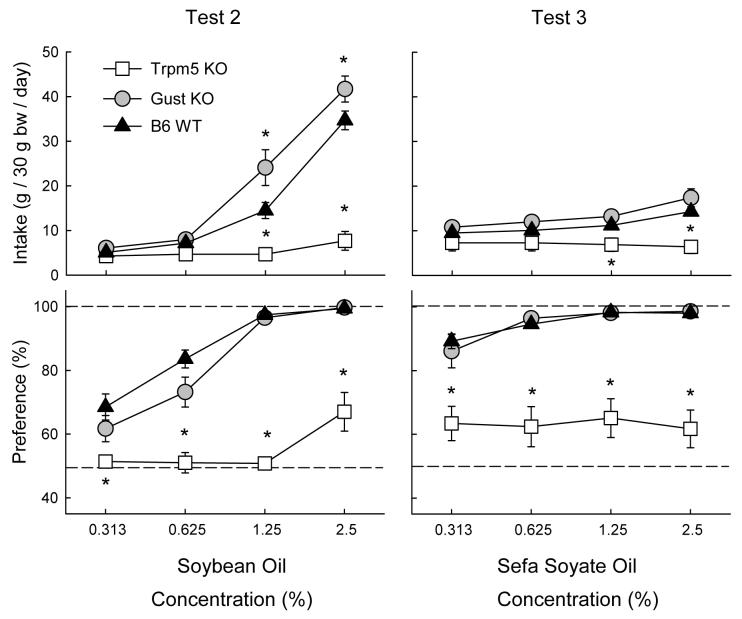
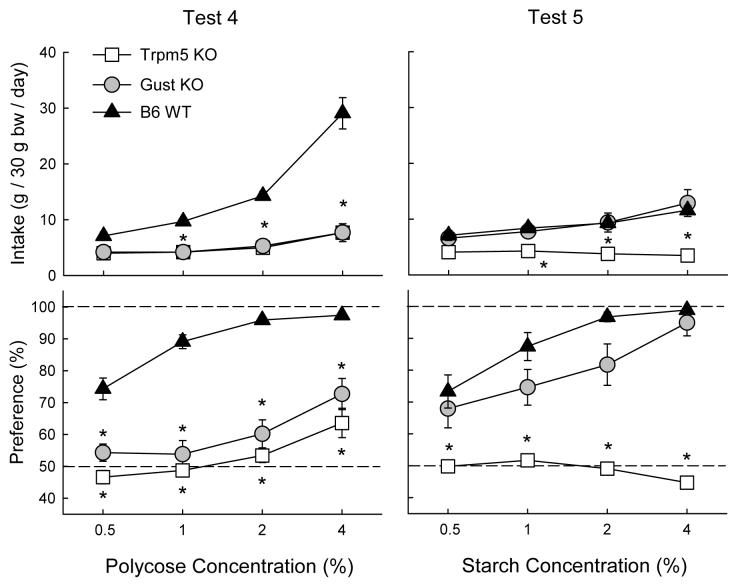
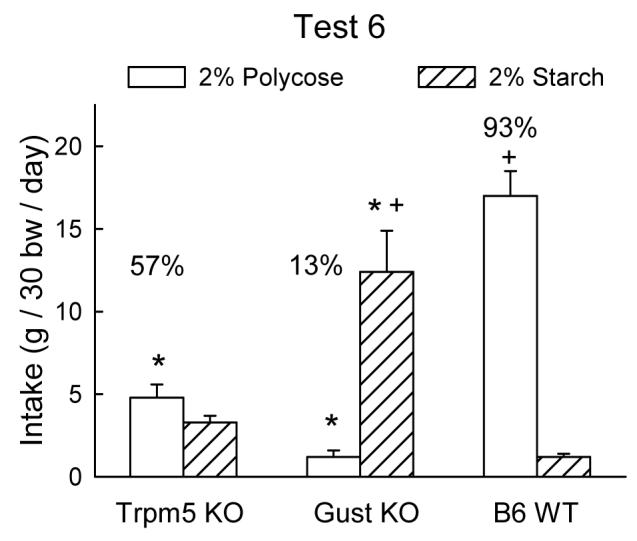
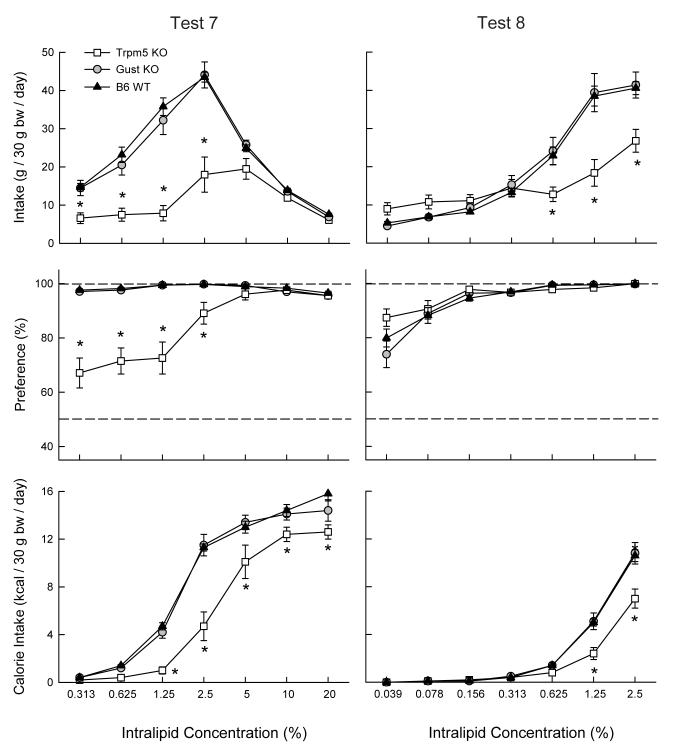
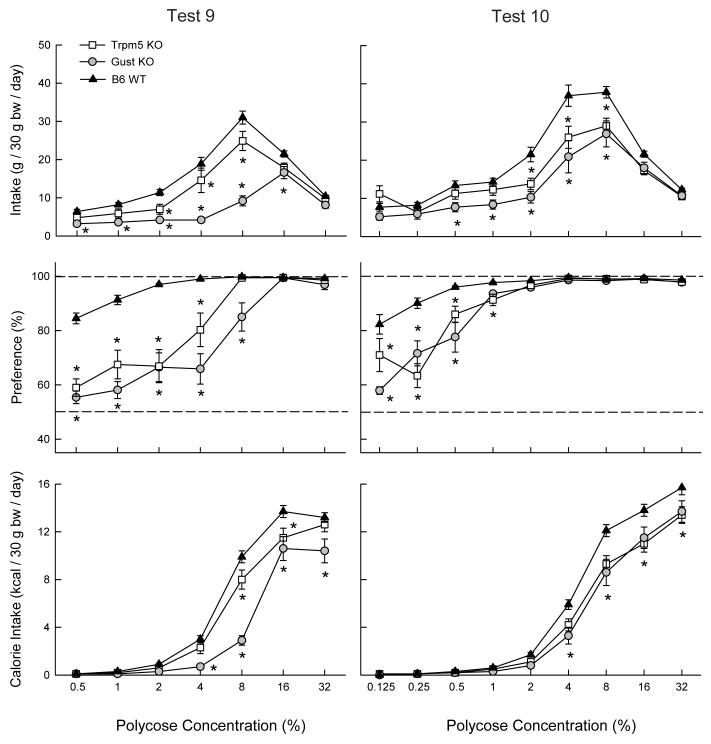
Trpm5 and alpha-gustducin are key to the transduction of tastes of sugars, amino acids, and bitter compounds. This study investigated the role of these signaling proteins in the preference for fat, starch, and starch-derived polysaccharides (Polycose), using Trpm5 knockout (Trpm5 KO) and alpha-gustducin knockout (Gust KO) mice. In initial two-bottle tests (24 h/day), Trpm5 KO mice showed no preference for soybean oil emulsions (0.313-2.5%), Polycose solutions (0.5-4%), or starch suspensions (0.5-4%). Gust KO mice displayed an attenuated preference for Polycose, but their preferences for soybean oil and starch were comparable to those of C57BL/6J wild-type (WT) mice. Gust KO mice preferred starch to Polycose, whereas WT mice had the opposite preference. After extensive experience with soybean oil emulsions (Intralipid) and Polycose solutions, the Trpm5 KO mice developed preferences comparable to the WT mice, although their absolute intakes remained suppressed. Similarly, Gust KO mice developed a strong Polycose preference with experience, but they continued to consume less than the WT mice. These results implicate alpha-gustducin and Trpm5 as mediators of polysaccharide taste and Trpm5 in fat taste. The disruption in Polycose, but not starch, preference in Gust KO mice indicates that distinct sensory signaling pathways mediate the response to these carbohydrates. The experience-induced rescue of fat and Polycose preferences in the KO mice likely reflects the action of a postoral-conditioning mechanism, which functions in the absence of alpha-gustducin and Trpm5.
Figures
References
-
- Bezencon C, leCoutre J, Damak S. Taste-signaling proteins are coexpressed in solitary intestinal epithelial cells. Chem Senses. 2006;32:41–49. - PubMed
-
- Breslin PAS. Human gustation and flavour. Flavour and Fragrance Journal. 2006;16:439–456.
-
- Carter JM, Jeukendrup AE, Jones DA. The effect of carbohydrate mouth rinse on 1-h cycle time trial performance. Med Sci Sports Exerc. 2004;36:2107–2111. - PubMed
-
- Chale-Rush A, Burgess JR, Mattes RD. Evidence for human orosensory (taste?) sensitivity to free fatty acids. Chem Senses . 2007 - PubMed
-
- Chandrashekar J, Hoon MA, Ryba NJP, Zuker CS. The receptors and cells for mammalian taste. Nature. 2006;444:288–294. - PubMed
Publication types
MeSH terms
Substances
Grants and funding
LinkOut - more resources
Full Text Sources
Medical
Molecular Biology Databases
Research Materials
