


Epithelial cells prime the immune response to an array of gut-derived commensals towards a tolerogenic phenotype through distinct actions of thymic stromal lymphopoietin and transforming growth factor-beta
- PMID: 17655740
- PMCID: PMC2433297
- DOI: 10.1111/j.1365-2567.2007.02687.x
Epithelial cells prime the immune response to an array of gut-derived commensals towards a tolerogenic phenotype through distinct actions of thymic stromal lymphopoietin and transforming growth factor-beta
Abstract
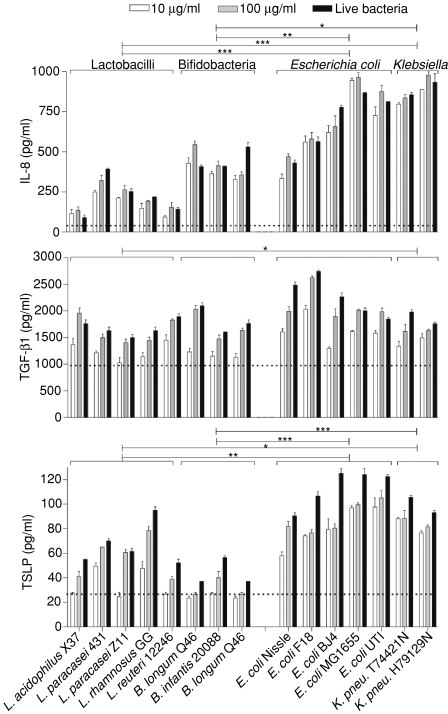
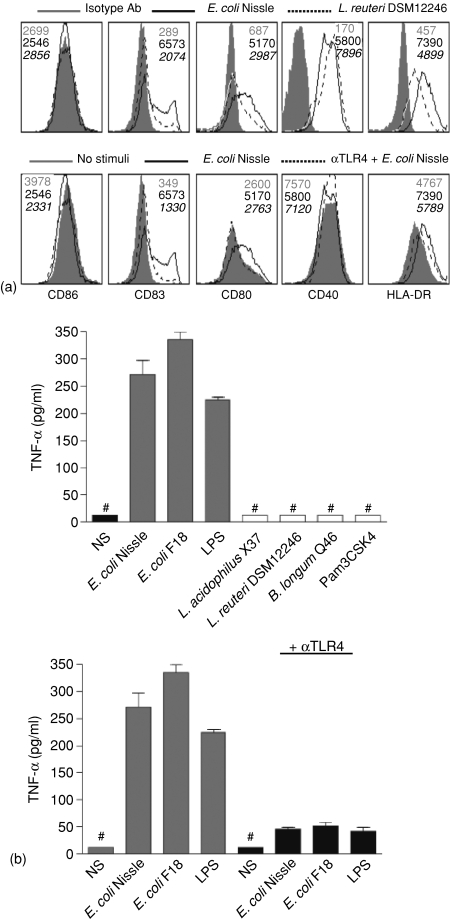
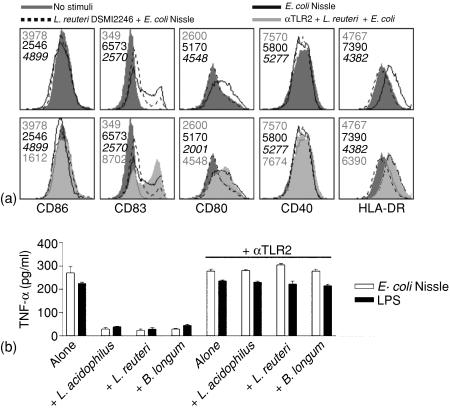
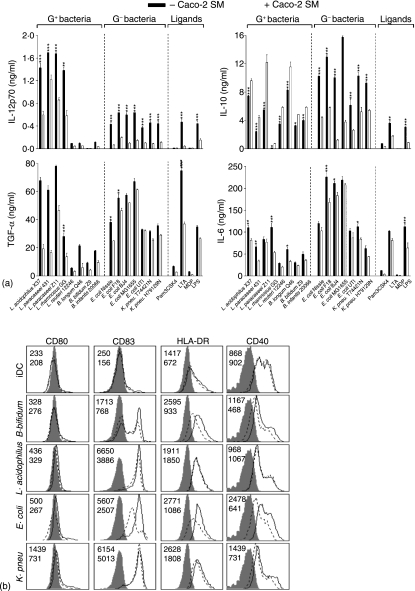
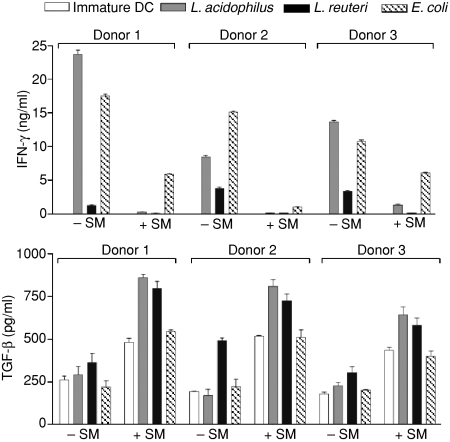
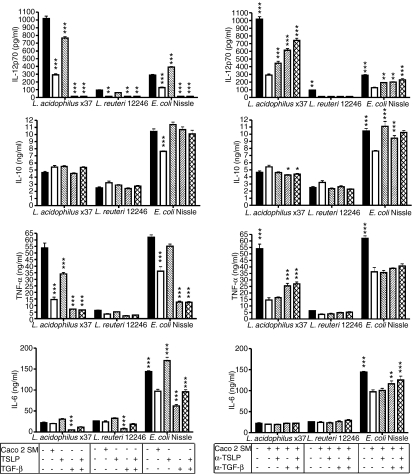
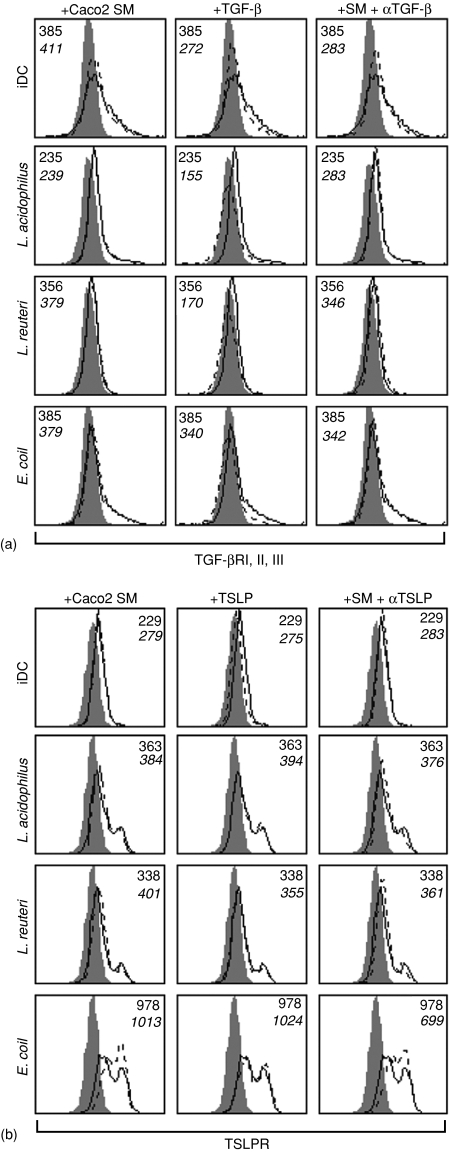
Humans and other mammals coexist with a diverse array of microbes colonizing the intestine, termed the microflora. The relationship is symbiotic, with the microbes benefiting from a stable environment and nutrient supply, and the host gaining competitive exclusion of pathogens and continuously maintenance of the gut immune homeostasis. Here we report novel crosstalk mechanisms between the human enterocyte cell line, Caco2, and underlying human monocyte-derived DC in a transwell model where Gram-positive (G+) commensals prevent Toll-like receptor-4 (TLR4)-dependent Escherichia coli-induced semimaturation in a TLR2-dependent fashion. These findings add to our understanding of the hypo-responsiveness of the gut epithelium towards the microflora. Gut DC posses a more tolerogenic phenotype than conventional DC. Here we show that Caco2 spent medium (SM) induces tolerogenic DC with lower expression of maturation markers, interleukin (IL)-12p70, and tumour necrosis factor-alpha when matured with G+ and Gram-negative (G-) commensals, while IL-10 production is enhanced in DC upon encountering G+ commensals and reduced upon encountering G- bacteria. The Caco2 SM-induced tolerogenic phenotype is also seen in DC priming of naive T cells with elevated levels of transforming growth factor-beta (TGF-beta) and markedly reduced levels of bacteria-induced interferon-gamma production. Caco2 cell production of IL-8, thymic stromal lymphopoietin (TSLP) and TGF-beta increases upon microbial stimulation in a strain dependent manner. TSLP and TGF-beta co-operate in inducing the tolerogenic DC phenotype but other mediators might be involved.
Figures
References
-
- Rescigno M, Urbano M, Valzasina B, et al. Dendritic cells express tight junction proteins and penetrate gut epithelial monolayers to sample bacteria. Nat Immunol. 2001;2:361–7. - PubMed
-
- Niess JH, Brand S, Gu XB, et al. CX (3) CR1-mediated dendritic cell access to the intestinal lumen and bacterial clearance. Science. 2005;307:254–8. - PubMed
-
- Mach J, Hshieh T, Hsieh D, Grubbs N, Chervonsky A. Development of intestinal M cells. Immunol Rev. 2005;206:177–89. - PubMed
-
- Zeuthen LH, Christensen HR, Frokiaer H. Lactic acid bacteria inducing a weak interleukin-12 and tumor necrosis factor alpha response in human dendritic cells inhibit strongly stimulating lactic acid bacteria but act synergistically with Gram-negative bacteria. Clin Vaccine Immunol. 2006;13:365–75. - PMC - PubMed
-
- Christensen HR, Frokiaer H, Pestka JJ. Lactobacilli differentially modulate expression of cytokines and maturation surface markers in murine dendritic cells. J Immunol. 2002;168:171–8. - PubMed
Publication types
MeSH terms
Substances
LinkOut - more resources
Full Text Sources
Other Literature Sources
