


Characterization of EBV gB indicates properties of both class I and class II viral fusion proteins
- PMID: 17655906
- PMCID: PMC2131761
- DOI: 10.1016/j.virol.2007.06.031
Characterization of EBV gB indicates properties of both class I and class II viral fusion proteins
Abstract
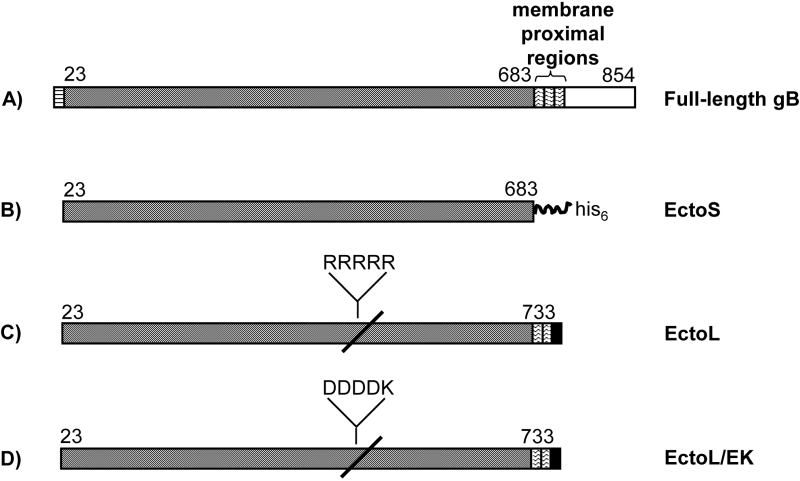
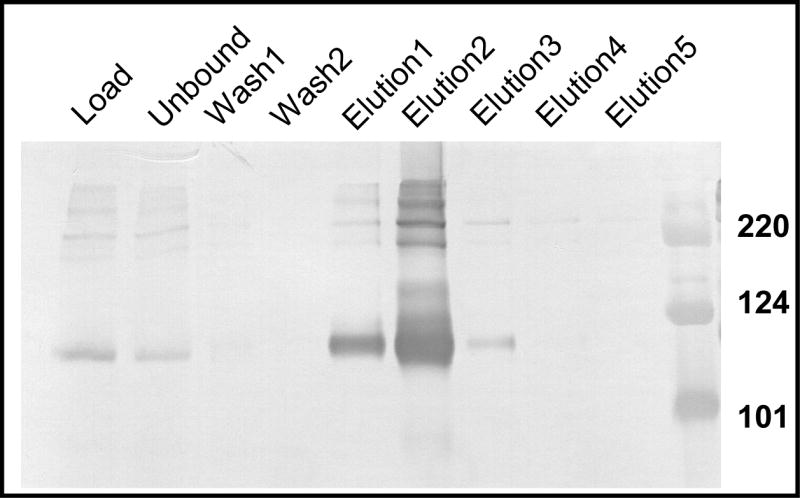
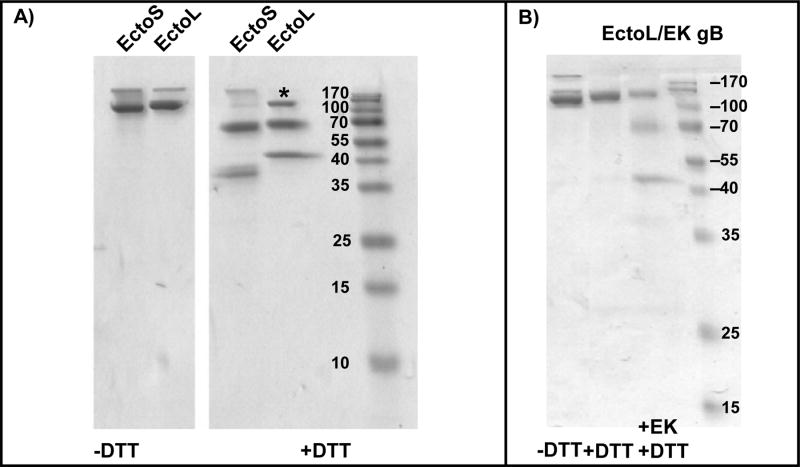
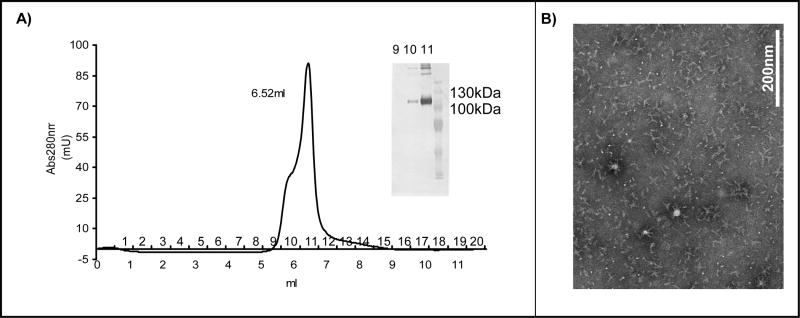
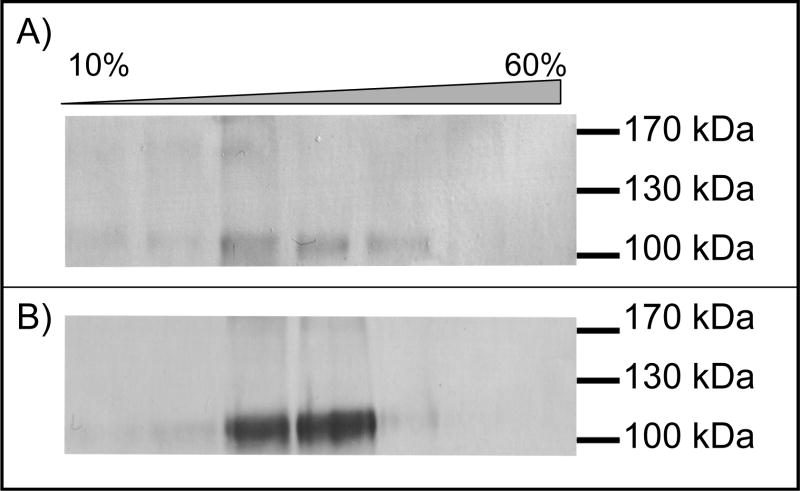
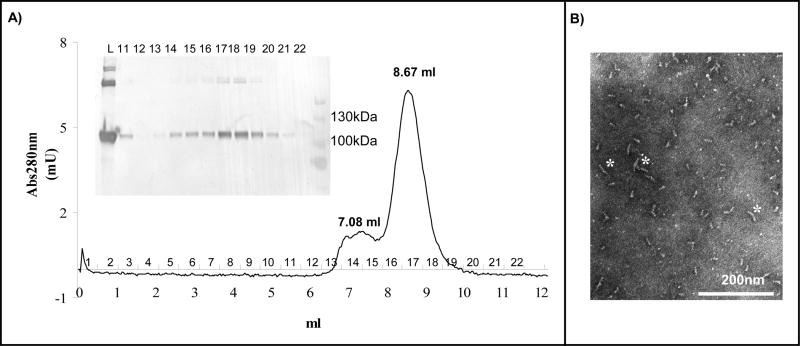
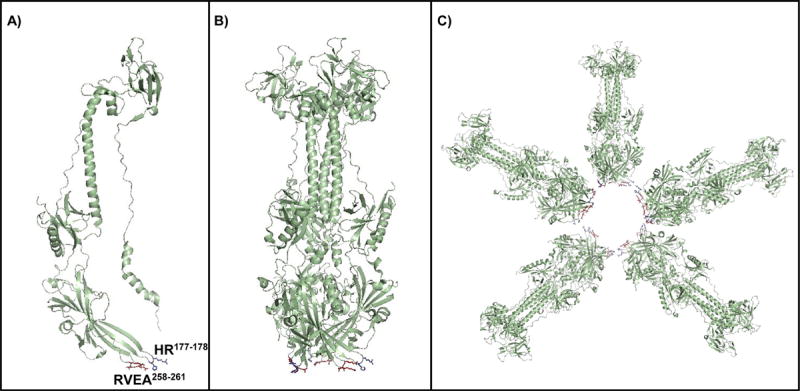
To gain insight into Epstein-Barr virus (EBV) glycoprotein B (gB), recombinant, secreted variants were generated. The role of putative transmembrane regions, the proteolytic processing and the oligomerization state of the gB variants were investigated. Constructs containing 2 of 3 C-terminal hydrophobic regions were secreted, indicating that these do not act as transmembrane anchors. The efficiency of cleavage of the gB furin site was found to depend on the nature of C-terminus. All of the gB constructs formed rosette structures reminiscent of the postfusion aggregates formed by other viral fusion proteins. However, substitution of putative fusion loop residues, WY(112-113) and WLIY(193-196), with less hydrophobic amino acids from HSV-1 gB, produced trimeric protein and abrogated the ability of the EBV gB ectodomains to form rosettes. These data demonstrate biochemical features of EBV gB that are characteristic of other class I and class II viral fusion proteins, but not of HSV-1 gB.
Figures

References
-
- Blewett EL, Misra V. Cleavage of the bovine herpesvirus glycoprotein B is not essential for its function. J Gen Virol. 1991;72:2083–90. - PubMed
-
- Borza CM, Hutt-Fletcher LM. Alternate replication in B cells and epithelial cells switches tropism of Epstein-Barr virus. Nat Med. 2002;8:594–9. - PubMed
-
- Browne H, Bruun B, Minson T. Plasma membrane requirements for cell fusion induced by herpes simplex virus type 1 glycoproteins gB, gD, gH and gL. J Gen Virol. 2001;82:1419–22. - PubMed
-
- Burnette WN. “Western blotting”: electrophoretic transfer of proteins from sodium dodecyl sulfate--polyacrylamide gels to unmodified nitrocellulose and radiographic detection with antibody and radioiodinated protein A. Anal Biochem. 1981;112:195–203. - PubMed
Publication types
MeSH terms
Substances
Grants and funding
LinkOut - more resources
Full Text Sources
Other Literature Sources
