


Hip replacement by a minimal anterior approach
- PMID: 17657491
- PMCID: PMC2267519
- DOI: 10.1007/s00264-007-0433-7
Hip replacement by a minimal anterior approach
Abstract
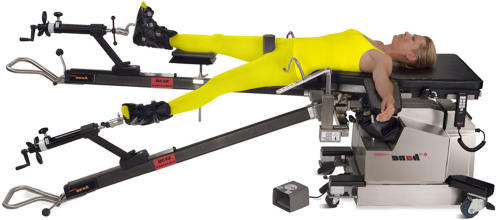
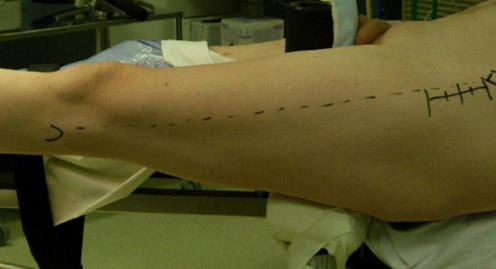
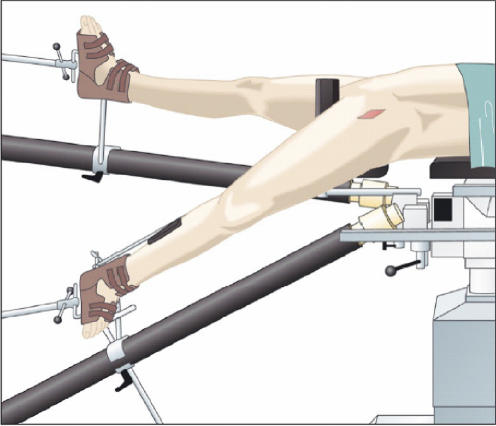
The mini-incision anterior approach in total hip replacement is not new, but uses a shorter incision than the traditional Hueter approach, typically only 6-8 cm in length. Despite its size, the single anterior incision allows good exposure. It is very atraumatic, preserves muscles and tendons, and allows the patient early mobilisation and fast postoperative recovery. Although, a special table (e.g., a Judet table) and specific tools (e.g., a curved reamer) are needed to perform hip replacement via the mini-anterior approach, any kind of hip prosthesis (cemented or uncemented) can be implanted. As there is a significant learning curve in mastering the mini-incision anterior approach, surgeons are advised to start with a longer incision and then to decrease its length with increasing experience.
Figures
References
-
- DeWal H, Su E, DiCesare PE (2003) Instability following total hip arthroplasty. Am J Orthop 32:377–382 - PubMed
-
- McCollum DE, Gray WJ (1990) Dislocation after total hip arthroplasty: causes and prevention. Clin Orthop 261:159–170 - PubMed
-
- Judet J, Judet R (1950) The use of an artificial femoral head for arthroplasty of the hip joint. J Bone Joint Surg 32B:166–173 - PubMed
MeSH terms
LinkOut - more resources
Full Text Sources
Medical
Research Materials
