


Social isolation disrupts autonomic regulation of the heart and influences negative affective behaviors
- PMID: 17658486
- PMCID: PMC2144909
- DOI: 10.1016/j.biopsych.2007.04.011
Social isolation disrupts autonomic regulation of the heart and influences negative affective behaviors
Abstract
Background: There is a documented association between affective disorders (e.g., depression and anxiety) and cardiovascular disease in humans. Chronic social stressors may play a mechanistic role in the development of behavioral and cardiac dysregulation. The current study investigated behavioral, cardiac, and autonomic responses to a chronic social stressor in prairie voles, a rodent species that displays social behaviors similar to humans.
Methods: Female prairie voles were exposed to 4 weeks of social isolation (n = 8) or pairing (control conditions; n = 7). Electrocardiographic parameters were recorded continuously during isolation, and behavioral tests were conducted during and following this period.
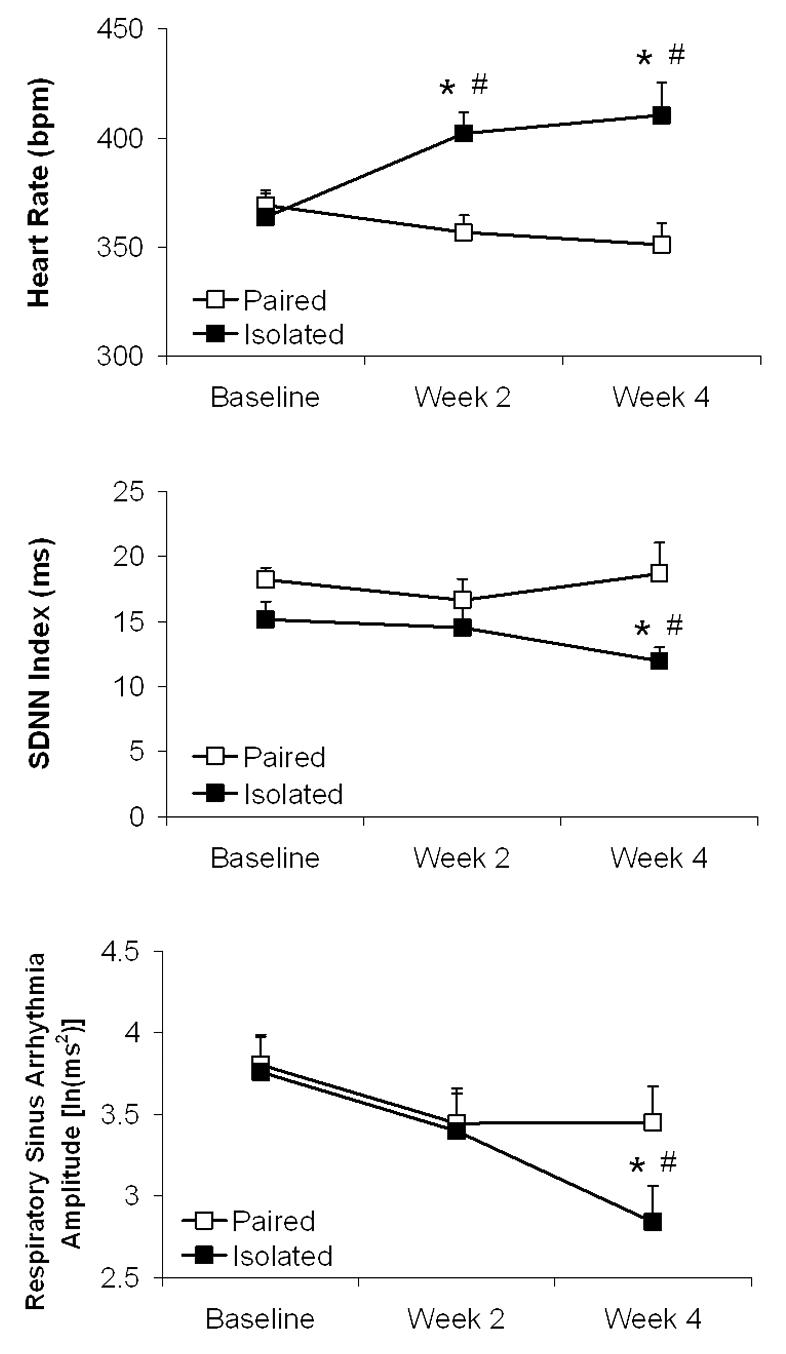
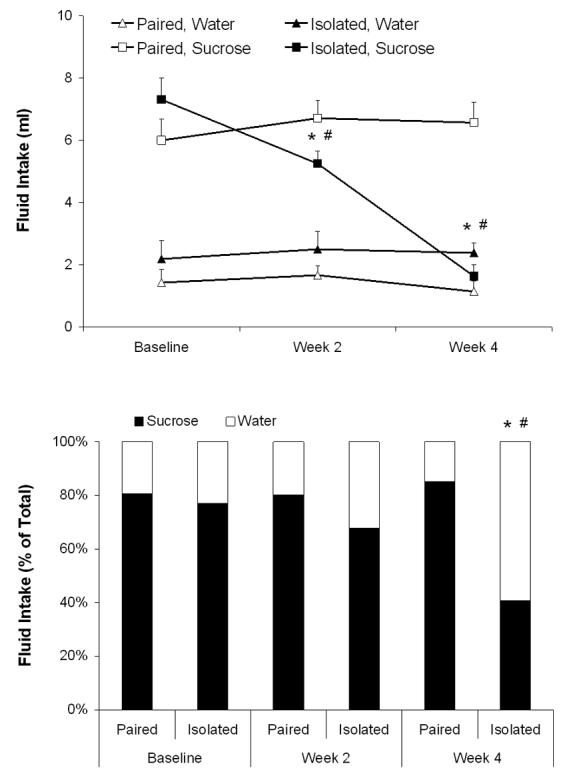
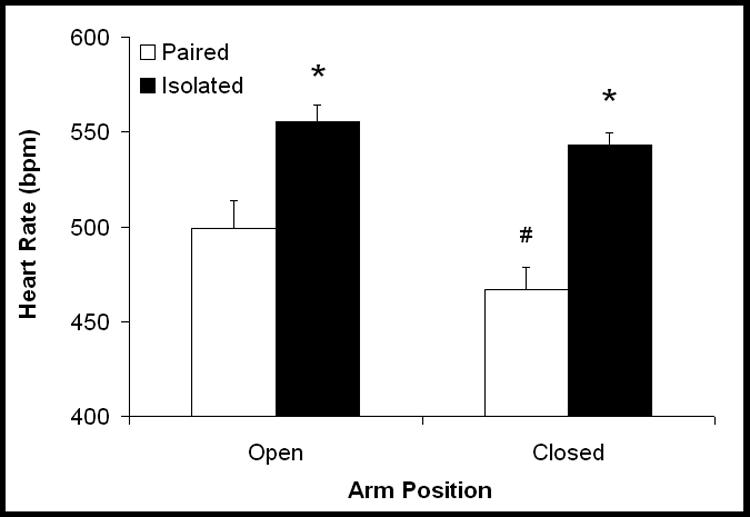
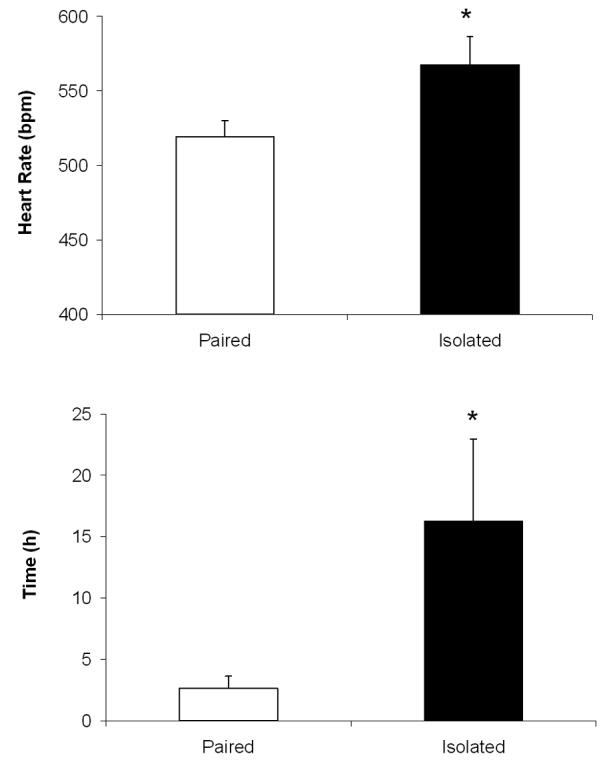
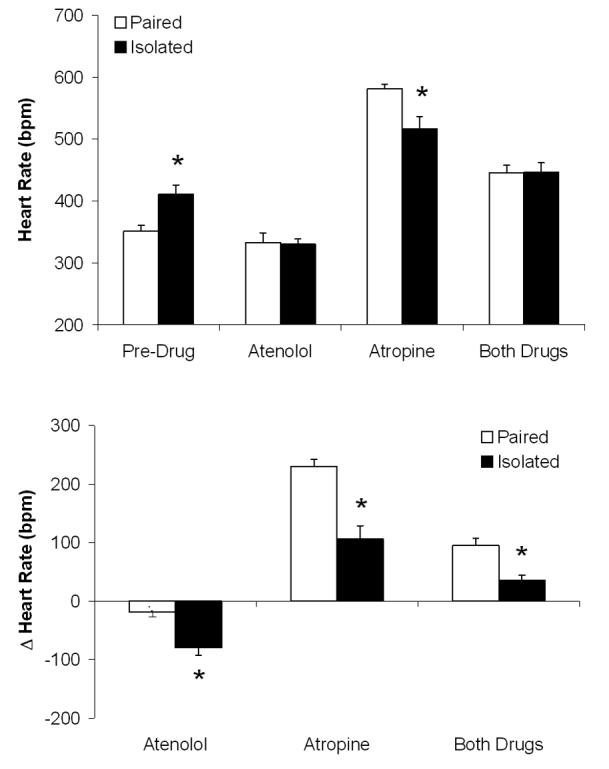
Results: Isolation induced a significant increase in resting heart rate, reduction in heart rate variability (standard deviation of normal-to-normal intervals and amplitude of respiratory sinus arrhythmia), and exaggerated cardiac responses during an acute resident-intruder paradigm. Isolation led also to both depression-like and anxiety-like behaviors in validated operational tests. These changes in response to social isolation showed predictable interrelations and were mediated by a disruption of autonomic balance including both sympathetic and parasympathetic (vagal) mechanisms.
Conclusions: These findings indicate that social isolation induces behavioral, cardiac, and autonomic alterations related to those seen after other stressors and which are relevant to cardiovascular disease and affective disorders. This model may provide insight into the mechanisms that underlie these co-occurring conditions.
Figures
References
-
- Barefoot JC, Schroll M. Symptoms of depression, acute myocardial infarction, and total mortality in a community sample. Circulation. 1996;93:1976–1980. - PubMed
-
- Frasure-Smith N, Lespérance F, Talajic M. Depression and 18-month prognosis after myocardial infarction. Circulation. 1995;91:999–1005. - PubMed
-
- Penninx BWJH, Beekman ATF, Honig A, Deeg DJH, Schoevers RA, van Eijk JTM, et al. Depression and cardiac mortality: results from a community-based longitudinal study. Arch Gen Psychiatry. 2001;58:221–227. - PubMed
-
- Kawachi I, Sparrow D, Vokonas PS, Weiss ST. Symptoms of anxiety and risk of coronary heart disease. The Normative Aging Study. Circulation. 1994;90:2225–2229. - PubMed
-
- Carney RM, Freedland KE. Depression, mortality, and medical morbidity in patients with coronary heart disease. Biol Psychiatry. 2003;54:241–247. - PubMed
Publication types
MeSH terms
Substances
Grants and funding
LinkOut - more resources
Full Text Sources
