


S179D prolactin: antagonistic agony!
- PMID: 17669587
- PMCID: PMC2001205
- DOI: 10.1016/j.mce.2007.06.001
S179D prolactin: antagonistic agony!
Abstract
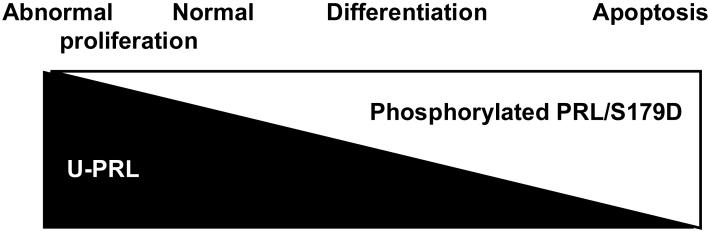
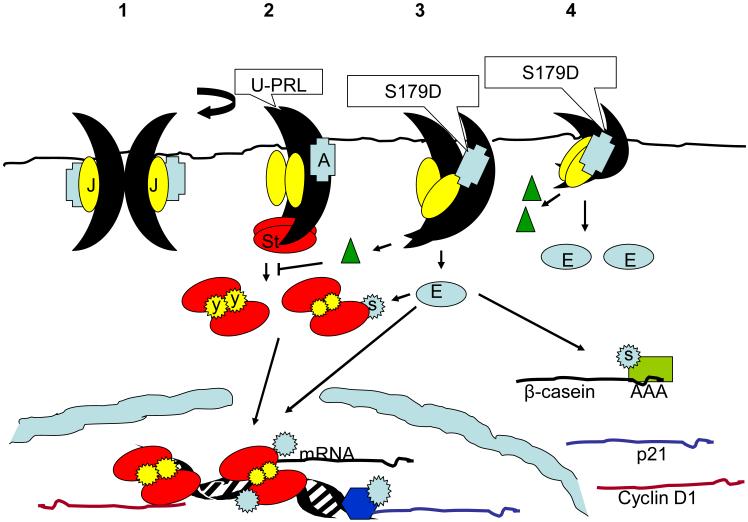
The aims of this review are three-fold: first, to collate what is known about the production and activities of phosphorylated prolactin (PRL), the latter largely, but not exclusively, as illustrated through the use of the molecular mimic, S179D PRL; second, to apply this and related knowledge to produce an updated model of prolactin-receptor interactions that may apply to other members of this cytokine super-family; and third, to promote a shift in the current paradigm for the development of clinically important growth antagonists. This third aim explains the title since, based on results with S179D PRL, it is proposed that agents which signal to antagonistic ends may be better therapeutics than pure antagonists-hence antagonistic agony. Since S179D PRL is not a pure antagonist, we have proposed the term selective prolactin receptor modulator (SPeRM) for this and like molecules.
Figures
References
-
- Ali S, Pelligrini I, Kelly PA. A prolactin-dependent immune cell line (Nb2) expresses a mutant form of prolactin receptor. J. Biol. Chem. 1991;266:20110–20117. - PubMed
-
- Aramburo C, Montiel JL, Proudman JA, Berghman LR, Scanes CG. Phosphorylation of PRL and growth hormone. J. Mol. Endocrinol. 1992;8:183–191. - PubMed
-
- Benelli R, Lorusso G, Albini A, Noonan DM. Cytokines and chemokines as regulators of angiogenesis in health and disease. Curr. Pharm. Des. 2006;12:3101–3115. - PubMed
-
- Bernichtein S, Kinet S, Jeay S, Llovera M, Madern D, Martial JA, Kelly PA, Goffin V. S179D-human PRL, a pseudophosphorylated human PRL analog, is an agonist and not an antagonist. Endocrinology. 2001;142:3950–3963. - PubMed
-
- Brooks CL, Kim BG, Aphale P, Kleeman BE, Johnson GC. Phosphorylated variant of bovine prolactin. Mol. Cell. Endocrinol. 1990;71:117–123. - PubMed
Publication types
MeSH terms
Substances
Grants and funding
LinkOut - more resources
Full Text Sources
