


The apoptosome: emerging insights and new potential targets for drug design
- PMID: 17674158
- PMCID: PMC2279152
- DOI: 10.1007/s11095-007-9396-z
The apoptosome: emerging insights and new potential targets for drug design
Abstract
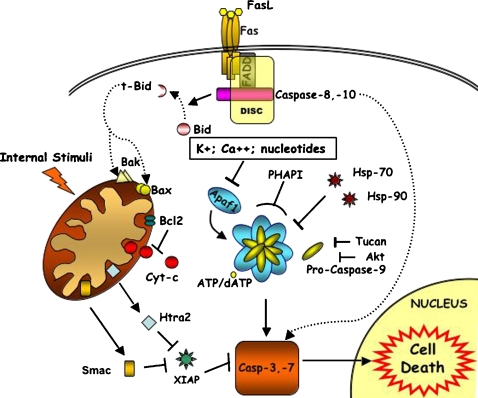
Apoptosis plays a crucial role in tissue homeostasis, development and many diseases. The relevance of Apaf1, the molecular core of apoptosome, has been underlined in mitochondria-dependent apoptosis, which according to a growing body of evidence, is involved in various pathologies where the equilibrium of life-and-death is dysregulated, such as heart attack, stroke, liver failure, cancer and autoimmune diseases. Consequently, great interest has emerged in devising therapeutic strategies for regulating the key molecules involved in the life-and-death decision. Here we review recent progress in apoptosis-based pharmacological therapies and, in particular, we point out a possible role of the apoptosome as an emerging and promising pharmacological target.
Figures
References
-
- A.H. Wyllie, J.F. Kerr, and A.R. Currie. Cell death: the significance of apoptosis. Int.Rev. Cyt.68:251–306 (1980). - PubMed
-
- D. R. Green and G. Kroemer. The pathophysiology of mitochondrial cell death. Science305:626–629 (2004). - PubMed
-
- K. Schulze-Osthoff, D. Ferrari, M. Los, S. Wesselborg, and M. E. Peter. Apoptosis signaling by death receptors. Eur. J. Biochem.254:439–459 (1998). - PubMed
-
- M. E. Peter and P. H. Krammer. The CD95 (Apo-1/Fas) DISC and beyond. Cell Death Differ.10(1):26–35 (2003). - PubMed
Publication types
MeSH terms
Substances
Grants and funding
LinkOut - more resources
Full Text Sources
