


Weight change during chemotherapy as a potential prognostic factor for stage III epithelial ovarian carcinoma: a Gynecologic Oncology Group study
- PMID: 17675142
- PMCID: PMC2517223
- DOI: 10.1016/j.ygyno.2007.06.010
Weight change during chemotherapy as a potential prognostic factor for stage III epithelial ovarian carcinoma: a Gynecologic Oncology Group study
Abstract
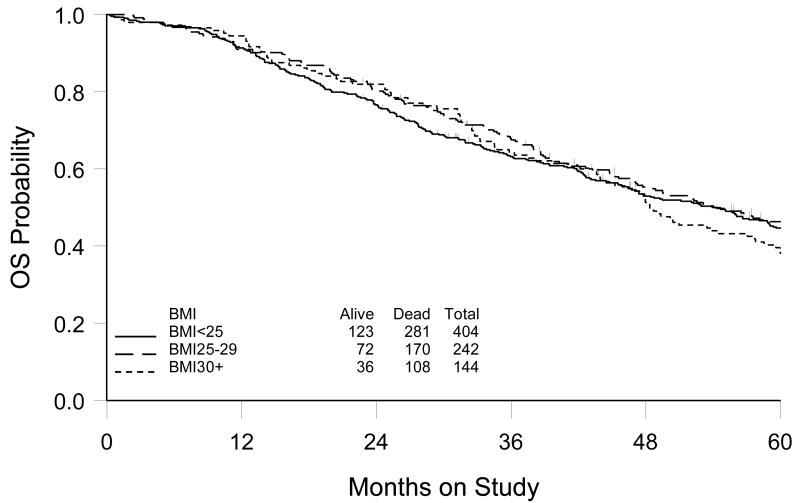
Objective: Platinum/Paclitaxel-based chemotherapy is a current treatment for advanced epithelial ovarian cancer. We sought to explore the association between weight change during treatment and survival, as well as the association between pre-chemotherapy body mass index (BMI) and survival.
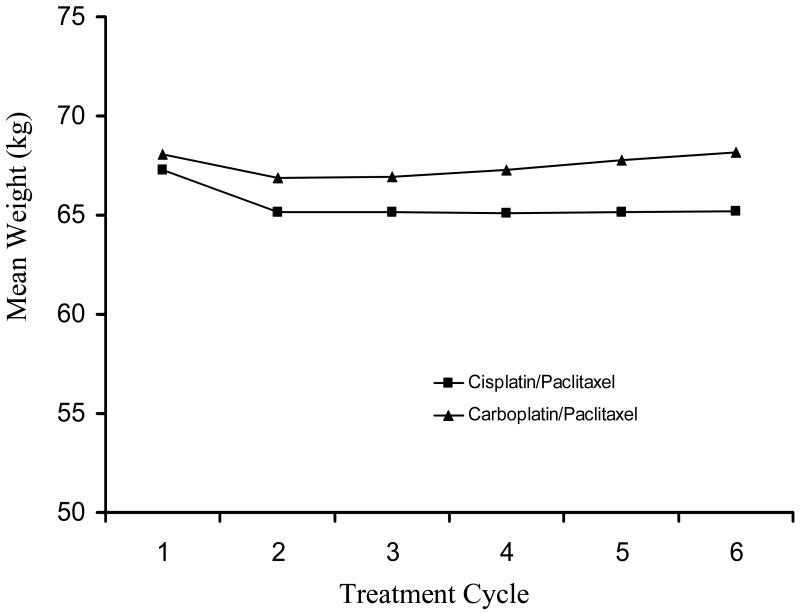
Methods: A retrospective data review was conducted of 792 advanced ovarian cancer patients who participated in a phase III randomized trial of cisplatin/paclitaxel versus carboplatin/paclitaxel. Pre-chemotherapy BMI was calculated following surgery. Weight change was defined as the ratio of body weight at completion of protocol therapy to pre-chemotherapy body weight. Progression-free survival (PFS) and overall survival (OS), classified by BMI or relative weight change, were estimated by Kaplan-Meier, and associations were assessed using a Cox model controlled for known prognostic variables (age, race, performance status, histology, tumor grade, tumor residual and treatment group).
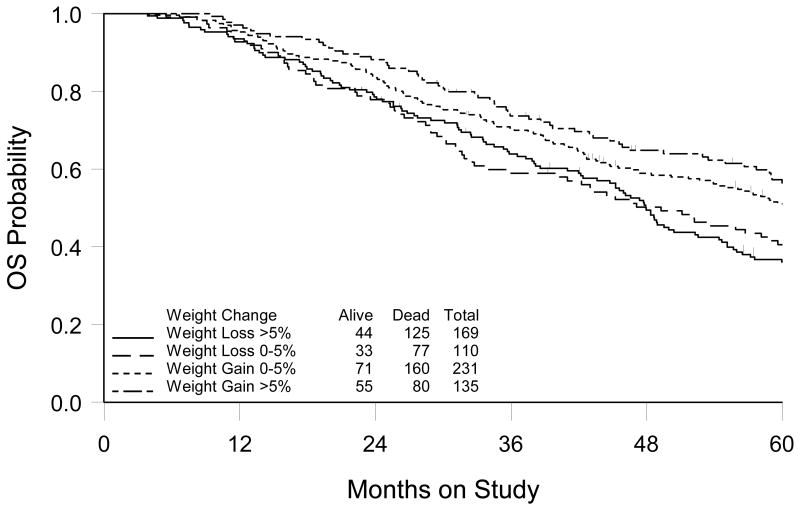
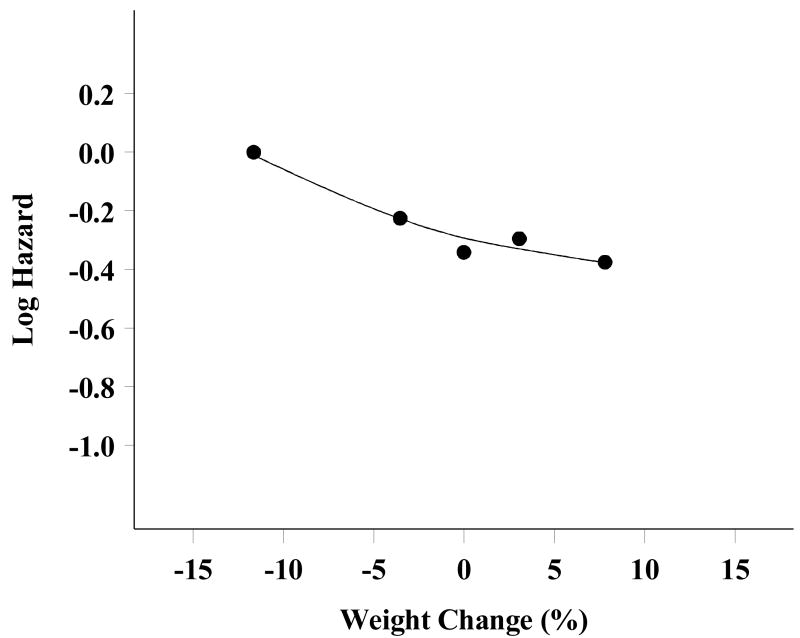
Results: There was no association between pre-chemotherapy BMI and survival. There was a significant relationship between median OS and weight change as follows: >5% decrease=48.0 months; 0-5% decrease=49.3 months; 0-5% increase=61.1 months; and >5% increase=68.2 months. Adjusted for covariates, the relative risk of death increased by 7% for each 5% decrease in body weight (HR=0.93, 95% CI=0.88-0.99; p=0.013).
Conclusions: Change of body weight during primary chemotherapy was a strong prognostic factor for overall survival. Loss of body weight during primary therapy is an indicator for poor OS; weight gain is an indicator for improved survival. This study supports the development of strategies to minimize weight loss that can be assessed in a prospective, randomized study to improve patient outcomes.
Figures
References
-
- Calle EE, Rodriguez C, Walker-Thurmond K, Thun MJ. Overweight, obesity, and mortality from cancer in a prospectively studied cohort of U.S. adults. N Engl J Med. 2003 Apr 24;348(17):1625–38. - PubMed
-
- Key TJ, Appleby PN, Reeves GK, Roddam A, Dorgan JF, Longcope C, et al. Body mass index, serum sex hormones, and breast cancer risk in postmenopausal women. J Natl Cancer Inst. 2003 Aug 20;95(16):1218–26. - PubMed
-
- Modesitt SC, van Nagell JR., Jr The impact of obesity on the incidence and treatment of gynecologic cancers: a review. Obstet Gynecol Surv. 2005 Oct;60(10):683–92. - PubMed
-
- Hoyo C, Berchuck A, Halabi S, Bentley RC, Moorman P, Calingaert B, et al. Anthropometric Measurements and Epithelial Ovarian Cancer Risk in African-American and White women. Cancer Causes Control. 2005 Oct;16(8):955–63. - PubMed
-
- Zhang M, Xie X, Lee AH, Binns CW, Holman CD. Body mass index in relation to ovarian cancer survival. Cancer Epidemiol Biomarkers Prev. 2005 May;14(5):1307–10. - PubMed
Publication types
MeSH terms
Substances
Grants and funding
LinkOut - more resources
Full Text Sources
Other Literature Sources
Medical
