


Histone modifications induced by a family of bacterial toxins
- PMID: 17675409
- PMCID: PMC1948930
- DOI: 10.1073/pnas.0702729104
Histone modifications induced by a family of bacterial toxins
Erratum in
- Proc Natl Acad Sci U S A. 2007 Oct 30;104(44):17555
Abstract
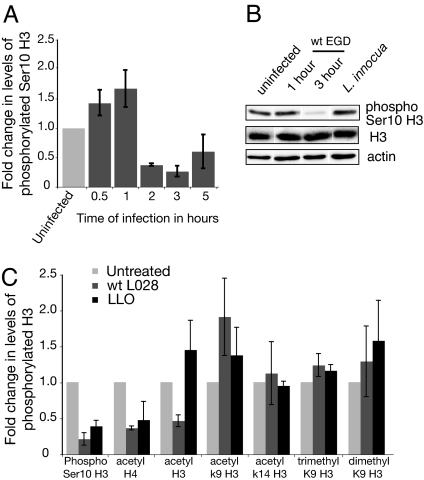
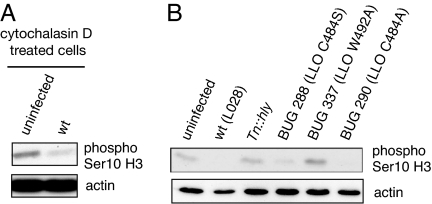
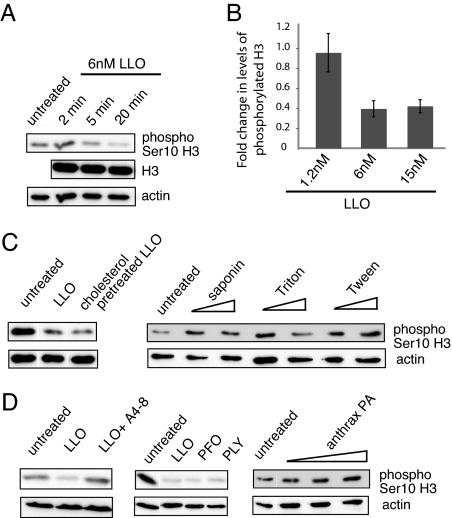
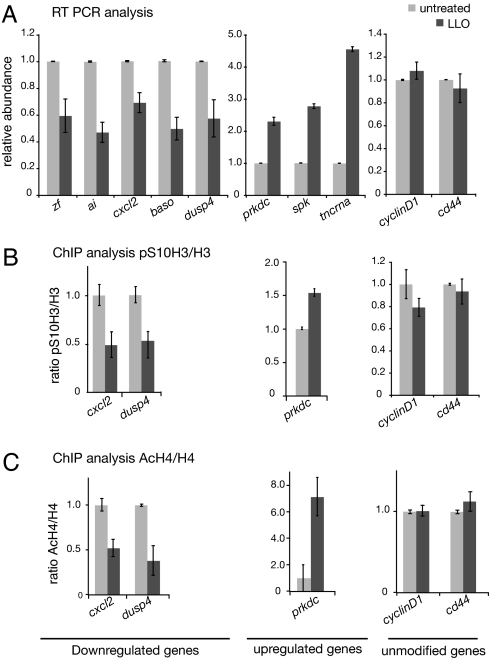
Upon infection, pathogens reprogram host gene expression. In eukaryotic cells, genetic reprogramming is induced by the concerted activation/repression of transcription factors and various histone modifications that control DNA accessibility in chromatin. We report here that the bacterial pathogen Listeria monocytogenes induces a dramatic dephosphorylation of histone H3 as well as a deacetylation of histone H4 during early phases of infection. This effect is mediated by the major listerial toxin listeriolysin O in a pore-forming-independent manner. Strikingly, a similar effect also is observed with other toxins of the same family, such as Clostridium perfringens perfringolysin and Streptococcus pneumoniae pneumolysin. The decreased levels of histone modifications correlate with a reduced transcriptional activity of a subset of host genes, including key immunity genes. Thus, control of epigenetic regulation emerges here as an unsuspected function shared by several bacterial toxins, highlighting a common strategy used by intracellular and extracellular pathogens to modulate the host response early during infection.
Conflict of interest statement
The authors declare no conflict of interest.
Figures
References
Publication types
MeSH terms
Substances
LinkOut - more resources
Full Text Sources
Other Literature Sources
Molecular Biology Databases
