


The glycans of stem cells
- PMID: 17681848
- PMCID: PMC2697851
- DOI: 10.1016/j.cbpa.2007.05.032
The glycans of stem cells
Abstract
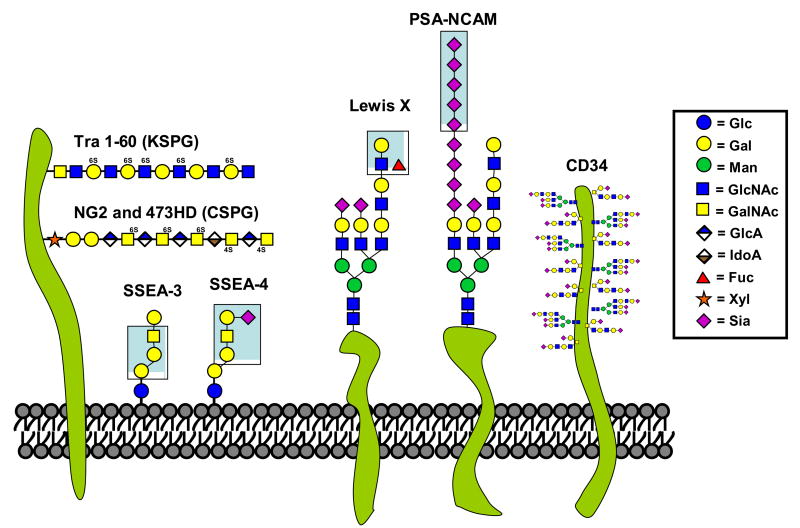
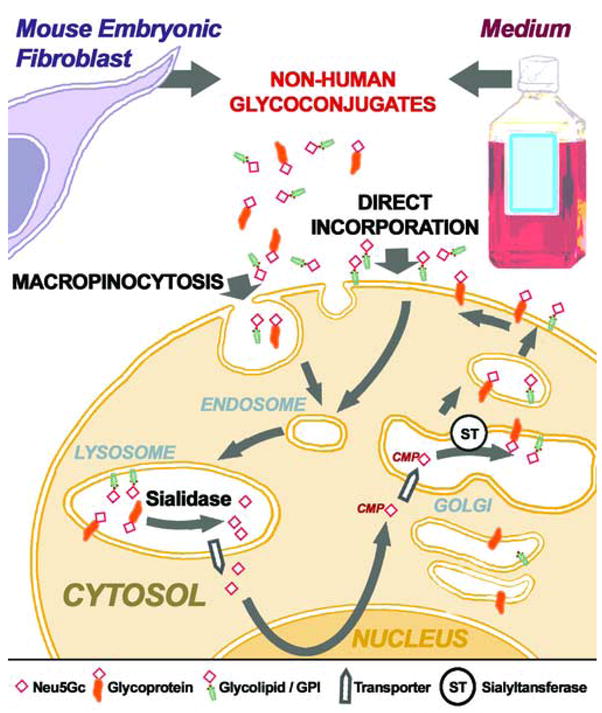
Glycans cover all cellular surfaces and, not surprisingly, are involved in many facets of stem cell biology and technology. For instance, coaxing stem cells to either proliferate or differentiate into the specific cell types needed for transplantation requires intricate glycan-dependent modulation of signalling molecules such as FGF-2, Wnt, and Notch. Moreover, owing to their prominent cell-surface localization and lineage-specific signatures, glycan epitopes such as the stage-specific embryonic antigens (Lewis X/SSEA-1, SSEA3-4) and tumor-rejection antigens (TRA1-60, 1-81) are ideally suited for identifying and isolating specific cell types from heterogeneous populations. Finally, the non-human sialic acid Neu5Gc has been detected on the surface of human embryonic stem cells because of metabolic incorporation from animal products used for their culture. Transplantation of Neu5Gc-contaminated cells poses immunological risks due to the presence, in humans, of circulating antibodies recognizing this glycan epitope.
Figures

References
-
- Varki A, Cummings R, Esko J, Freeze H, Hart G, Marth J. Essentials of Glycobiology. 1. Cold Spring Harbor Laboratory Press; New York: 1999. - PubMed
-
- Trombetta ES, Parodi AJ. Quality control and protein folding in the secretory pathway. Annu Rev Cell Dev Biol. 2003;19:649–676. - PubMed
-
- Yamamoto F, Clausen H, White T, Marken J, Hakomori S. Molecular genetic basis of the histo-blood group ABO system. Nature. 1990;345:229–233. - PubMed
-
- Hanjan SN, Kearney JF, Cooper MD. A monoclonal antibody (MMA) that identifies a differentiation antigen on human myelomonocytic cells. Clin Immunol Immunopathol. 1982;23:172–188. - PubMed
Publication types
MeSH terms
Substances
Grants and funding
LinkOut - more resources
Full Text Sources
Other Literature Sources
Medical
Miscellaneous
