What is in a word? No versus Yes differentially engage the lateral orbitofrontal cortex
- PMID: 17683220
- PMCID: PMC2443710
- DOI: 10.1037/1528-3542.7.3.649
What is in a word? No versus Yes differentially engage the lateral orbitofrontal cortex
Erratum in
- Emotion. 2007 Nov;7(4):735
Abstract
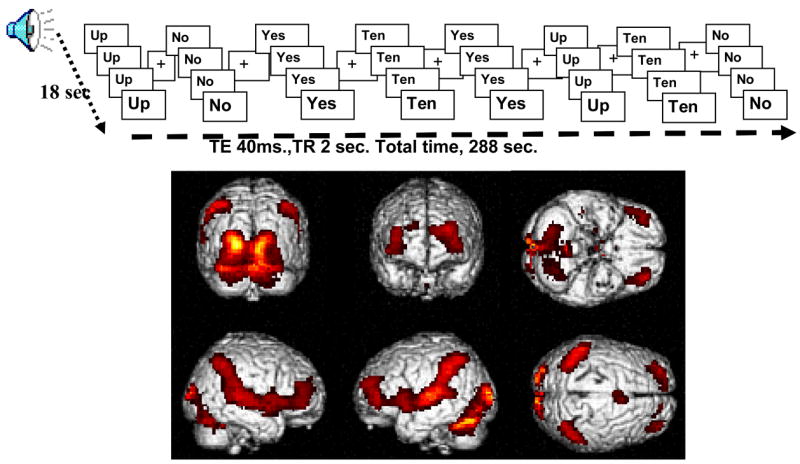
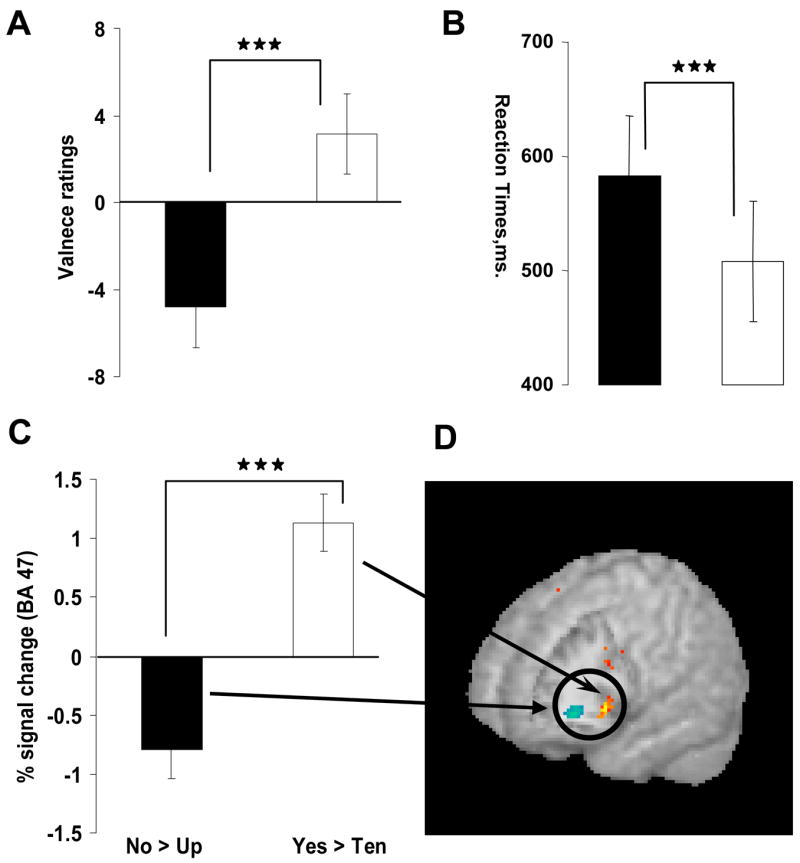
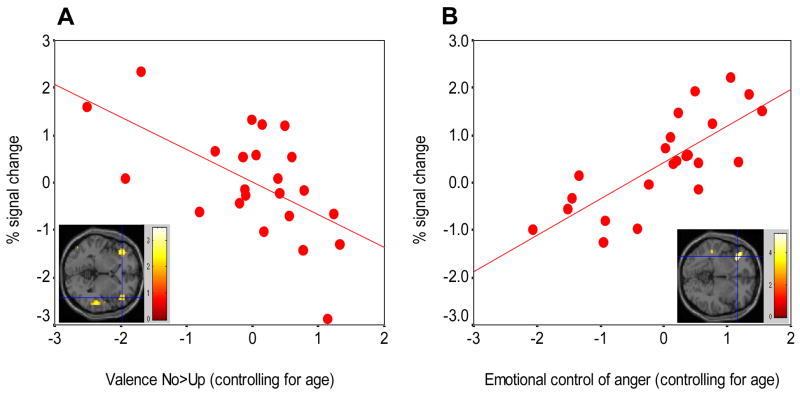
The words "No" and "Yes" are involved in conditioning to prohibit or encourage behavior, respectively. The authors, therefore, hypothesized that these words would be attributed to endogenous valence, activating neuronal circuits involved with valence and emotional control. Functional MRI (fMRI) at 4 Tesla was used to record regional brain activity while participants were exposed to emphatic vocalizations of the words. Results showed that No and Yes were associated with opposite brain-behavior responses; while No was negatively valenced, produced slower response times, and evoked a negative signal in the right lateral orbitofrontal cortex (OFC), Yes was positively valenced, produced faster response times, and evoked a positive signal in a contiguous region of the OFC. Attribution of negative valence to No and trait anger control were associated with increased responsivity of the OFC to No. Inasmuch as sensitivity to the prohibitive command No develops during childhood through interaction with primary caregivers as the first social objects, our findings may implicate the lateral OFC in the neurobiology of emotion regulation and subsequent social development.
((c) 2007 APA, all rights reserved).
Figures
References
-
- Ashburner J, Neelin P, Collins DL, Evans A, Friston K. Incorporating prior knowledge into image registration. Neuroimage. 1997;6(4):344–352. - PubMed
-
- Bechara AB, Damasio H, Damasio AR. Emotion, decision making and the orbitofrontal cortex. Cerebral Cortex. 2000;10:295–307. - PubMed
-
- Belin P, Zilbovicius M, Crozier S, Thivard L, Fontaine A, Masure MC, et al. Lateralization of speech and auditory temporal processing. J Cogn Neurosci. 1998;10(4):536–540. - PubMed
-
- Berlin HA, Rolls ET, Kischka U. Brain. 2004. Impulsivity, time perception, emotion and reinforcement sensitivity in patients with orbitofrontal cortex lesions. - PubMed
-
- Buonocore MH, Gao L. Ghost artifact reduction for echo planar imaging using image phase correction. Magn Reson Med. 1997;38(1):89–100. - PubMed