


First human-caused extinction of a cetacean species?
- PMID: 17686754
- PMCID: PMC2391192
- DOI: 10.1098/rsbl.2007.0292
First human-caused extinction of a cetacean species?
Abstract
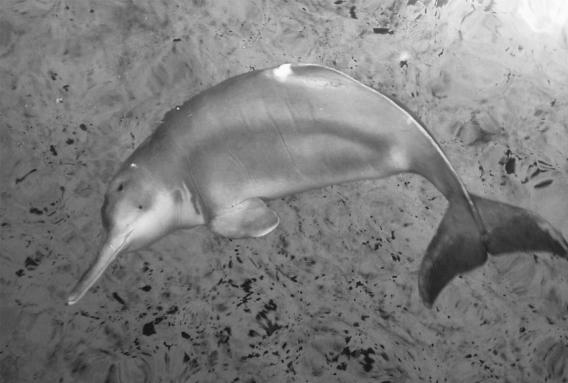
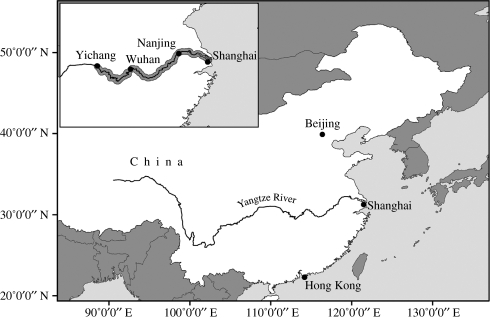
The Yangtze River dolphin or baiji (Lipotes vexillifer), an obligate freshwater odontocete known only from the middle-lower Yangtze River system and neighbouring Qiantang River in eastern China, has long been recognized as one of the world's rarest and most threatened mammal species. The status of the baiji has not been investigated since the late 1990s, when the surviving population was estimated to be as low as 13 individuals. An intensive six-week multi-vessel visual and acoustic survey carried out in November-December 2006, covering the entire historical range of the baiji in the main Yangtze channel, failed to find any evidence that the species survives. We are forced to conclude that the baiji is now likely to be extinct, probably due to unsustainable by-catch in local fisheries. This represents the first global extinction of a large vertebrate for over 50 years, only the fourth disappearance of an entire mammal family since AD 1500, and the first cetacean species to be driven to extinction by human activity. Immediate and extreme measures may be necessary to prevent the extinction of other endangered cetaceans, including the sympatric Yangtze finless porpoise (Neophocaena phocaenoides asiaeorientalis).
Figures
References
-
- Barlow J. The abundance of cetaceans in California waters. Part I. ship surveys in summer and fall of 1991. Fish. Bull. 1995;93:1–14.
-
- Chen P, Hua Y. Distribution, population size and protection of Lipotes vexillifer. Occ. Papers IUCN SSC. 1989;3:78–81.
-
- Chen P, Liu P, Liu R, Lin K, Pilleri G. Distribution, ecology, behaviour and protection of the dolphins in the middle reaches of the Changjiang River (Wuhan-Yueyang) Oceanol. Limnol. Sin. 1980;11:73–84.
-
- Chen P, Zhang X, Wei Z, Zhao Q, Wang X, Zhang G, Yang J. Appraisal of the influence upon baiji Lipotes vexillifer by the Three-gorge Project and conservation strategy. Acta Hydrobiol. Sin. 1993;17:101–111.
-
- Chen P, Liu R, Wang D, Zhang X. Science Press; Beijing, China: 1997. Biology of baiji, and its rearing and conservation.
Publication types
MeSH terms
LinkOut - more resources
Full Text Sources
