


Risk factors for group B streptococcal colonization: potential for different transmission systems by capsular type
- PMID: 17689259
- PMCID: PMC2099698
- DOI: 10.1016/j.annepidem.2007.05.014
Risk factors for group B streptococcal colonization: potential for different transmission systems by capsular type
Abstract
Purpose: Group B Streptococcus (GBS) is a common inhabitant of the bowel and vaginal flora, with known transmission routes including sexual contact and vertical transmission from mother to infant. Food-borne transmission is also possible, as GBS is a known fish and bovine pathogen. We conducted a prospective cohort study in order to identify risk factors for acquisition.
Methods: We identified risk factors for GBS acquisition among college women (n = 129) and men (n = 128) followed at 3-week intervals for 3 months.
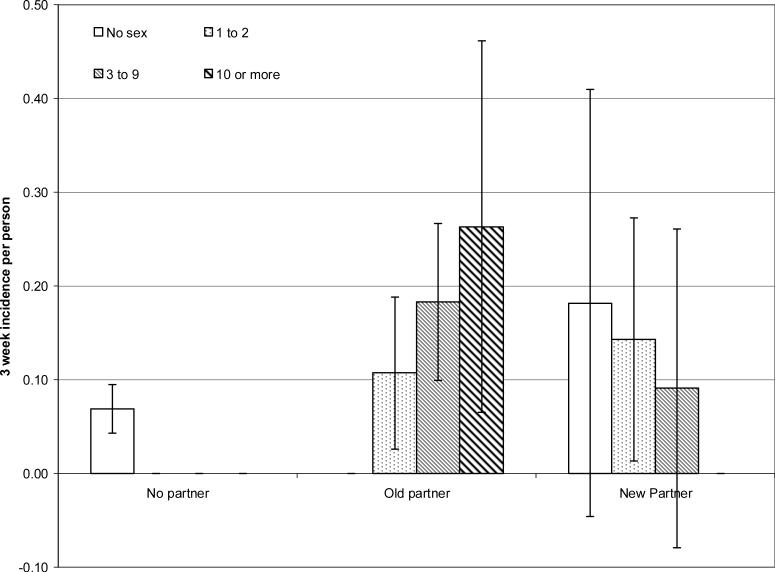
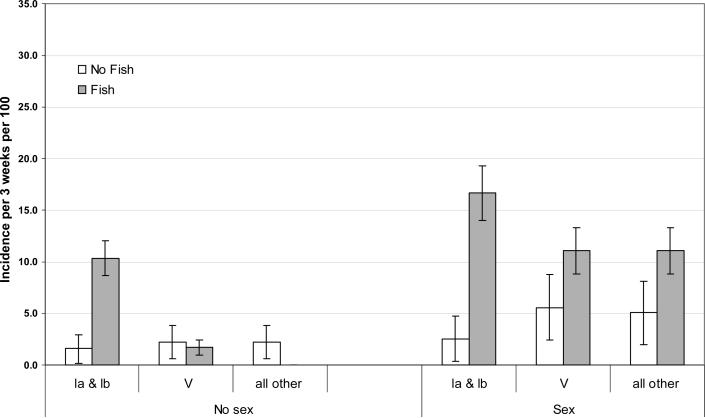
Results: A doubling in sex acts significantly increased incidence of GBS capsular type V by 80% (95% confidence interval [CI]: 1.19, 2.58), and other non-Ia or -Ib types combined by 40% (95% CI: 1.00, 2.06; incidence of capsular type Ia (odds ratio [OR] = 1.2; 95% CI: 0.71, 1.88; p = 0.57) and Ib (OR = 1.5, 95% CI: 0.75, 2.86; p = 0.27) were elevated, although not significantly. After adjustment for sexual activity and sexual history, gender, and eating venue, fish consumption increased risk of acquiring capsular types Ia and Ib combined 7.3 fold (95% CI: 2.34, 19.50), but not of acquiring other capsular types. Beef and milk were not associated with GBS incidence.
Conclusions: Different GBS capsular types may have different transmission routes.
Figures
References
-
- Schuchat A. Group B streptococcal disease: from trials and tribulations to triumph and trepidation. Clinical Infectious Diseases. 2001;33:751–756. Epub 2001 Aug 10. - PubMed
-
- Hill HR. Group B streptococcal infections. In: Holmes KK, et al., editors. Sexually transmitted diseases. Second Edition McGraw-Hill; New York: 1990. pp. 851–861.
-
- Baker CJ, Goroff DK, Alpert S, Crockett VA, Zinner SH, Evrard JR, et al. Vaginal colonization with Group B Streptococcus: a study in college women. Journal of Infectious Diseases. 1977;134:392–397. - PubMed
-
- Newton ER, Butler MC, Shain RN. Sexual behavior and vaginal colonization by group B Streptococcus among minority women. Obstetrics and Gynecology. 1996;88:377–82. - PubMed
-
- Bliss SJ, Manning SD, Tallman P, Baker CJ, Pearlman MD, Marrs CF, et al. Group B Streptococcus colonization in male and non-pregnant female university students: A cross sectional prevalence study. Clinical Infectious Diseases. 2002;34:184–190. - PubMed
Publication types
MeSH terms
Substances
Grants and funding
LinkOut - more resources
Full Text Sources
Medical
