. 2007 Aug 10;130(3):427-39.
doi: 10.1016/j.cell.2007.06.044.

Human alpha B-crystallin mutation causes oxido-reductive stress and protein aggregation cardiomyopathy in mice

Affiliations

Human alpha B-crystallin mutation causes oxido-reductive stress and protein aggregation cardiomyopathy in mice

Namakkal S Rajasekaran et al. Cell. .

Abstract

The autosomal dominant mutation in the human alphaB-crystallin gene inducing a R120G amino acid exchange causes a multisystem, protein aggregation disease including cardiomyopathy. The pathogenesis of cardiomyopathy in this mutant (hR120GCryAB) is poorly understood. Here, we show that transgenic mice overexpressing cardiac-specific hR120GCryAB recapitulate the cardiomyopathy in humans and find that the mice are under reductive stress. The myopathic hearts show an increased recycling of oxidized glutathione (GSSG) to reduced glutathione (GSH), which is due to the augmented expression and enzymatic activities of glucose-6-phosphate dehydrogenase (G6PD), glutathione reductase, and glutathione peroxidase. The intercross of hR120GCryAB cardiomyopathic animals with mice with reduced G6PD levels rescues the progeny from cardiac hypertrophy and protein aggregation. These findings demonstrate that dysregulation of G6PD activity is necessary and sufficient for maladaptive reductive stress and suggest a novel therapeutic target for abrogating R120GCryAB cardiomyopathy and heart failure in humans.


Figures
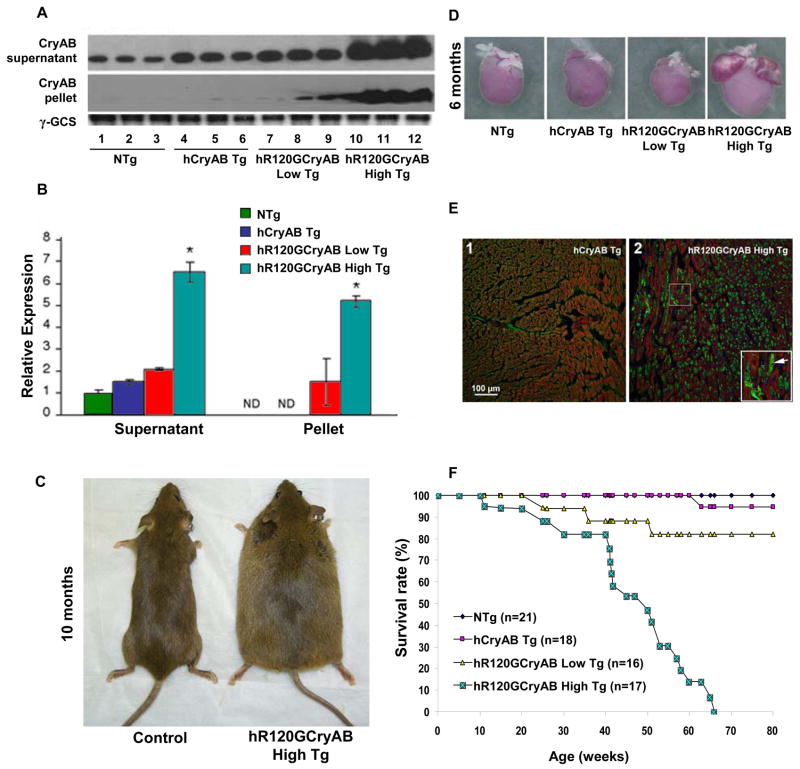
Figure 1
Figure 1. Cardiac-specific Overexpression of R120GCryAB Causes Protein Aggregation Cardiomyopathy in Transgenic Mice
(A) Representative Westerns of either the soluble (supernatant) or insoluble (pellet) fractions isolated from hearts of 6 month old non-transgenic (NTg), human αB-crystallin (hCryAB Tg), hR120GCryAB Low Tg, and hR120GCryAB High Tg animals. Each lane represents an individual animal. (B) R120GCryAB overexpression causes translocation of CryAB into the insoluble fraction in a dose-dependent manner. Fold changes are expressed in arbitrary units relative to NTg. Representative groups consist 3 or more animals (*p<0.001). (C) Congestive heart failure exhibited by systemic edema in hR120GCryAB mice at 10 months. (D) Human R120GCryAB overexpression causes ventricular enlargement along with biatrial thrombosis consistent with heart failure at 6 months. (E) Indirect immunofluorescence analysis of heart sections stained with anti-CryAB detected by FITC conjugated secondary antibodies shows large protein aggregates (green) in cardiomyocytes of hR120GCryAB High Tg hearts (inset/arrow). (F) Survival Curve. Transgenic hR120GCryAB High mice developed congestive heart failure and died between 24 and 65 weeks. Most hR120GCryAB Low Tg mice (~80%) were alive after 80 weeks. No differences in mortality were observed between hCryAB Tg and NTg littermates.
Figure 2
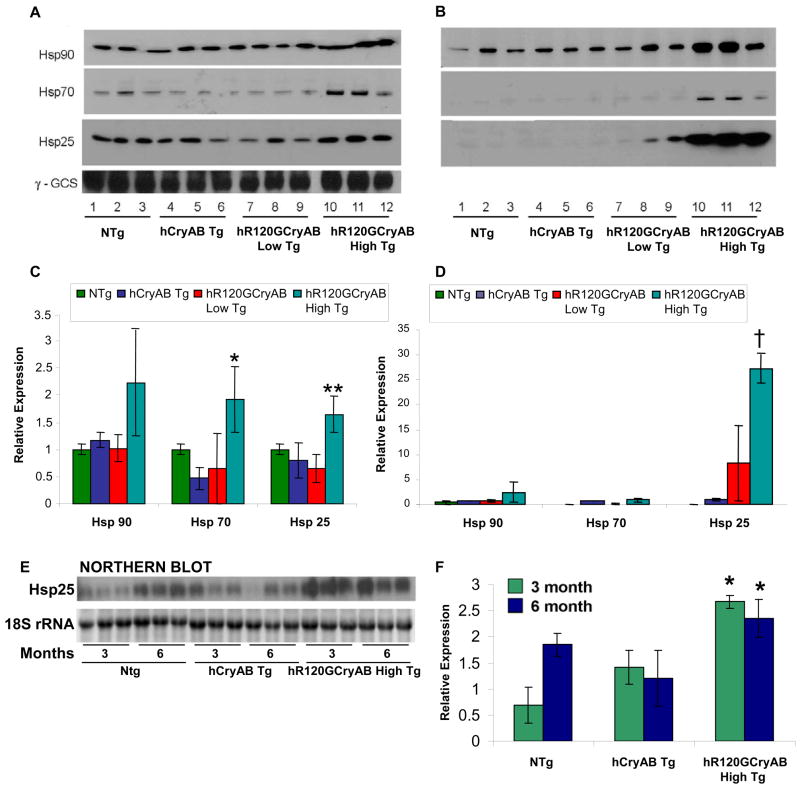
Figure 2. Mutant R120GCryAB induces the HSP stress response pathway
(A, B) Representative Western blot experiments of (A) supernatants or (B) insoluble fractions (pellets) from heart extracts of 6 month old NTg, hCryAB Tg, hR120GCryAB Low Tg and hR120GCryAB High Tg mice, immunoblotted with anti-Hsp25, -Hsp70, and -Hsp90 antibodies. Each lane represents an individual animal (3 animals/group). (C, D) Densitometry values are represented as relative intensities in mean arbitrary units calculated from the Western blots shown in Figures 2A and 2B, respectively (*p<0.05, **p<0.01, †p<0.001). (E, F) Northern blots show that Hsp25 transcripts are significantly increased in hR120GCryAB hearts at 3 and 6 month old animals (*p<0.05).
Figure 3
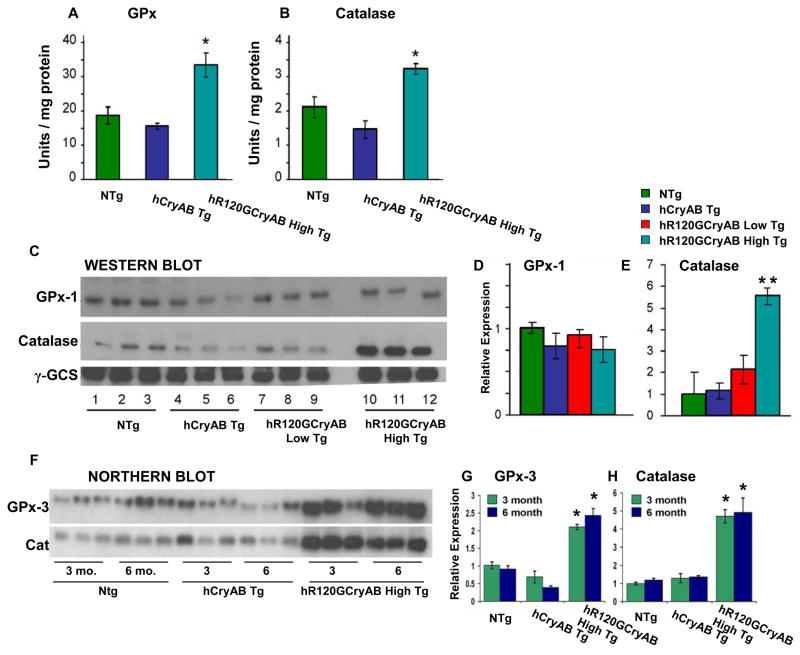
Figure 3. Enzyme activity and protein expression of glutathione peroxidase-1 (GPx-1) and catalase at 6 months
(A, B) Mutant hR120GCryAB Tg High overexpression enhances the activities of GPx-1 and catalase (*p 0.05) in 6 month old hearts. (C, D) At 6 months, protein expression for GPx-1 is unchanged but catalase was increased in hR120GCryAB High animals compared with NTg, hCryAB Tg and hR120GCryAB Low Tg animals. Moderate increase in GPx activity (panel A) without a commensurate increase in GPx protein expression may reflect the translational limitations of available selenium, which is not standardized in chows, and/or of the translational cofactors required for selenoprotein synthesis (Handy et al., 2006). Each lane represents an individual animal (3 animals/group). (E) Densitometry of Western blots presented in Figure 3C reveals that catalase level was increased by ~ 5 fold in hR120GCryAB High Tg compared with the other groups (**p<0.02). (F) Northern blot analysis using radio-labeled cDNA probes against GPx-3 and catalase (Cat). Total RNA was harvested from NTg, hCryAB Tg and hR120GCryAB High Tg at either 3 or 6 months. (G, H) Densitometry analysis of Northern blots of Figure 3F expressed in arbitrary units shows ~ 2–3 fold increases for GPx-3 (G) and catalase (H), in both 3 and 6 month old hR120GCryAB High Tg hearts (*p<0.05). Each lane represents an individual animal (3 animals/group).
Figure 4
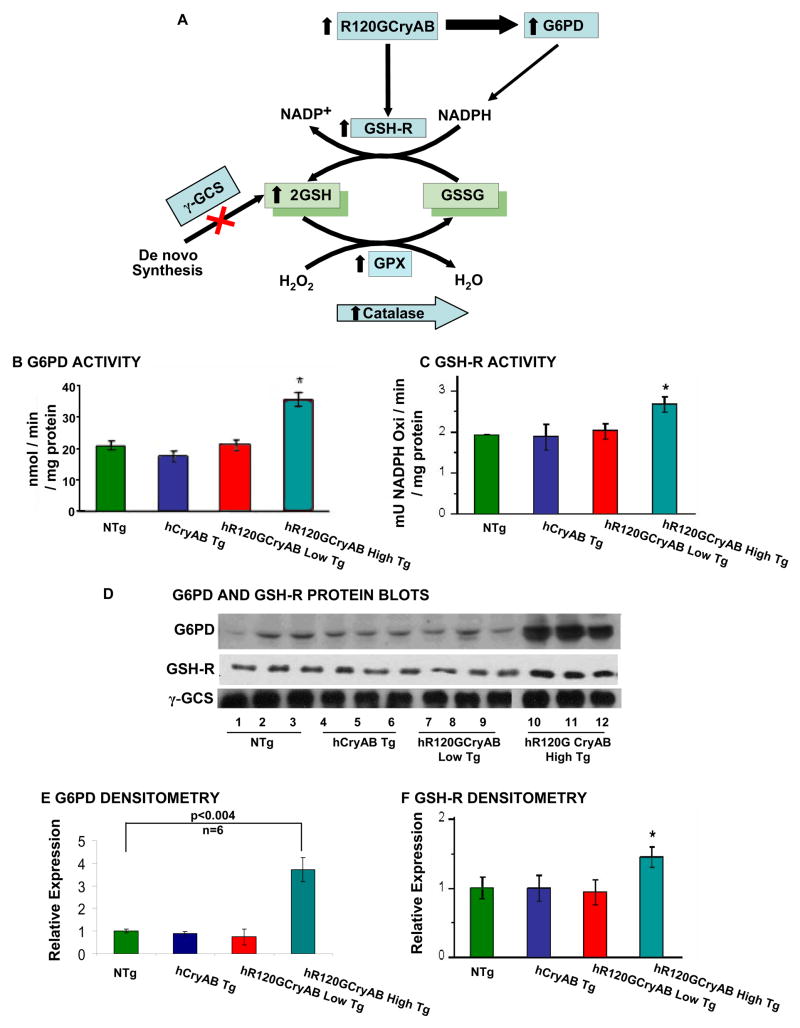
Figure 4. R120GCryAB Overexpression Enhances Antioxidative Enzymatic and GSH Recycling Pathways
(A) The schematic diagram illustrates the effects of hR120GCryAB expression on upregulation of Hsp25 and G6PD, the first and rate-limiting enzyme of the anaerobic pentose phosphate pathway and major source of reducing equivalents in the form of NADPH. Reduced glutathione (GSH) is generated by increased activity of glutathione reductase from recycling and not from de novo synthesis. Catalase and glutathione peroxidase (which consumes GSH) catalyze the conversion of reactive oxygen species such as hydrogen peroxide to H2O. (B) Human hR120GCryAB causes modest increase in G6PD enzyme activity in 6 month old hR120GCryAB High Tg expressors compared with the control groups. (C) Glutathione reductase, which catalyses the recycling of GSSG to GSH, exhibits increased activity and expression in heart homogenates with hR120GCryAB High Tg expression at 6 months (*p<0.05). (D) Representative Western blot analysis of G6PD, GSH-R and α-GCS protein expression in 6 month old hR120GCryAB High Tg animals. (E, F) Densitometry analysis of the protein bands expressed in arbitrary units shows ~ 4 fold increase of G6PD (n=6) and ~40 % increase of GSH-R in the transgenic hearts with hR120GCryAB High expression compared to NTg, respectively (*p<0.05).
Figure 5
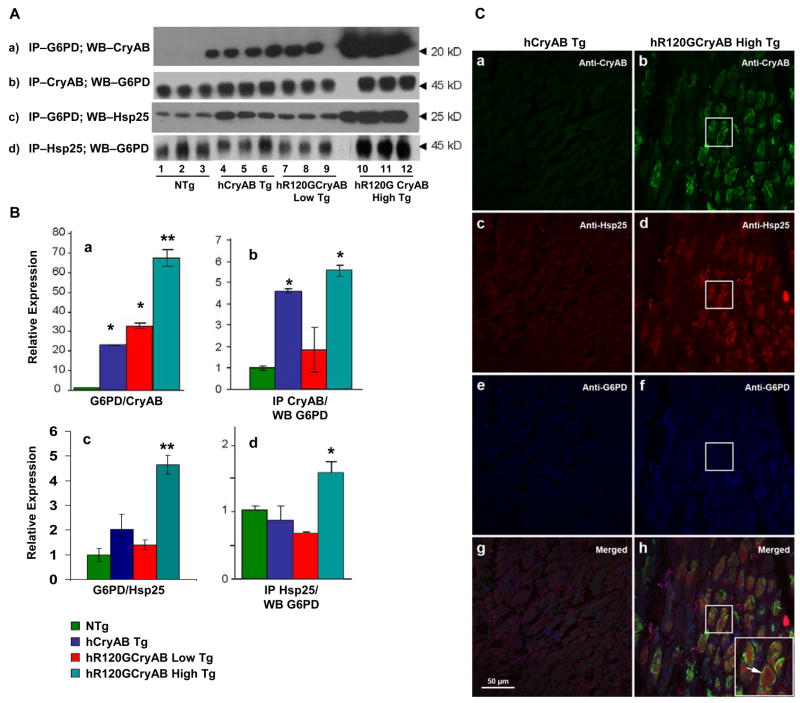
Figure 5. R120GCryAB Overexpression Promotes Co-localization and Novel Interactions between G6PD and Hsp25 in Protein Aggregates
(A) Representative Westerns of supernatant fractions from heart homogenate after co-immunoprecipitation were performed and probed with anti-G6PD, anti-CryAB and anti-Hsp25 antibodies. (B) Densitometry analysis of immunoblots indicates significant interactions among CryAB, Hsp25 and G6PD in the hR120GCryAB High Tg group. G6PD/CryAB (panels A & B-a); CryAB/G6PD (panels A & B-b); G6PD/Hsp25 (panels A & B-c); and Hsp25/G6PD (panels A & B-d). (*p ≤ 0.05, **p<0.01 compared with NTg control). (C) Protein aggregates in hR120GCryAB High Tg mice contain moderate levels of both CryAB (b, shown in green) and Hsp25 at 6 months (d, red). G6PD is also expressed more diffusely (f, blue) but appears to be slightly concentrated in or around the aggregates (h, three images merged). Inset arrow (panel h) is a higher magnification of a representative myocardial section contained in the squares (panels b, d, f, and h). No aggregates are seen in transgenic mice expressing the wild type version of human CryAB (panels a, c, e, and g).
Figure 6
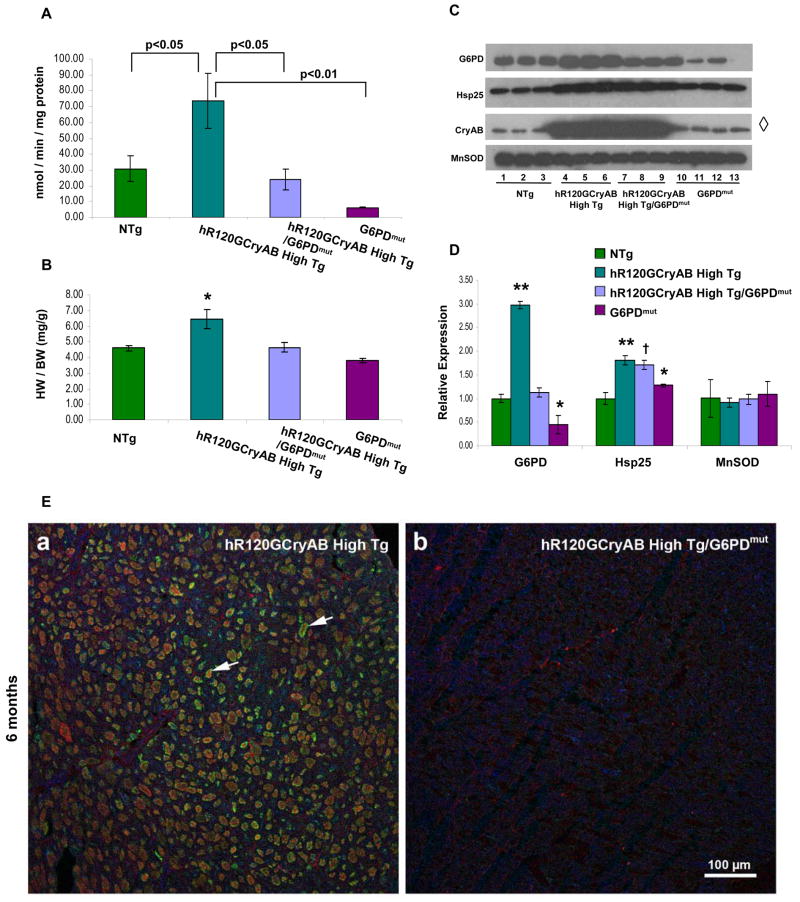
Figure 6. G6PD Deficiency Prevents Cardiac Hypertrophy and Protein Aggregation in hR120GCryAB High mice in vivo
(A) G6PD activity in heart homogenates of hR12GCryAB High Tg/G6PDmut is similar to NTg and significantly lower than hR12GCryAB High Tg at 6 months (p<0.01). (B) Cardiac hypertrophy (assessed by heart weight/body weight ratio) caused by hR120GCryAB Tg overexpression was completely prevented by G6PD deficiency in R12GCryAB High Tg/G6PDmut hearts. HW=heart weight. BW=body weight. (C, D) Protein abundance of total CryAB, Hsp25, G6PD, and MnSOD in hR120GCryAB High Tg and hR120GCryAB High Tg/G6PDmut hearts. Each lane in panel C represents an individual animal per experimental group (3 animals/group). (*p<0.05, † p<0.015, **p<0.001). Lane 13 is blank in the G6PD and Hsp25 panels. (E) G6PD deficiency prevents protein aggregation in hR120GCryAB High Tg expression crossed into G6PDmut animals. Arrows in panel (a) point to examples of the large protein aggregates (green, CryAB; red, Hsp25; and blue, G6PD), which are not found in the transgenic hR120GCryAB High Tg/G6PDmut mice (b).

Comment in

References

    1. Baek SH, Min JN, Park EM, Han MY, Lee YS, Lee YJ, Park YM. Role of small heat shock protein HSP25 in radioresistance and glutathione-redox cycle. J Cell Physiol. 2000;183:100–107. - PubMed
    1. Benjamin IJ, Schneider MD. Learning from failure: congestive heart failure in the postgenomic age. J Clin Invest. 2005;115:495–499. - PMC - PubMed
    1. Bova MP, Yaron O, Huang Q, Ding L, Haley DA, Stewart PL, Horwitz J. Mutation R120G in alphaB-crystallin, which is linked to a desmin-related myopathy, results in an irregular structure and defective chaperone-like function. Proc Natl Acad Sci U S A. 1999;96:6137–6142. - PMC - PubMed
    1. Bukau B, Weissman J, Horwich A. Molecular chaperones and protein quality control. Cell. 2006;125:443–451. - PubMed
    1. Chance B, Sies H, Boveris A. Hydroperoxide metabolism in mammalian organs. Physiol Rev. 1979;59:527–605. - PubMed

Publication types

MeSH terms