


Enhanced nicotinic receptor function and drug abuse vulnerability
- PMID: 17699659
- PMCID: PMC6672186
- DOI: 10.1523/JNEUROSCI.2017-06.2007
Enhanced nicotinic receptor function and drug abuse vulnerability
Abstract
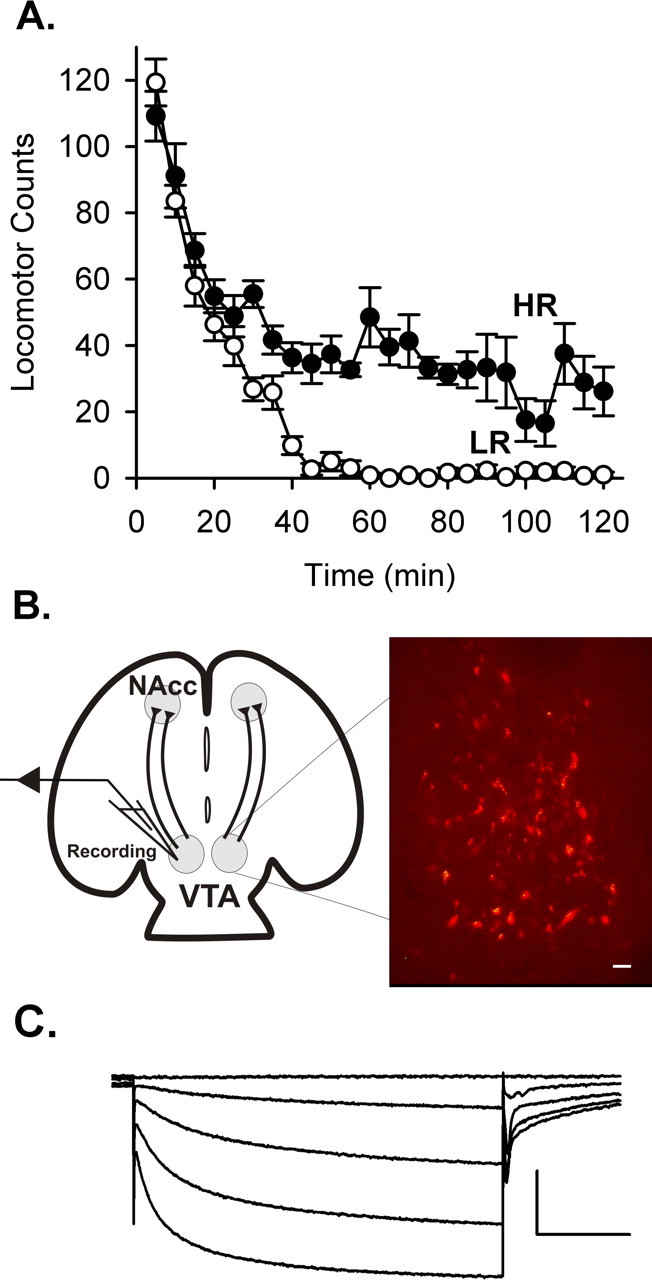
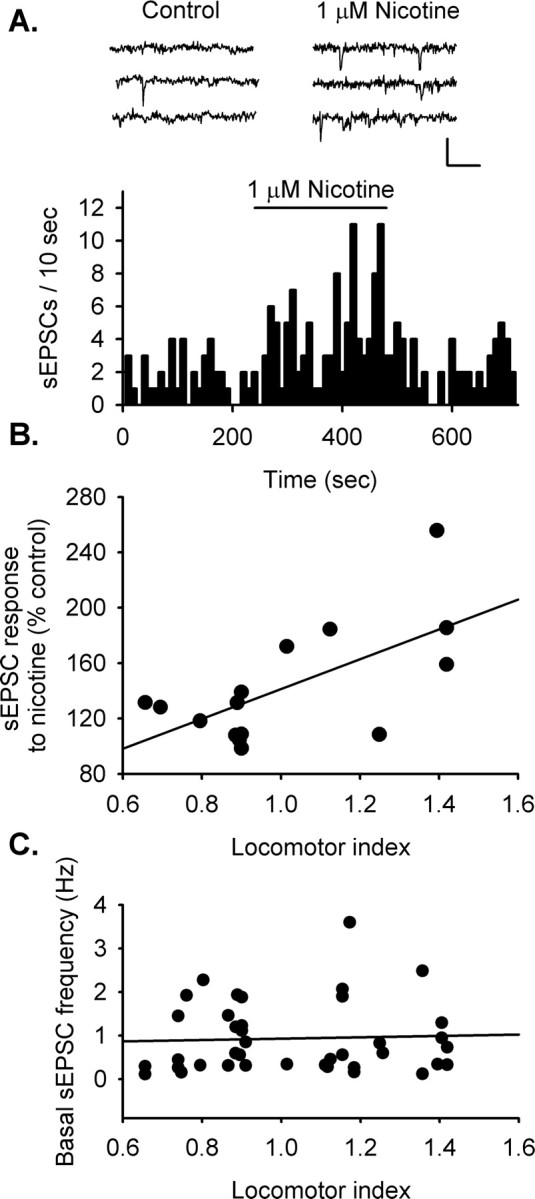
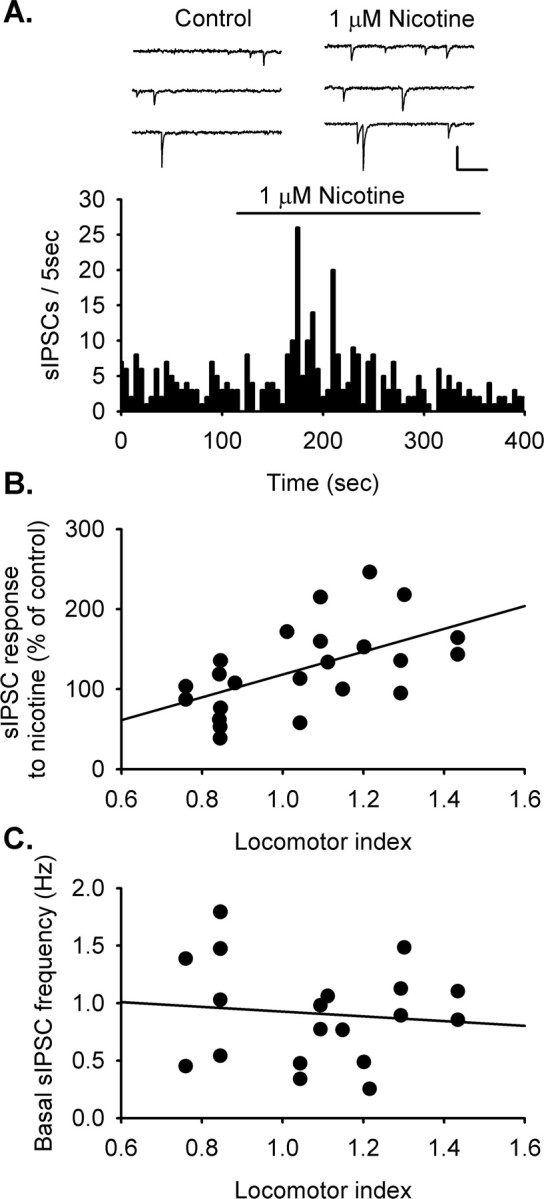
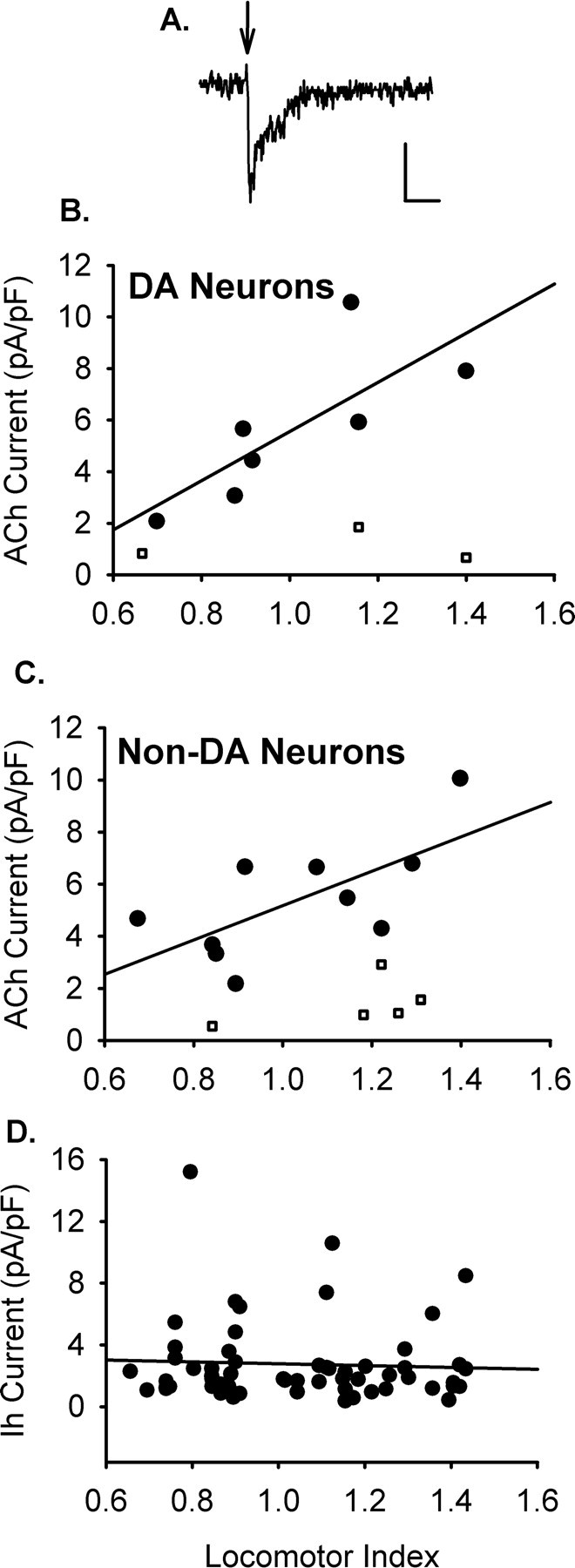
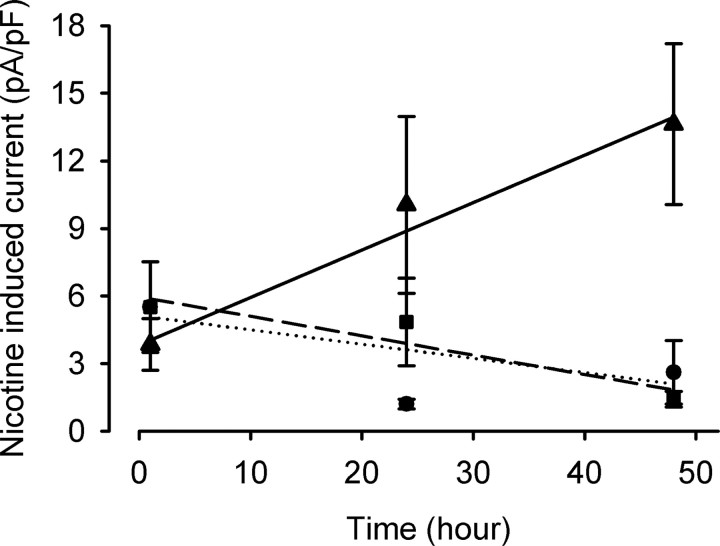
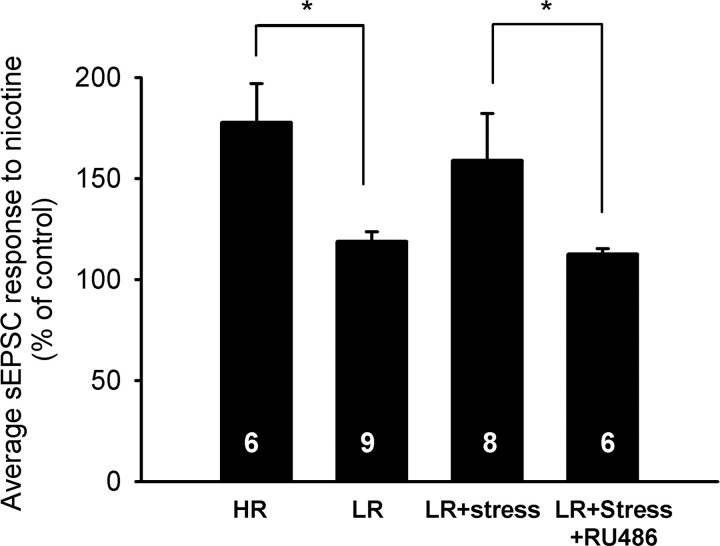
In animals and humans, vulnerability to drug abuse varies among individuals. Animals that display high activity levels in a novel environment are more likely to self-administer psychostimulant drugs, including nicotine, cocaine, amphetamine, and morphine. Recent reports from behavioral studies indicate that nicotinic acetylcholine receptor (nAChR) activity contributes to the rewarding effects of several different addictive drugs. Thus, we hypothesized that differences in nAChR activity may contribute to the predisposition to drug self-administration. After screening of adult rats (>60 d postnatal) for the behavioral response to a novel environment, electrophysiological measures of nAChR function were conducted in brain slices that included the mesoaccumbens dopamine neurons of the ventral tegmental area (VTA). We found a positive correlation between the response to novelty and nAChR function in each assay conducted, including nAChR modulation of glutamatergic and GABAergic synaptic inputs to VTA dopamine neurons, as well as somatic nAChR responses of VTA neurons. The response to novelty and sensitivity to addictive drugs are positively correlated with the hormonal response to stress. Consistent with this observation, we found enhanced nAChR responses in vitro after a 48 h corticosterone treatment and in vivo after 48 h of repeated stress. Each of these effects was inhibited by RU486 (11beta-[p-(dimethylamino)phenyl]-17beta-hydroxy-17-(1-propynyl)estra-4,9-dien-3-one) pretreatment, suggesting a steroid hormone receptor-dependent process. These findings suggest that differences in nAChR function within the mesoaccumbens dopamine system may contribute to individual differences in drug abuse vulnerability and that these are likely attributable to differences in stress hormone levels.
Figures
References
-
- Almeida LE, Pereira EF, Alkondon M, Fawcett WP, Randall WR, Albuquerque EX. The opioid antagonist naltrexone inhibits activity and alters expression of alpha7 and alpha4beta2 nicotinic receptors in hippocampal neurons: implications for smoking cessation programs. Neuropharmacology. 2000;39:2740–2755. - PubMed
-
- Blaha CD, Allen LF, Das S, Inglis WL, Latimer MP, Vincent SR, Winn P. Modulation of dopamine efflux in the nucleus accumbens after cholinergic stimulation of the ventral tegmental area in intact, pedunculopontine tegmental nucleus-lesioned, and laterodorsal tegmental nucleus-lesioned rats. J Neurosci. 1996;16:714–722. - PMC - PubMed
-
- Choi HK, Won LA, Kontur PJ, Hammond DN, Fox AP, Wainer BH, Hoffmann PC, Heller A. Immortalization of embryonic mesencephalic dopaminergic neurons by somatic cell fusion. Brain Res. 1991;552:67–76. - PubMed
-
- Dani JA. Roles of dopamine signaling in nicotine addiction. Mol Psychiatry. 2003;8:255–256. - PubMed
Publication types
MeSH terms
Substances
Grants and funding
LinkOut - more resources
Full Text Sources
Other Literature Sources
