


Sensitive, stimulating caregiving predicts cognitive and behavioral resilience in neurodevelopmentally at-risk infants
- PMID: 17705896
- PMCID: PMC3709833
- DOI: 10.1017/S0954579407000326
Sensitive, stimulating caregiving predicts cognitive and behavioral resilience in neurodevelopmentally at-risk infants
Abstract
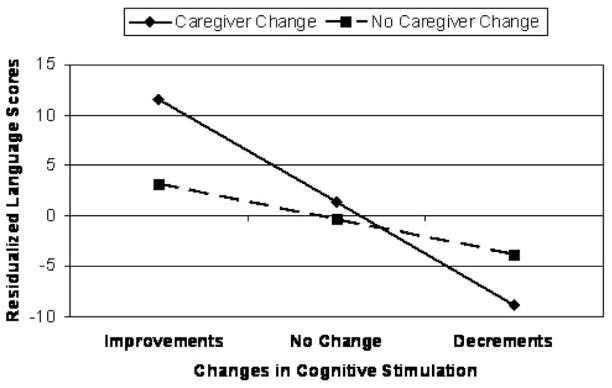
Although neurodevelopmental impairment is a risk factor for poor cognitive and behavioral outcomes, associations between early and later functioning are only moderate in magnitude, and it is likely that other factors intervene to modify this trajectory. The current study tested the hypothesis that sensitive, stimulating caregiving would promote positive behavioral and cognitive outcomes among children who were at risk based on the results of a neurodevelopmental screener and a temperament inventory. The sample comprised 1,720 infants and toddlers from the National Survey of Child and Adolescent Well-Being, a longitudinal study of children who were involved with child welfare services. Children were first assessed between 3 and 24 months of age and subsequently 18 months later. Children who experienced improvements in the amount of sensitive, stimulating caregiving they received had positive cognitive and behavioral outcomes 18 months later, despite early levels of neurodevelopmental risk. The association between changes in caregiving quality and changes in children's functioning was stronger for children who were removed from the care of their biological parents before the follow-up assessment than for children who remained in the care of biological parents, suggesting a causal role for caregiving quality on children's outcomes.
Figures
References
-
- Achenbach TM. Manual for the Child Behavior Checklist/4–18 and 1991 profile. Burlington, VT: University of Vermont, Department of Psychiatry; 1991.
-
- Arseneault L, Tremblay R, Boulerice B, Saucier JF. Obstetrical complications and violent delinquency: Testing two developmental pathways. Child Development. 2002;73:496–508. - PubMed
-
- Aylward GP. Bayley Infant Neurodevelopmental Screener. San Antonio, TX: Psychological Corporation; 1995.
-
- Aylward GP. Neurodevelopmental outcomes in infants born prematurely. Developmental and Behavioral Pediatrics. 2005;26:427–440. - PubMed
-
- Aylward GP, Verhulst SJ. Predictive utility of the Bayley Infant Neurodevelopmental Screener (BINS) risk status classifications: Clinical interpretation and application. Developmental Medicine and Child Neurology. 2000;42:25–31. - PubMed
Publication types
MeSH terms
Grants and funding
LinkOut - more resources
Full Text Sources
Medical
