


A homozygous missense mutation in human KLOTHO causes severe tumoral calcinosis
- PMID: 17710231
- PMCID: PMC1940239
- DOI: 10.1172/JCI31330
A homozygous missense mutation in human KLOTHO causes severe tumoral calcinosis
Abstract
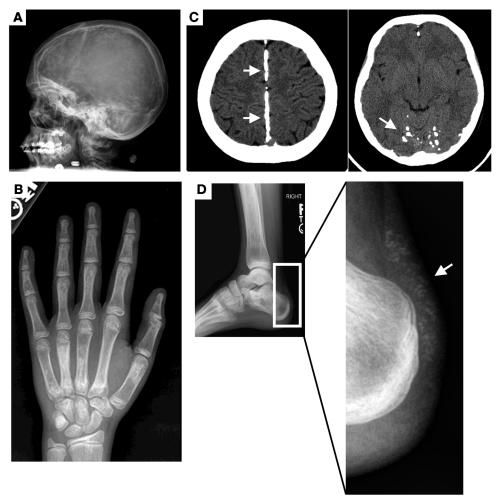
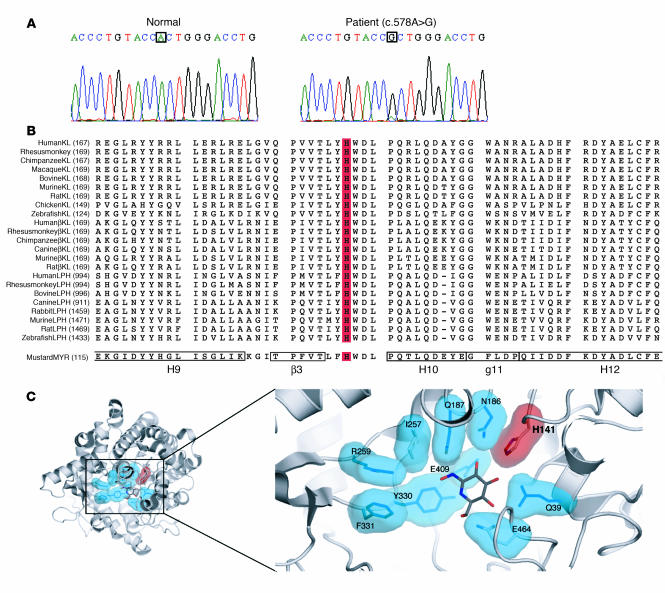
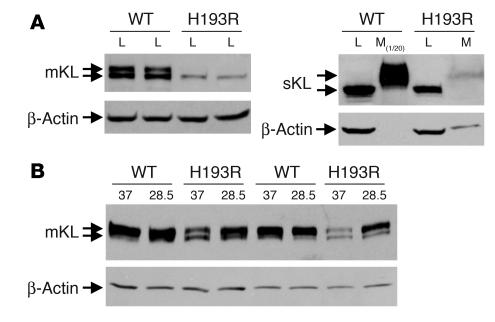
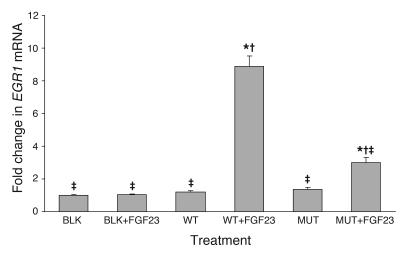
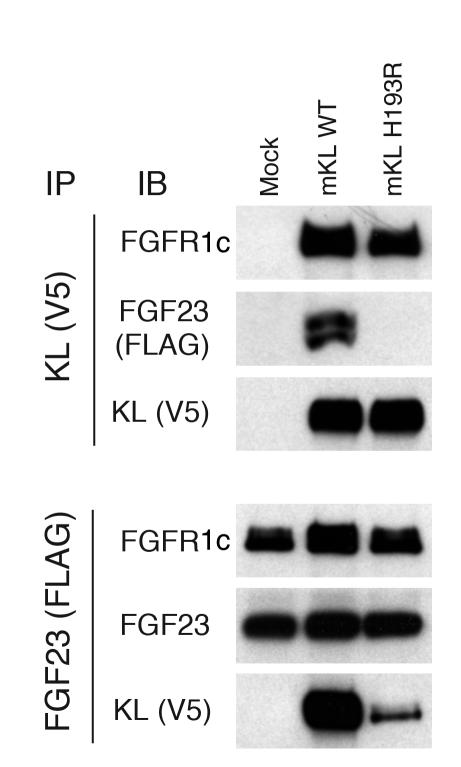
Familial tumoral calcinosis is characterized by ectopic calcifications and hyperphosphatemia due to inactivating mutations in FGF23 or UDP-N-acetyl-alpha-D-galactosamine:polypeptide N-acetylgalactosaminyltransferase 3 (GALNT3). Herein we report a homozygous missense mutation (H193R) in the KLOTHO (KL) gene of a 13-year-old girl who presented with severe tumoral calcinosis with dural and carotid artery calcifications. This patient exhibited defects in mineral ion homeostasis with marked hyperphosphatemia and hypercalcemia as well as elevated serum levels of parathyroid hormone and FGF23. Mapping of H193R mutation onto the crystal structure of myrosinase, a plant homolog of KL, revealed that this histidine residue was at the base of the deep catalytic cleft and mutation of this histidine to arginine should destabilize the putative glycosidase domain (KL1) of KL, thereby attenuating production of membrane-bound and secreted KL. Indeed, compared with wild-type KL, expression and secretion of H193R KL were markedly reduced in vitro, resulting in diminished ability of FGF23 to signal via its cognate FGF receptors. Taken together, our findings provide what we believe to be the first evidence that loss-of-function mutations in human KL impair FGF23 bioactivity, underscoring the essential role of KL in FGF23-mediated phosphate and vitamin D homeostasis in humans.
Figures
References
-
- Araya K., et al. A novel mutation in fibroblast growth factor 23 gene as a cause of tumoral calcinosis. J. Clin. Endocrinol. Metab. 2005;90:5523–5527. - PubMed
-
- Benet-Pages A., Orlik P., Strom T.M., Lorenz-Depiereux B. An FGF23 missense mutation causes familial tumoral calcinosis with hyperphosphatemia. Hum. Mol. Genet. 2005;14:385–390. - PubMed
-
- Chefetz I., et al. A novel homozygous missense mutation in FGF23 causes Familial Tumoral Calcinosis associated with disseminated visceral calcification. Hum. Genet. 2005;118:261–266. - PubMed
-
- Larsson T., et al. A novel recessive mutation in fibroblast growth factor-23 causes familial tumoral calcinosis. J. Clin. Endocrinol. Metab. 2005;90:2424–2427. - PubMed
Publication types
MeSH terms
Substances
Grants and funding
LinkOut - more resources
Full Text Sources
Other Literature Sources
Medical
Molecular Biology Databases
