


A survey on planar IMRT QA analysis
- PMID: 17712302
- PMCID: PMC5722600
- DOI: 10.1120/jacmp.v8i3.2448
A survey on planar IMRT QA analysis
Abstract
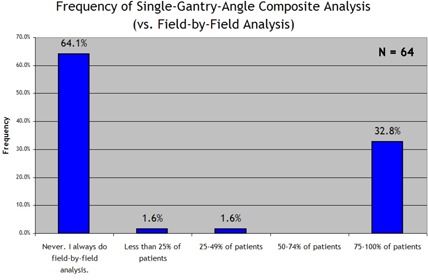
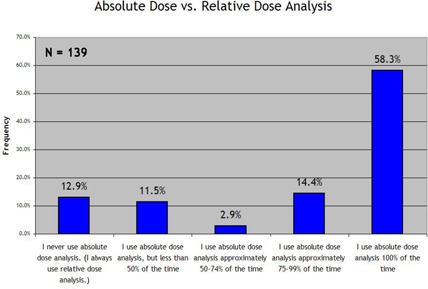
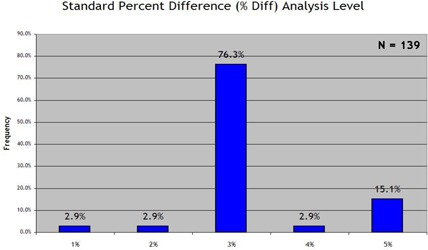
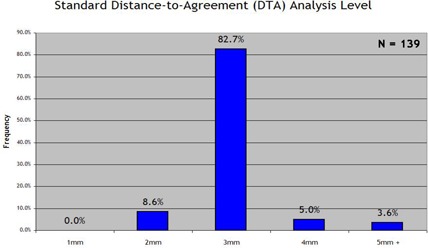
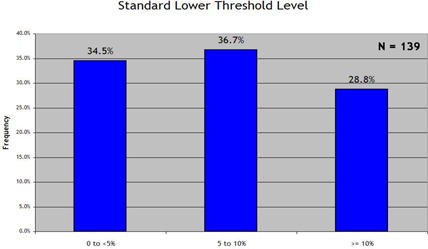
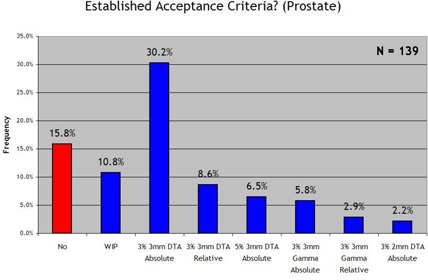
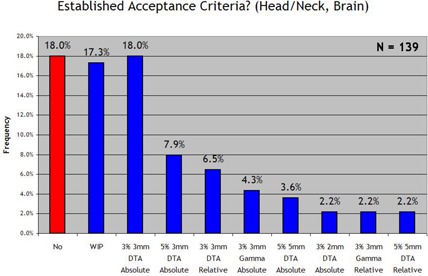
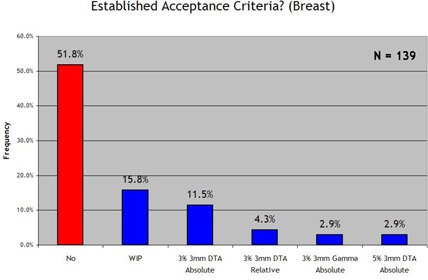
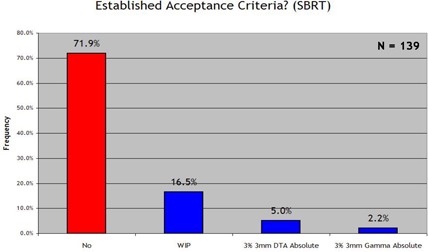
Quality assurance (QA) systems for intensity-modulated radiation therapy (IMRT) have become standard tools in modern clinical medical physics departments. However, because formalized industry standards or recommendations from professional societies have yet to be defined, methods of IMRT QA analysis vary from institution to institution. Understanding where matters stand today is an important step toward improving the effectiveness of IMRT QA and developing standards. We therefore conducted an IMRT QA survey. This particular survey was limited to users of an electronic two-dimensional diode array device, but we took care to keep the questions as general and useful as possible. The online survey polled institutions (one survey per institution) on a collection of questions about methods of IMRT QA. The topics were general to the IMRT QA analysis methods common to all IMRT systems; none of the questions was vendor- or product-specific. Survey results showed that a significant proportion of responding institutions (32.8%) use the single-gantry-angle composite method for IMRT QA analysis instead of field-by-field analysis. Most institutions perform absolute dose comparisons rather than relative dose comparisons, with the 3% criterion being used most often for the percentage difference analysis, and the 3 mm criterion for distance-to-agreement analysis. The most prevalent standard for acceptance testing is the combined 3% and 3 mm criteria. A significant percentage of responding institutions report not yet having standard benchmarks for acceptance testing-specifically, 26.6%, 35.3%, and 67.6% had not yet established standard acceptance criteria for prostate, head and neck, and breast IMRT respectively. This survey helps in understanding how institutions perform IMRT QA analysis today. This understanding will help to move institutions toward more standardized acceptance testing. But before standards are defined, it would be useful to connect the conventional planar QA analyses to their resulting impact on the overall plan, using clinically relevant metrics (such as estimated deviations in dose-volume histograms).
Figures
References
-
- Low DA, Harms WB, Mutic S, Purdy JA. A technique for the quantitative evaluation of dose distributions. Med Phys. 1998; 25 (5): 656–661. - PubMed
-
- Jursinic PA, Nelms, BE . A 2‐D diode array and analysis software for verification of intensity modulated radiation therapy delivery. Med Phys. 2003; 30 (5): 870–879. - PubMed
-
- Letourneau D, Gulam M, Yan D, Oldham M, Wong JW. Evaluation of a 2D diode array for IMRT quality assurance. Radiother Oncol. 2004; 70 (2): 199–206. - PubMed
-
- van Dyk J, Barnett RB, Cygler JE, Shragge, PC . Commissioning and quality assurance of treatment planning computers. Int J Radiat Biol Phys. 1993; 26 (2): 261–273. - PubMed
Publication types
MeSH terms
LinkOut - more resources
Full Text Sources
