


The effect of oxandrolone on the endocrinologic, inflammatory, and hypermetabolic responses during the acute phase postburn
- PMID: 17717439
- PMCID: PMC1959346
- DOI: 10.1097/SLA.0b013e318146980e
The effect of oxandrolone on the endocrinologic, inflammatory, and hypermetabolic responses during the acute phase postburn
Abstract
Objective and summary background data: Postburn long-term oxandrolone treatment improves hypermetabolism and body composition. The effects of oxandrolone on clinical outcome, body composition, endocrine system, and inflammation during the acute phase postburn in a large prospective randomized single-center trial have not been studied.
Methods: Burned children (n = 235) with >40% total body surface area burn were randomized (block randomization 4:1) to receive standard burn care (control, n = 190) or standard burn care plus oxandrolone for at least 7 days (oxandrolone 0.1 mg/kg body weight q.12 hours p.o, n = 45). Clinical parameters, body composition, serum hormones, and cytokine expression profiles were measured throughout acute hospitalization. Statistical analysis was performed by Student t test, or ANOVA followed by Bonferroni correction with significance accepted at P < 0.05.
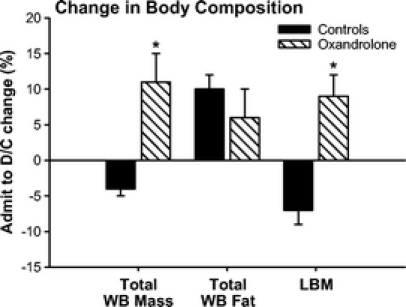
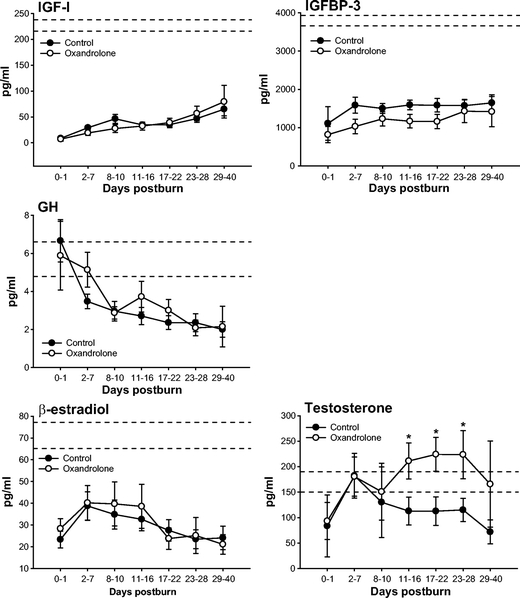
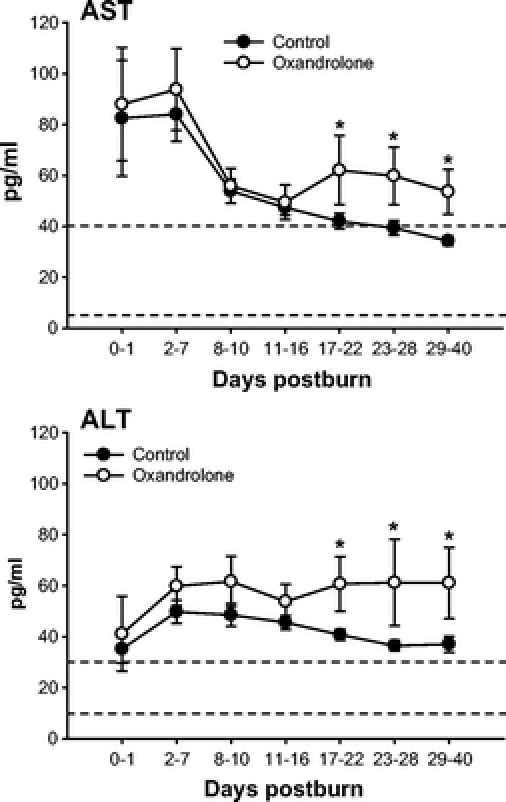
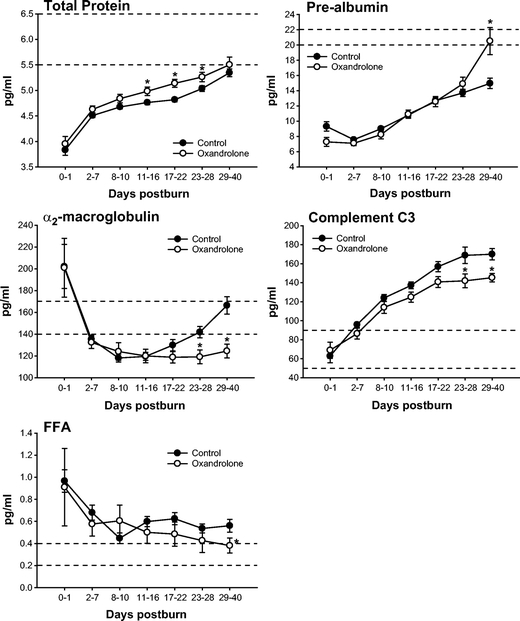
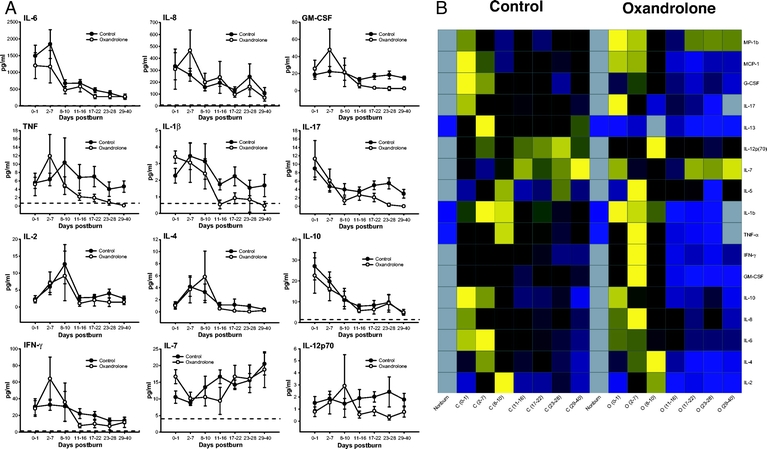
Results: Demographics and clinical data were similar in both groups. Length of intensive care unit stay was significantly decreased in oxandrolone-treated patients (0.48 +/- 0.02 days/% burn) compared with controls (0.56 +/- 0.02 days/% burn), (P < 0.05). Control patients lost 8 +/- 1% of their lean body mass (LBM), whereas oxandrolone-treated patients had preserved LBM (+9 +/- 4%), P < 0.05. Oxandrolone significantly increased serum prealbumin, total protein, testosterone, and AST/ALT, whereas it significantly decreased alpha2-macroglobulin and complement C3, P < 0.05. Oxandrolone did not adversely affect the endocrine and inflammatory response as we found no significant differences in the hormone panels and cytokine expression profiles.
Conclusions: In this large prospective, double-blinded, randomized single-center study, oxandrolone shortened length of acute hospital stay, maintained LBM, improved body composition and hepatic protein synthesis while having no adverse effects on the endocrine axis postburn, but was associated with an increase in AST and ALT.
Figures
References
-
- Finnerty CC, Herndon DN, Przkora R, et al. Cytokine expression profile over time in severely burned pediatric patients. Shock. 2006;26:13–19. - PubMed
-
- Herndon DN, Tompkins RG. Support of the metabolic response to burn injury. Lancet. 2004;363:1895–1902. - PubMed
-
- Wilmore DW, Aulick LH. Metabolic changes in burned patients. Surg Clin North Am. 1978;58:1173–1187. - PubMed
-
- Hasselgren PO. Glucocorticoids and muscle catabolism. Curr Opin Clin Nutr Metab Care. 1999;2:201–205. - PubMed
Publication types
MeSH terms
Substances
Grants and funding
LinkOut - more resources
Full Text Sources
Medical
Research Materials
Miscellaneous
